



Best Strength Training Apps for iPhone
By App Store Tracker Editorial · Updated — live App Store data verified
The short version
The best strength training app for iPhone in 2026 is Fitbod — its AI-driven workout generation, 600-plus exercise library, and 4.81 rating across 270,296 reviews make it the most flexible programming tool for lifters at every level. Runner-up LADDER brings premium coached programs at a 4.95 rating. Among the 9 strength training apps we evaluated, picks span AI generators, minimalist loggers, classic spreadsheet replacements, and full coaching platforms.
Jump to a pick↓
We ranked iPhone strength training apps on five criteria: exercise library quality with form video and muscle-group targeting, programming intelligence (AI generation, periodization, progression schemes), tracking ergonomics in a real gym, Apple Watch support, and review consensus from the App Store. We gave extra weight to apps that handle real lifting workflows — quick set logging between heavy sets, plate calculators, rest timers — and penalized apps that turned simple logging into a chore. Among the 9 strength training apps in this guide, picks include AI workout generators (Fitbod), coached programs (LADDER, Caliber), proven minimalist trackers (Strong, Hevy), and program libraries pulling from Reddit's best (Boostcamp). Ratings range from 4.77 to 4.95 across more than 645,000 combined reviews.
- Rating
- —
- Reviews
- —
- Price
- Paid
- 90-day trend
- —
Fitbod is the best overall strength training app for iPhone because its AI generates a fresh workout each session based on your recent volume, recovery, available equipment, and training goal. The 4.81 rating across 270,296 reviews makes it the most-vetted intelligent programming app in this category.
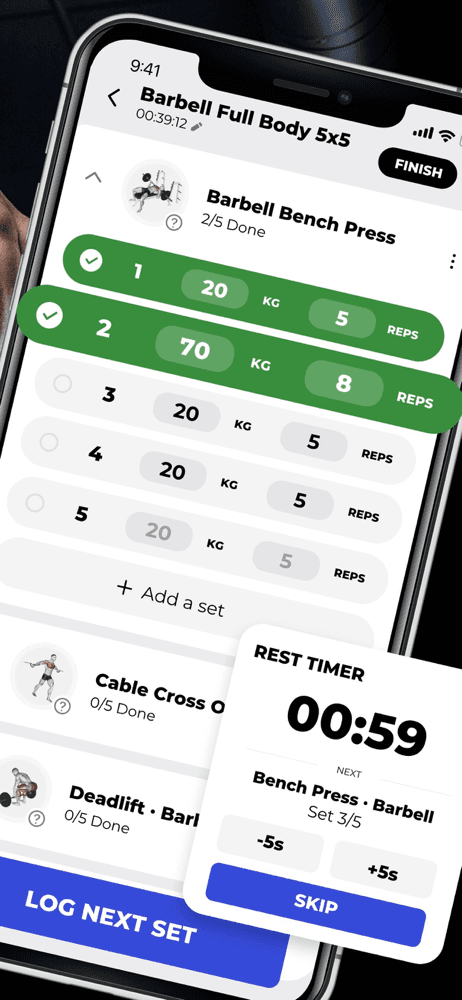
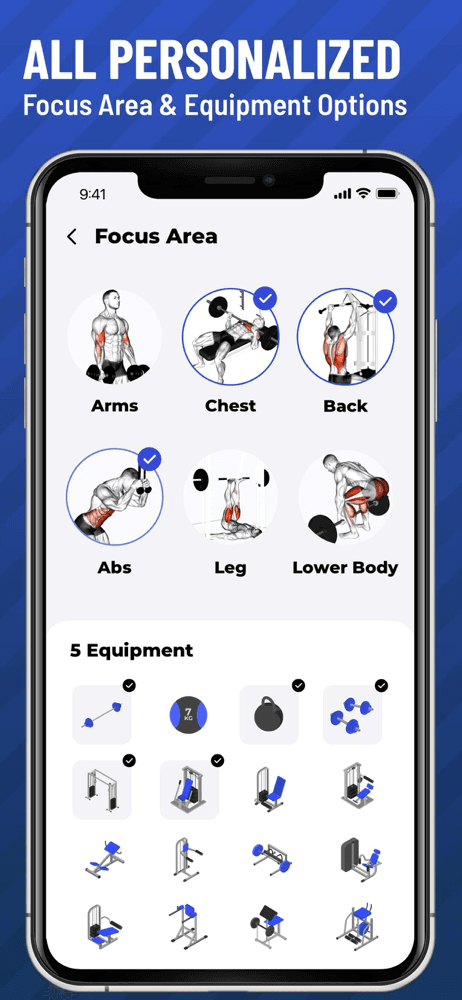
What sets Fitbod apart is the adaptive logic. Tell it you have 45 minutes, a barbell, dumbbells, and a cable stack, and it builds a session that hits the right muscles given what you trained yesterday. The 600-plus exercise library has clean form videos, the rest timer is dialed, and the Apple Watch app handles set logging without unlocking your phone.
Use case: a busy intermediate lifter who can train four to five days a week but doesn't want to write programs. Fitbod handles the periodization decisions, surfaces accessory work that addresses imbalances, and adjusts intensity when you log RPE. It works equally well in a commercial gym or a home setup with limited equipment.
The tradeoff is the AI black box. If you're a programming nerd who wants explicit control over every set, Fitbod's decisions can feel opaque, and the lack of an explicit 5/3/1 or PPL template means you can't follow a famous program as written. Pricing at $12.99 monthly or $79.99 annually is fair. For lifters who want intelligent programming without spreadsheets, Fitbod is the strongest pick.
Pros
- AI generates fresh workouts based on recovery and recent volume
- Six-hundred-plus exercise library with clean form videos throughout
- Apple Watch app handles set logging without phone unlocks
Cons
- AI decisions feel opaque to programming-nerd lifters who want control
- No explicit 5/3/1 or PPL template for following famous programs
- Rating
- 5.0
- Reviews
- 168.9K
- Price
- Paid
- 90-day trend
- —
LADDER Strength Training Plans is the best strength training app for hypertrophy because it pairs you with elite-level coaches — many of whom train pro athletes — running structured multi-week strength, hypertrophy, and conditioning programs. The 4.95 rating across 136,453 reviews is the highest in this category.
What sets LADDER apart is the small-team format. You don't get a one-on-one coach; you join a team of lifters following the same program with a coach who answers questions, demonstrates form, and adapts the plan group-wide. The energy of a small cohort training together translates surprisingly well to digital format, and the coach roster includes names from CrossFit, powerlifting, and athletic performance.
Use case: an intermediate lifter who has run beginner programs solo, plateaued, and wants real expert eyes on their training without paying for one-on-one coaching. LADDER's $29.99 monthly fee is far cheaper than personal training and the program quality reflects pro-grade methodology.
The tradeoff is the team model — you don't get bespoke programming, and if your schedule diverges from the team's, you fall behind on the daily cadence. Equipment requirements also lean toward well-equipped gyms. For lifters serious enough to commit to a real program with coach oversight, LADDER is unmatched at the price.
Pros
- Elite coach roster includes pro athletes and recognizable industry names
- Small-team format brings cohort accountability without one-on-one cost
- 4.95 rating reflects deep satisfaction from committed program users
Cons
- Team schedule rigidity means falling behind if life disrupts cadence
- Equipment requirements assume well-equipped commercial gym access
- 3Get on App Store
#3Strong Workout Tracker Gym LogBest with Apple Watch
Strong Fitness PTE Limited
Strength Training Planner
- Rating
- 4.9
- Reviews
- 108.5K
- Price
- Free
- 90-day trend
- —
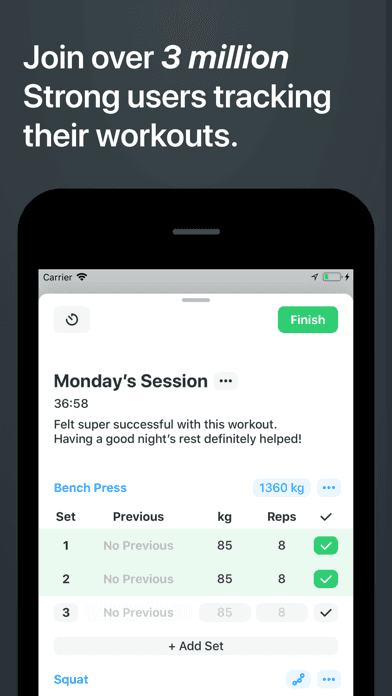
Strong is the best strength training app with Apple Watch because the Watch app is widely considered the most polished in the category, paired with a logger interface laser-focused on the lifting workflow: pick a workout, tap to log sets, hit the rest timer, repeat. The 4.86 rating across 108,375 reviews comes from over 1.2 million users who chose Strong for clean simplicity, including features in CNBC and The Verge.
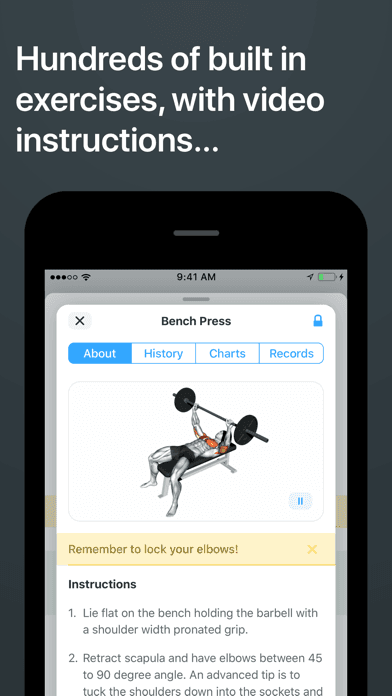
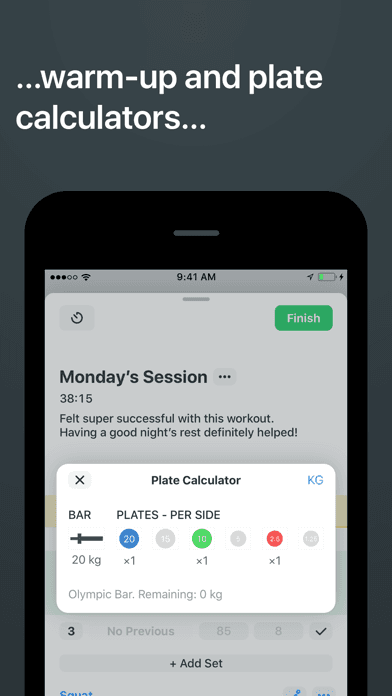
What sets Strong apart is restraint. Where Fitbod generates and Boostcamp programs, Strong gets out of your way. The exercise library is curated rather than exhaustive, the plate calculator is one tap, and the Apple Watch app is widely considered the most polished in this category — start your workout from your wrist, log sets without unlocking your phone, and let the rest timer drive your pace.
Use case: an experienced lifter who already knows their program and just needs a great logger. Strong respects your time and your training; it doesn't try to coach you. Free tier covers core logging; Strong Pro at $4.99 monthly unlocks supersets, cardio tracking, and detailed analytics.
The tradeoff is the deliberate lack of programming intelligence. Strong won't tell you what to do; it'll track what you did. If you want AI generation or built-in programs, look at Fitbod or Boostcamp instead. For lifters who want the cleanest possible logging experience, Strong is the standout pick.
Pros
- Cleanest, fastest workout logger in the category by user consensus
- Apple Watch app widely considered the most polished available today
- Plate calculator and rest timer dialed for real gym workflow
Cons
- No AI generation or built-in programs for users wanting structure
- Exercise library curated rather than exhaustive like JEFIT competitor
- Rating
- —
- Reviews
- —
- Price
- Paid
- 90-day trend
- —
Hevy is the best strength training app for women and serious hypertrophy because the social-tracking interface, share-friendly workout cards, and clean volume analytics make consistent training easier to stick with. The 4.92 rating across 67,654 reviews reflects a fast-growing, devoted community.
What sets Hevy apart is the polish. Workout cards are designed to share to Instagram or send to a training partner, the exercise library is huge with form videos and notes, supersets and drop sets work with one tap, and the analytics surface PRs and volume trends without making you do the math. Free tier is genuinely usable; Hevy Pro at $5.99 monthly adds routine folders, custom exercises, and advanced analytics.
Use case: a lifter who values community and accountability, who wants their workout app to feel modern rather than clinical, and who appreciates that Hevy doesn't gate basic features behind a paywall. The growing user base also means programs and templates flow through the Routines feed.
The tradeoff is that Hevy is younger than Strong and JEFIT, so the depth of historical data, plate calculator polish, and Watch app maturity are still catching up. Programming intelligence is also minimal — Hevy is a logger, not a programmer. For lifters who want a beautiful, social-friendly experience, Hevy is the strongest pick.
Pros
- Beautiful workout cards designed for sharing to social platforms
- One-tap supersets and drop sets work fluidly during real sessions
- Free tier genuinely usable without aggressive premium upgrade prompts
Cons
- Younger than Strong so plate calculator and Watch app still maturing
- Programming intelligence minimal — Hevy logs but does not coach
- Rating
- 4.8
- Reviews
- 46.8K
- Price
- Paid
- 90-day trend
- —
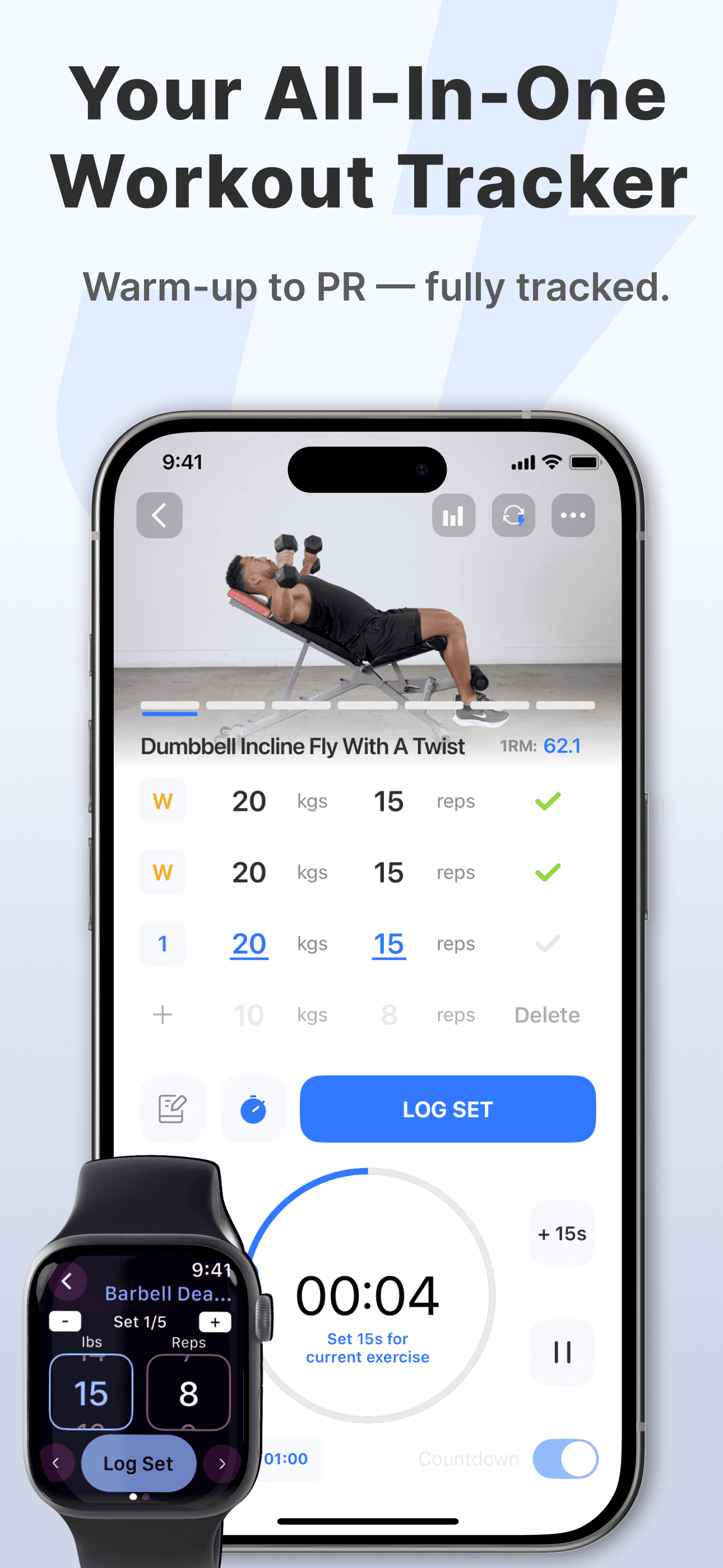
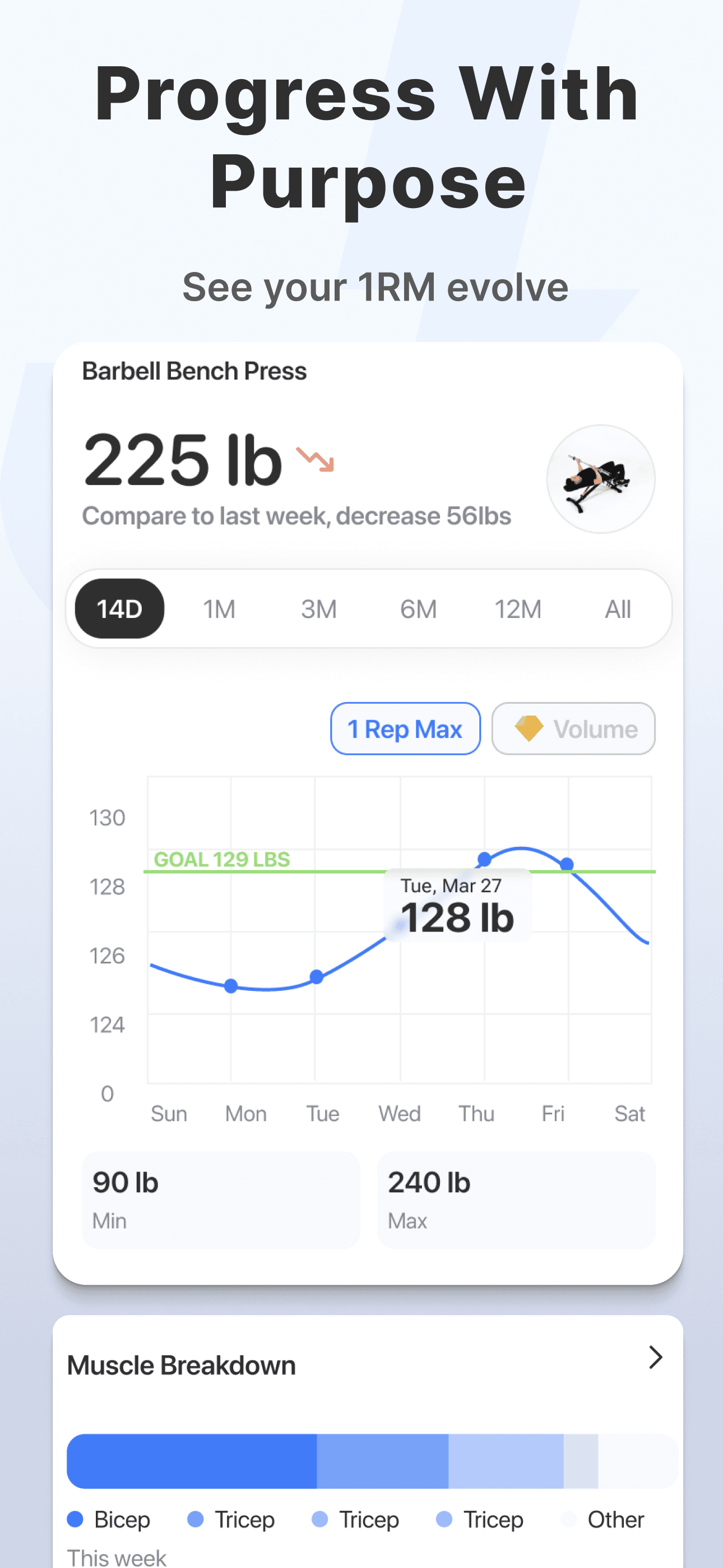
JEFIT is the best strength training app for tracking detail because it has been refining the workout-tracking workflow since 2010, with one of the largest exercise libraries on the App Store, HD video instructions, and template plans for cutting, bulking, and maintaining. The 4.77 rating across 46,584 reviews reflects steady satisfaction from a long-time user base.
What sets JEFIT apart is the depth of options. The exercise library covers thousands of movements with muscle group targeting, the workout planner supports complex set structures including drop sets, rest-pause, and pyramids, and the community feed lets you follow lifters and download their programs. The free tier is broad; JEFIT Elite at $12.99 monthly unlocks advanced analytics and unlimited routines.
Use case: a detail-oriented lifter who wants granular control over every set, set-type, and tempo, and who values an exercise library with options for any equipment scenario. JEFIT works particularly well for users who train multiple modalities (lifting, cardio, mobility) and want one app to track everything.
The tradeoff is the interface, which can feel dated compared to Hevy or Caliber. Some reviewers describe JEFIT as feature-rich but visually cluttered, and the Watch app lags behind Strong's polish. For users who prioritize depth over design, JEFIT is the most comprehensive pick.
Pros
- Massive exercise library covering thousands of movements with video instruction
- Complex set structures supported including drop sets and pyramids
- Community feed lets you follow lifters and download their programs
Cons
- Interface feels dated compared to newer Hevy or Caliber alternatives
- Watch app lags behind Strong's polish and gym-floor usability
- 6
 Get on App Store
#6Boostcamp: Workout ProgramsBest for Powerlifting
BPM Health Co.
Gym & Strength Training Plans
- Rating
- 4.8
- Reviews
- 9.5K
- Price
- Paid
- 90-day trend
- —
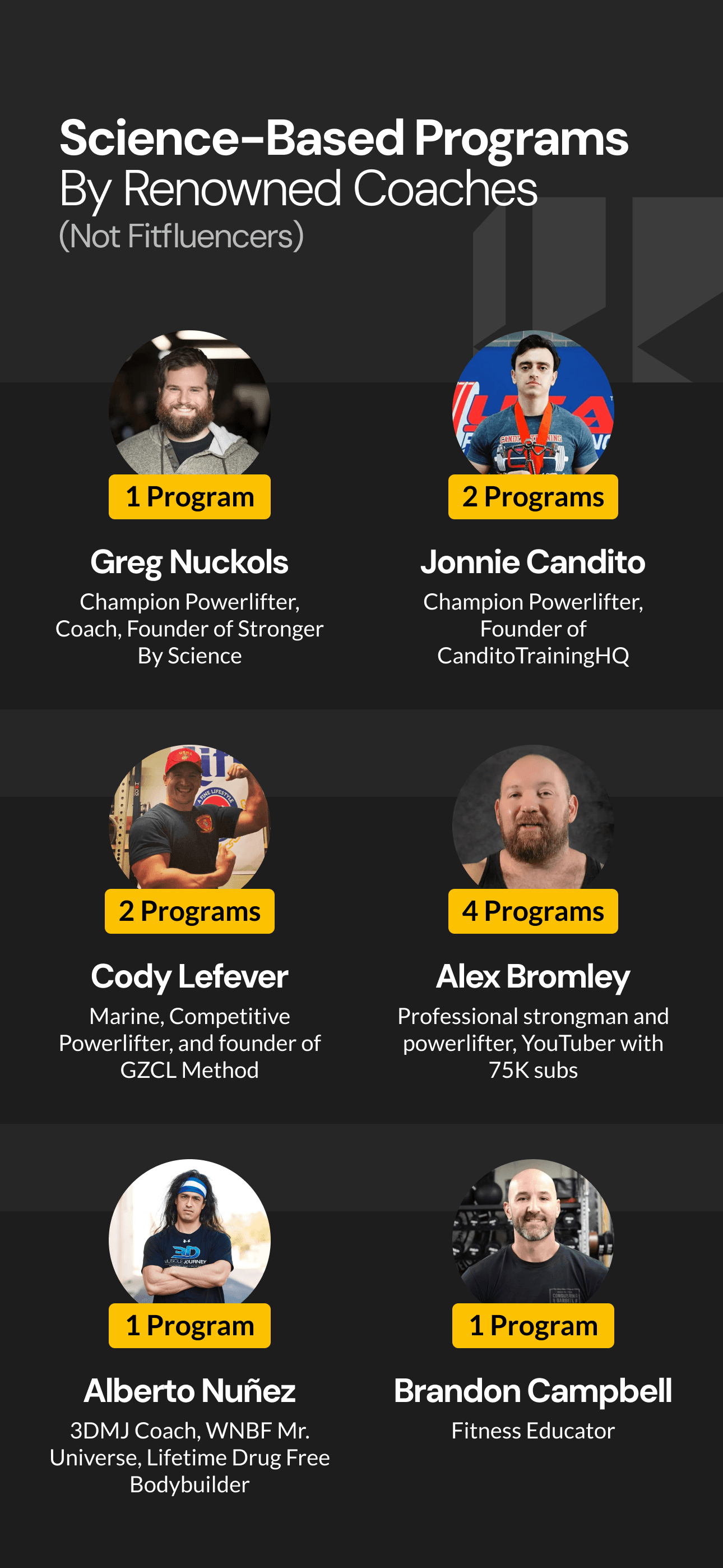
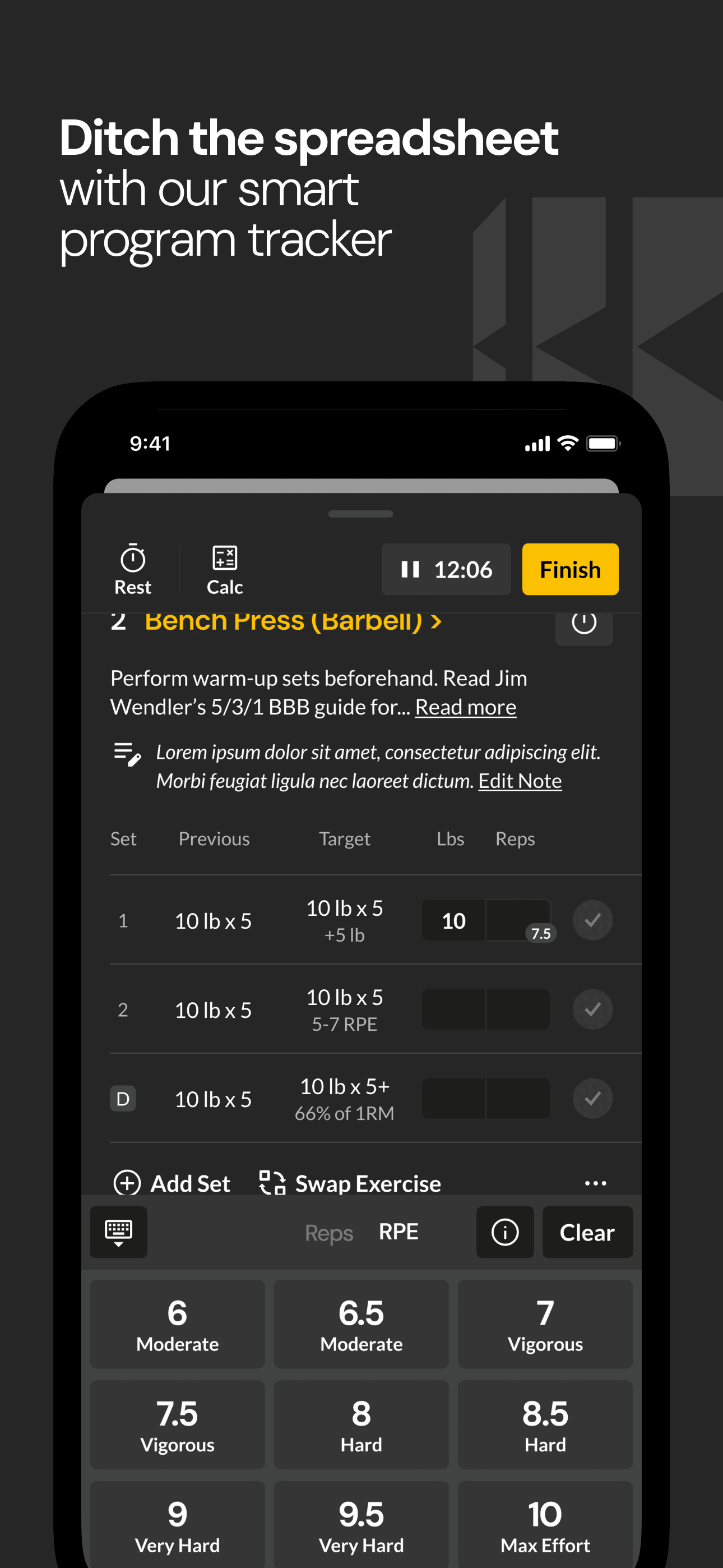
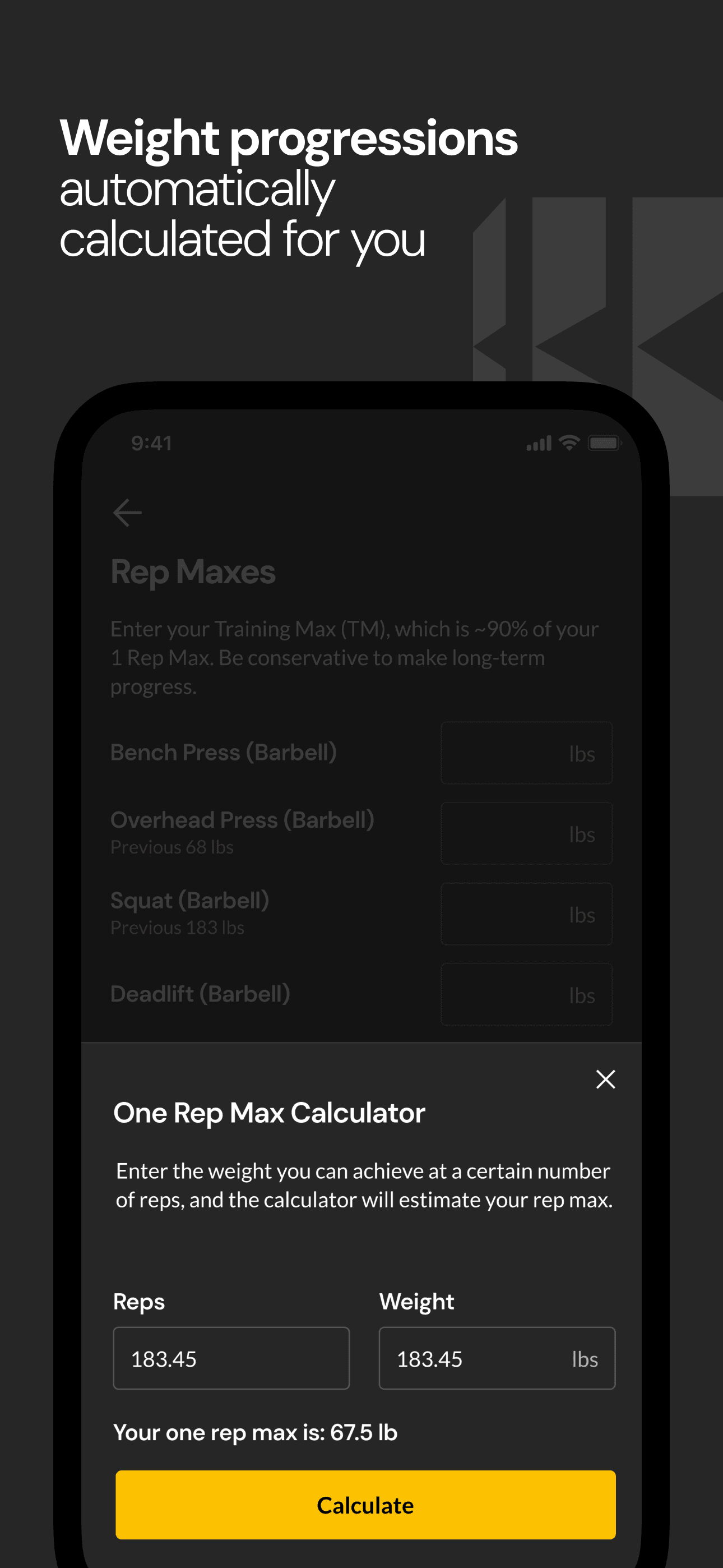
Boostcamp is the best strength training app for powerlifting because it ships with the canonical strength programs — 5/3/1, nSuns, GZCLP, Sheiko — alongside 130-plus expert-built programs including PPL, PHUL, PHAT, and more — pick one, follow it set by set. The 4.85 rating across 8,762 reviews comes from over a million lifters who logged 300 million-plus workouts.
What sets Boostcamp apart is curated quality. Most app program libraries pull from random fitness influencers; Boostcamp's library is sourced from credible names — Jeff Nippard, Greg Nuckols, Alex Bromley, plus the most-recommended Reddit programs. The auto-progression handles RPE and 1RM-based prescriptions, and the built-in deload weeks prevent burnout.
Use case: an intermediate lifter who knows they need a structured program but doesn't want to write one. Boostcamp lets you start a 16-week program in two minutes and follow it without spreadsheet juggling. The community programs section also lets you remix and share custom plans.
The tradeoff is the focus. Boostcamp is built for following programs, not generating ad-hoc workouts the way Fitbod does. Quick standalone sessions feel awkward inside the program-tracking flow. Boostcamp Pro at $9.99 monthly unlocks the full program library. For lifters who want the canonical programs in one slick app, Boostcamp is unmatched.
Pros
- 130-plus credible programs from Jeff Nippard, Greg Nuckols, and Reddit experts
- Auto-progression handles RPE and 1RM prescriptions without spreadsheet juggling
- Built-in deload weeks prevent burnout across long program blocks
Cons
- Ad-hoc standalone workouts feel awkward inside program-tracking flow
- Full program library locked behind Boostcamp Pro subscription tier
- 7
 Get on App Store
#7Caliber: Strength TrainingBest for Coach
Caliber Fitness, Inc
Workout Planner & Tracker
- Rating
- 4.8
- Reviews
- 5.8K
- Price
- Paid
- 90-day trend
- —
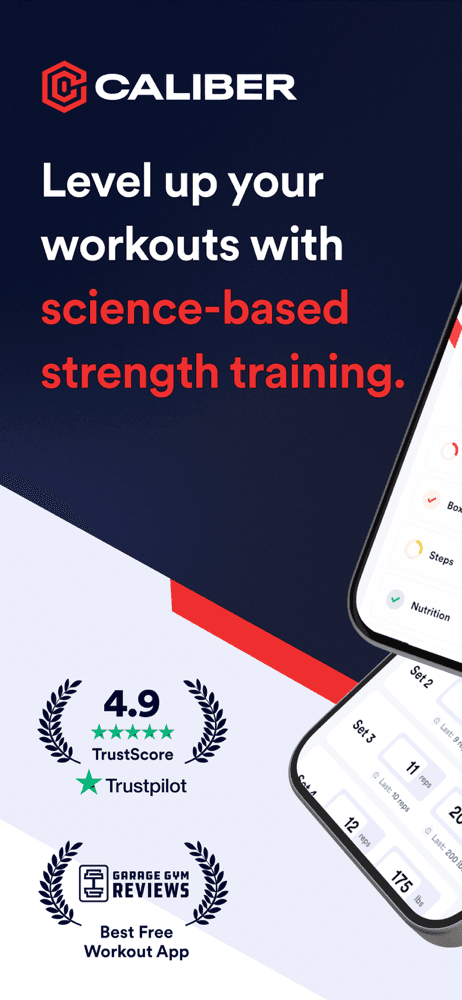
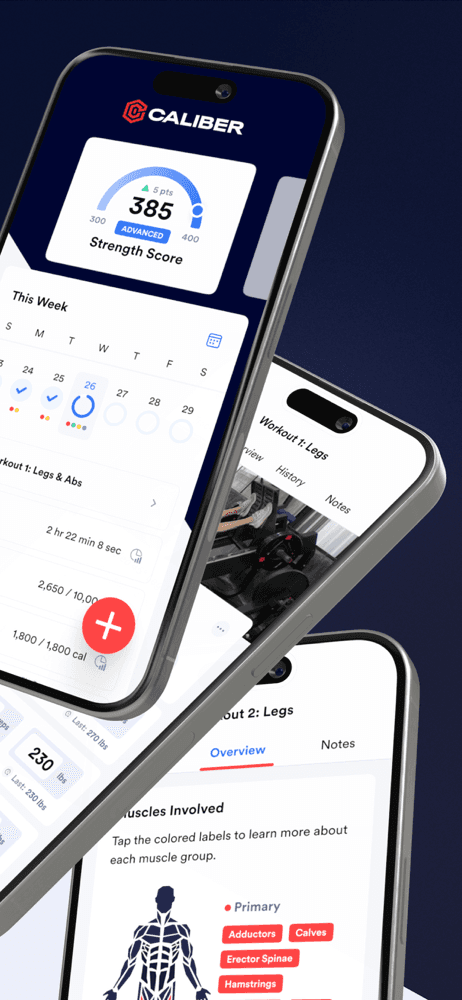
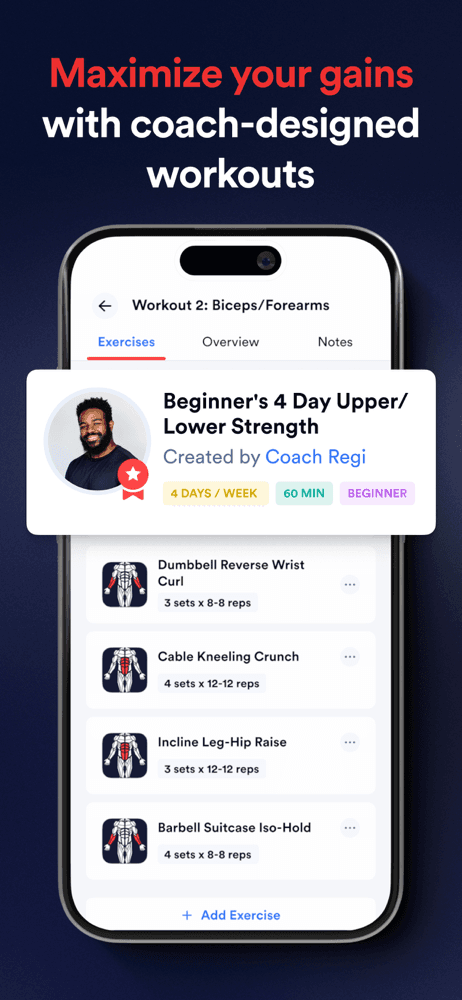
Caliber is the best strength training app with a coach because the Premium Coaching tier matches you with an elite-level personal trainer who designs your program, reviews progress weekly, and chats with you in-app. The 4.84 rating across 5,576 reviews comes from a smaller but high-engagement audience.
What sets Caliber apart is the integration of resistance training, cardio, nutrition, and habit formation in one platform. The free tier is genuinely usable — 600-plus exercises, unlimited workout creation, training with friends — and Caliber Plus at $19.99 monthly adds coach-designed plans and nutrition targets. Premium Coaching ($199+ monthly) brings real one-on-one trainers.
Use case: a lifter who has hit the limits of self-coaching and wants real expertise without paying for in-person training. Caliber's coaches handle progressive overload, deload timing, exercise selection for your goals, and form review via video.
The tradeoff is the coaching cost. At $199 to $250 monthly, Premium Coaching is the most expensive option in this list, though still cheaper than weekly in-person sessions. The free tier alone is good but not best-in-class against Strong or Hevy. For lifters who want a real coach in their pocket, Caliber is the strongest pick.
Pros
- Premium Coaching matches you with an elite personal trainer for plans
- Free tier includes 600-plus exercises and unlimited workout creation
- Combines resistance training, cardio, nutrition, and habit formation cleanly
Cons
- Premium Coaching at $199 to $250 monthly is steep budget commitment
- Free tier solid but not best-in-class against Strong or Hevy
- 8
 Get on App Store
#8GymBook ・ Strength TrainingBest Minimalist
Appwise GmbH
Workout Planner・Logger・Tracker
- Rating
- 4.8
- Reviews
- 2.4K
- Price
- Paid
- 90-day trend
- —
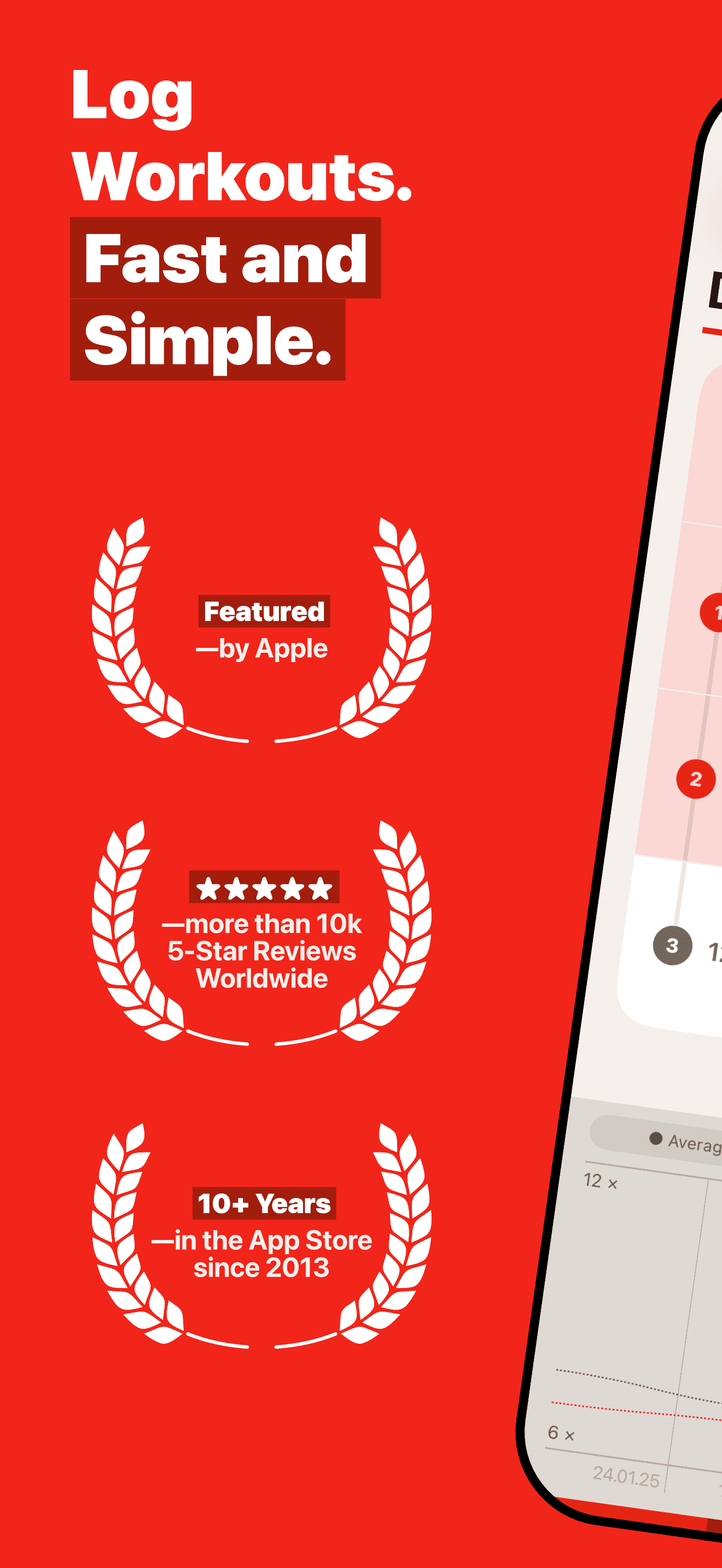
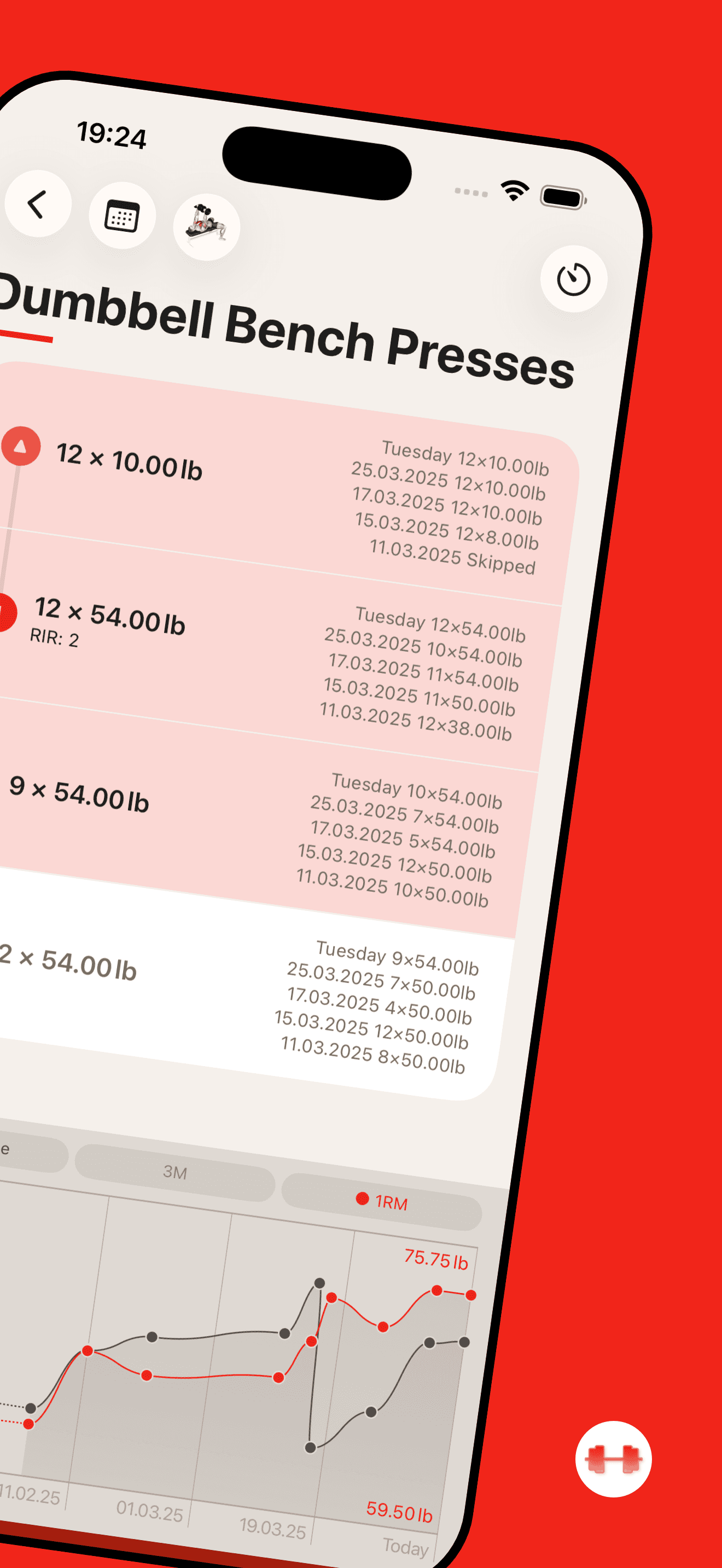
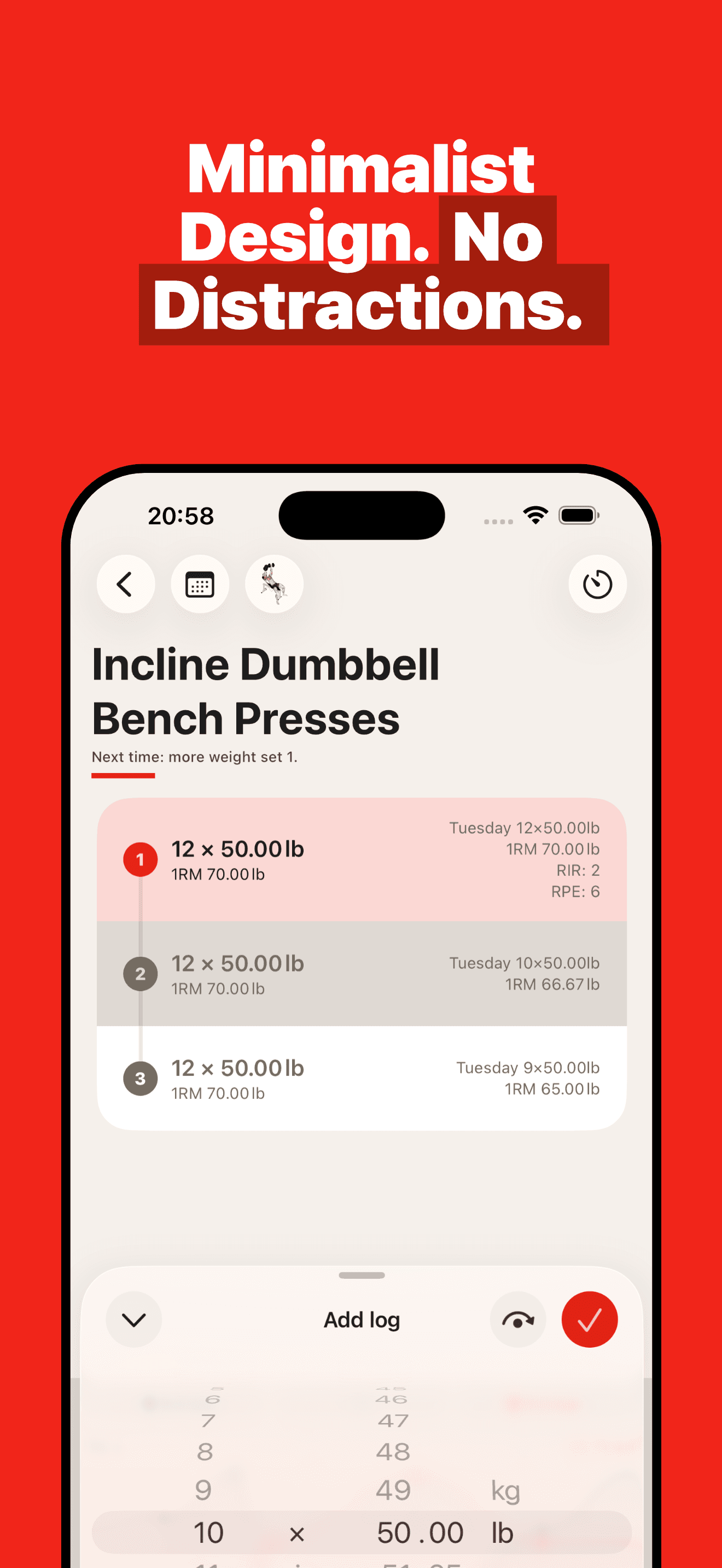
GymBook is the best minimalist strength training app for iPhone users who want a clean, native-feeling logger without the social or AI layer. The 4.79 rating across 2,353 reviews comes from a small but loyal audience of European and US lifters who prize design quality.
What sets GymBook apart is the interface. Built by an Austrian studio, the app feels like a modern iOS-native product — animated exercise images, clean muscle-group visualizations, and a beautifully laid-out set logger. The free tier covers core logging; subscription unlocks deeper analytics and unlimited custom exercises.
Use case: a lifter who already knows their program and wants the best-looking logger on iOS, who appreciates iCloud sync and Apple Health integration, and who doesn't want community feeds or AI suggestions cluttering the experience.
The tradeoff is feature breadth. GymBook's exercise library at 50-plus is smaller than Strong's curated set and far smaller than JEFIT's thousands. The Watch app and programming features also lag behind larger competitors. For users who prioritize visual polish and iOS-native feel, GymBook is the strongest small-developer pick.
Pros
- Beautifully designed native iOS interface from Austrian studio Appwise
- Animated exercise images and muscle-group visualizations enhance learning
- iCloud sync and Apple Health integration handle multi-device workflows
Cons
- Exercise library at 50-plus much smaller than Strong or JEFIT
- Watch app and programming features lag behind larger competitor apps
- 9
 Get on App Store
#9Gym Workout Planner & Gym LogBest for Beginners
Leap Health
Weight Lifting & Workout Log
- Rating
- 4.9
- Reviews
- 1.4K
- Price
- Paid
- 90-day trend
- —
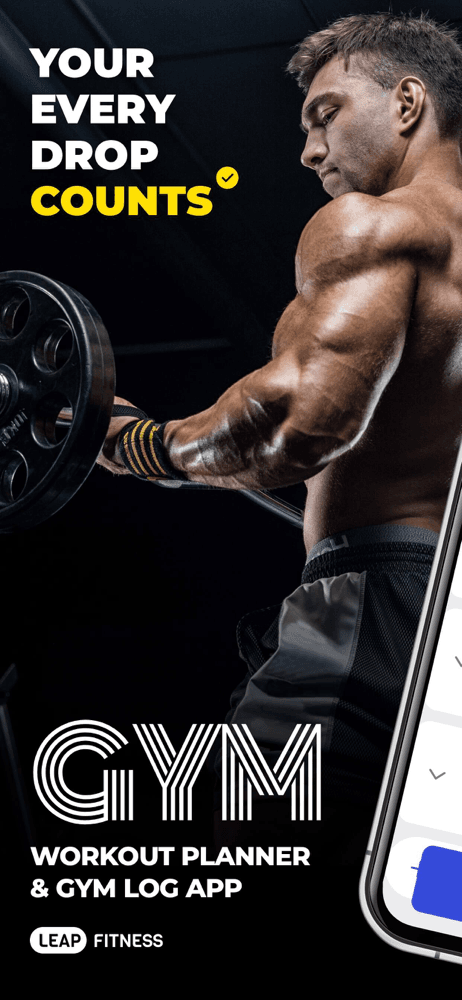
Gym Workout Planner & Gym Log from Leap Health is the best strength training app for beginners on a budget because it calculates 1RM, generates routines based on goal (gain muscle, endurance, max strength, get toned), and offers extensive guidance for users new to lifting. The 4.86 rating across 1,310 reviews comes from a smaller audience but reflects strong satisfaction in its target user.
What sets Gym Workout Planner apart is the goal-driven onboarding. Tell it your current level, available equipment, and what you want, and it builds a starting program with explicit progression rules. The educational content addresses common new-lifter questions — what's a 1RM, how to warm up, when to deload — that mainstream apps assume you already know.
Use case: a complete beginner who feels intimidated by the gym and wants a step-by-step app that says do this, then this, then this. Leap Health's broader app ecosystem (intermittent fasting tracker, fitness tools) also gives it credibility as a holistic-health developer.
The tradeoff is the smaller user base and shallower exercise library compared to Fitbod or JEFIT. Subscription pricing aligns with the category. For new lifters who want hand-holding through the first six months, Gym Workout Planner is a credible entry-level pick.
Pros
- Goal-driven onboarding builds beginner programs with explicit progression rules
- Educational content addresses common new-lifter questions clearly upfront
- Calculates 1RM and uses it as the foundation for routine recommendations
Cons
- Smaller exercise library than mainstream competitors limits intermediate users
- Newer entrant with less mature Apple Watch and analytics features


How we picked
Data sources: We pull live App Store metadata (rating, review count, version cadence, screenshots, developer) through the iTunes Search API and our own ranking history database, then layer in editorial review of each app's exercise library, programming logic, and Apple Watch support. Review themes for pros and cons come from sampling recent App Store reviews across rating buckets, including reviews mentioning real workout friction.
How we score: Each app is evaluated on exercise library depth and form-video quality, programming intelligence (AI generation, periodization, autoregulation), tracking ergonomics for in-gym use (one-tap set logging, plate calculators, rest timers, supersets), Apple Watch and HealthKit support, and signal strength from ratings.
Refresh cadence: We refresh metadata weekly and re-evaluate the ranked list at least quarterly, or sooner when a major version ships, programs are added, or pricing changes materially.
What we exclude: Apps with no rest timer (a deal-breaker in real gyms), apps that lock basic exercise logging behind paywalls, abandoned apps without an update in 12+ months, and apps that pull workouts from fitness influencers without disclosing methodology. We also exclude apps that promise muscle gain without the structural foundation of progressive overload programs.
What we don't do: We don't accept payment for placement, we don't claim any app substitutes for an in-person coach if you have specific injury or technique concerns, and we don't make medical claims. Consult a qualified trainer if you're returning from injury, have a back or shoulder issue, or are new enough to lifting that form risk is high.