



Best Sleep Tracker Apps for iPhone
By App Store Tracker Editorial · Updated — App Store ratings fetched to
The short version
The best sleep tracker app for iPhone in 2026 is BetterSleep — 390K U.S. ratings at 4.74 stars, a deep sound library, and a sleep tracker that doesn't require an Apple Watch. ShutEye is a close runner-up at 347K ratings and 4.77 stars with strong snore recording. AutoSleep wins for Apple Watch owners who want passive, accurate tracking with no subscription. Across these ten picks, the average rating is 4.66 stars on 1.46M combined U.S. ratings.
Jump to a pick↓
This is the working shortlist for tracking sleep on iPhone — with or without an Apple Watch. We pulled live U.S. App Store data — ratings, review counts, and recent reviews — for every pick, then read the critical reviews to find the failure modes. Among the dozens of sleep-tracking apps in the U.S. Health & Fitness category, these ten cover the meaningful product splits: passive Apple Watch tracking, microphone-based phone-only tracking, snore-recording specialists, and full sleep-coaching platforms. Four work without a watch. Two are one-time purchases or free with no recurring subscription. The rest are subscription apps with trials. We rank by tracking accuracy — flagged through review themes more than marketing claims — and by how usefully each app explains the data it gathers, because a sleep number you don't understand changes nothing.
Best Sleep Tracker Apps for iPhone compared
| App | Best for | Rating | Price | Last update |
|---|---|---|---|---|
| 1. BetterSleep: Relax and Sleep | Best Overall | 4.7 (390.8K) | Free · IAP | Oct 21, 2026 |
| 2. ShutEye®: Sleep Tracker, Sound | Best for Snoring | 4.8 (350.1K) | Free · IAP | Oct 23, 2026 |
| 3. SleepWatch - Top Sleep Tracker | Best for Power Users | 4.7 (328.4K) | Free · IAP | Oct 23, 2026 |
| 4. AutoSleep: Watch Sleep Tracker | Best Value | 4.7 (61.8K) | $9.99 | Sep 15, 2026 |
| 5. RISE: Sleep Tracker | Best for Energy | 4.7 (72K) | Free · IAP | Oct 22, 2026 |
| 6. SnoreLab : Record Your Snoring | Best for Diagnosis | 4.7 (57.5K) | Free · IAP | Oct 13, 2026 |
| 7. Pillow: Sleep Tracker | Best Cross-Device | 4.4 (95.8K) | Free · IAP | Oct 22, 2026 |
| 8. Sleep Cycle - Tracker & Sounds | Best Smart Alarm | 4.7 (30.8K) | Free · IAP | Oct 19, 2026 |
| 9. Sleep Tracker & Sound by Remly | Best Rising | 4.8 (19.9K) | Free | Jul 14, 2026 |
| 10. Sleepzy - Sleep Cycle Tracker | Best for Music | 4.3 (22.4K) | Free · IAP | Apr 15, 2025 |
US App Store ratings, prices and update dates from Apple.
- 1Get on App Store
#1BetterSleep: Relax and SleepBest Overall
Ipnos Software Inc.
Calm Sounds, Meditation Music
- Rating
- 4.7
- Reviews
- 390.8K
- Price
- Free · IAP
- Last update
- Oct 21, 2026
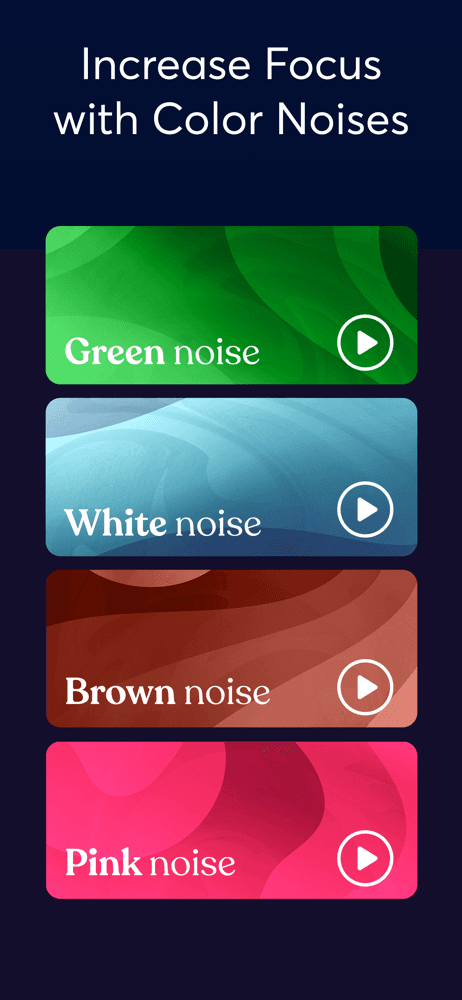
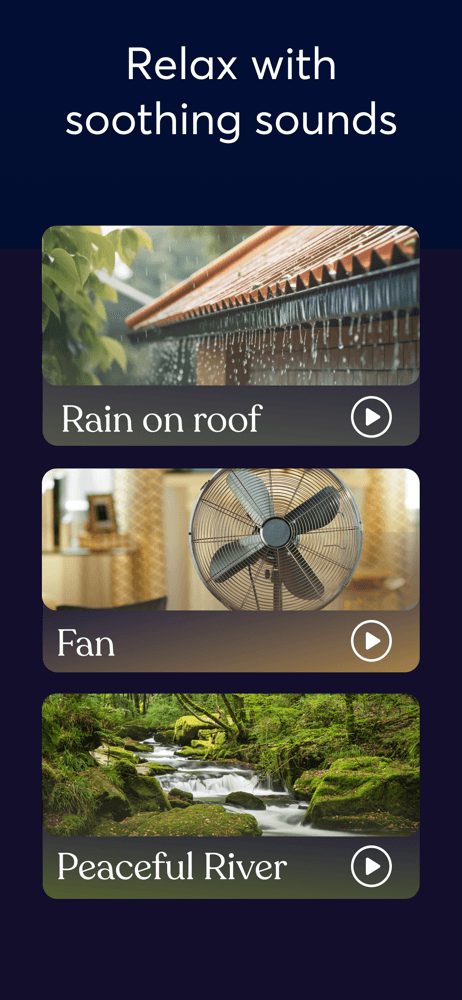
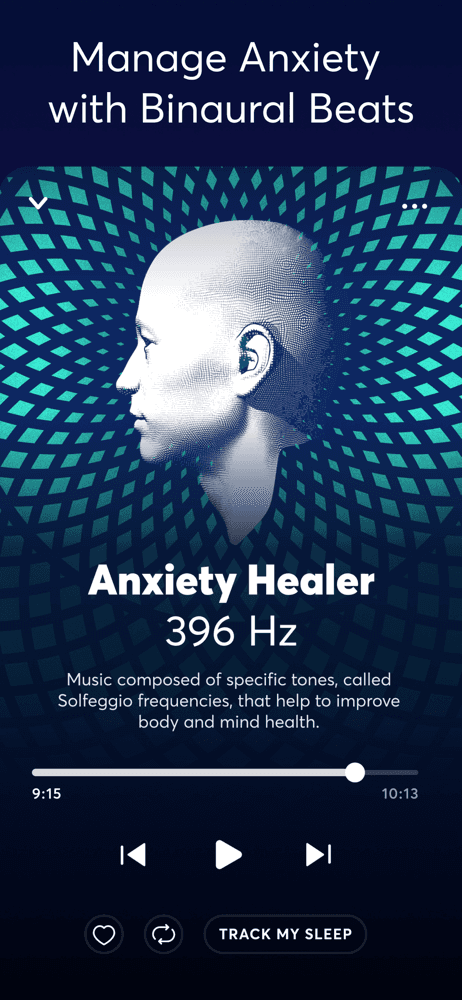
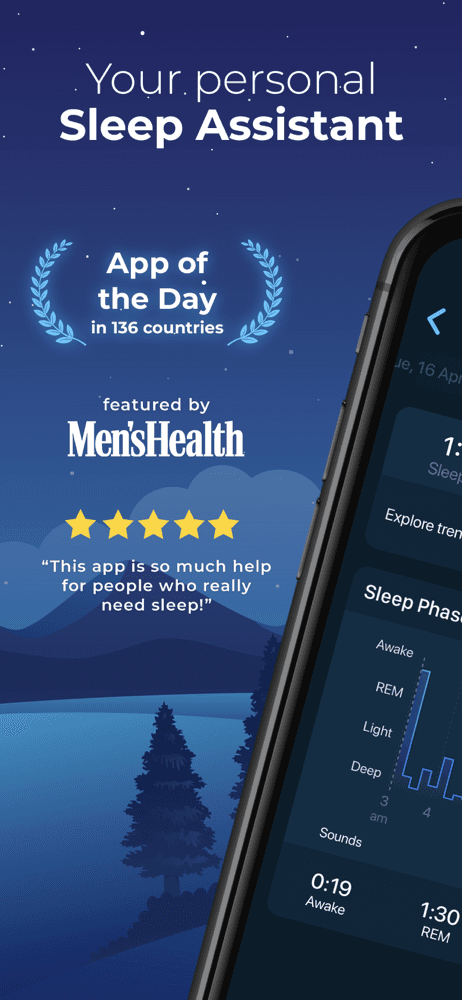
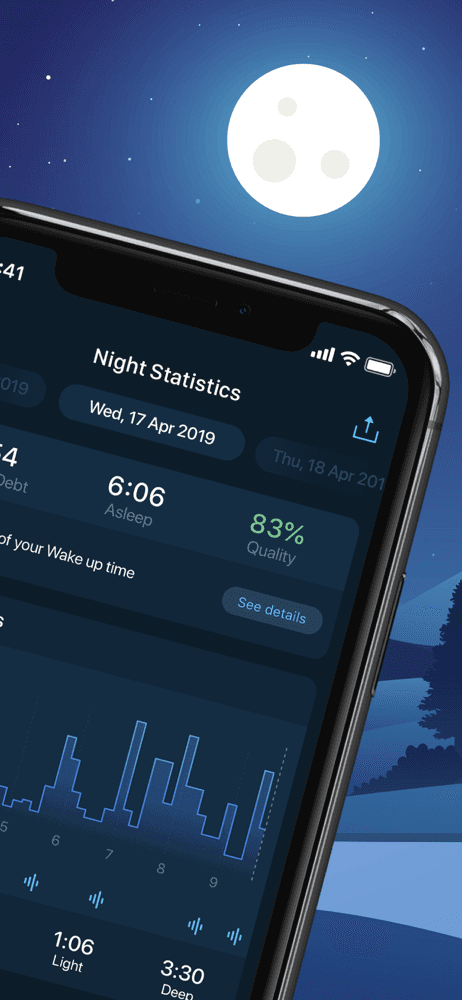
BetterSleep is the best overall sleep tracker app for iPhone because it does three things well in one app: tracks sleep, plays the sounds that help you fall asleep, and records snoring or sleep talk through the night. Apple has named it App of the Day more than 65 times, which is the App Store's editorial vote of confidence. The sound library covers nature sounds, white noise, and curated meditations, which means most users don't need a separate app for falling asleep. What sets it apart from ShutEye and Sleep Cycle is breadth — meditation content, sleep tracking, and recording all live under one subscription. Use case: you want to track sleep, listen to rain to fall asleep, and check whether you snored without juggling three apps. The tradeoff is reviewer complaints about the in-app audio player, which doesn't use iOS native controls — so you can't pause from the lock screen or AirPods. Subscription billing has also drawn complaints from international users charged before the trial ended; check your renewal date carefully.
Pros
- Sleep tracking, sound library, and snore recording bundled in one subscription
- Apple's App of the Day 65+ times signals consistent editorial confidence
- Works without an Apple Watch using iPhone microphone and motion sensors
Cons
- In-app audio player ignores iOS native controls and lock-screen pause
- International billing complaints around trial-end charges appearing before period ends
- 2Get on App Store
#2ShutEye®: Sleep Tracker, SoundBest for Snoring
Enerjoy Pte. Ltd.
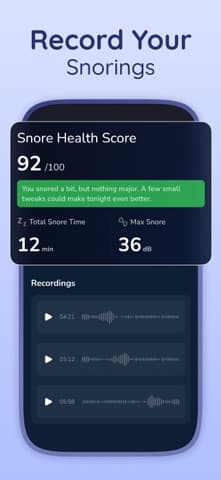
Snore & Sleeptalk Recorder
- Rating
- 4.8
- Reviews
- 350.1K
- Price
- Free · IAP
- Last update
- Oct 23, 2026
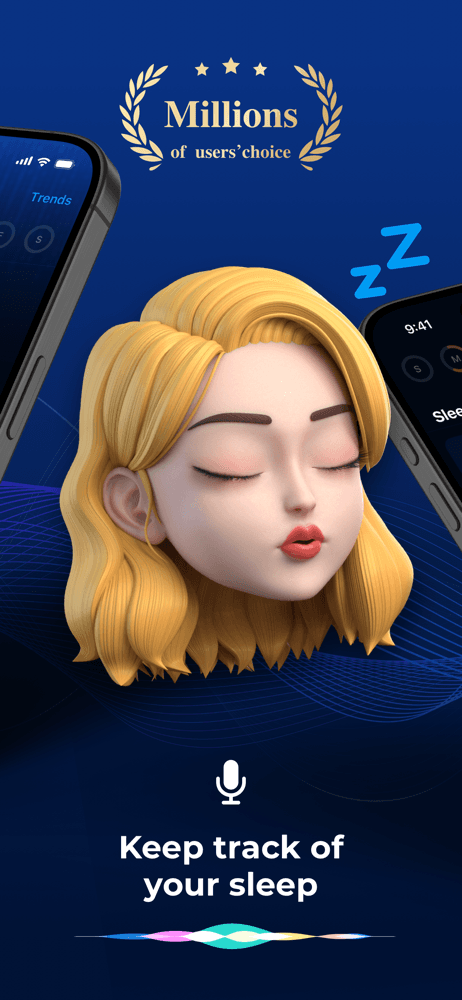
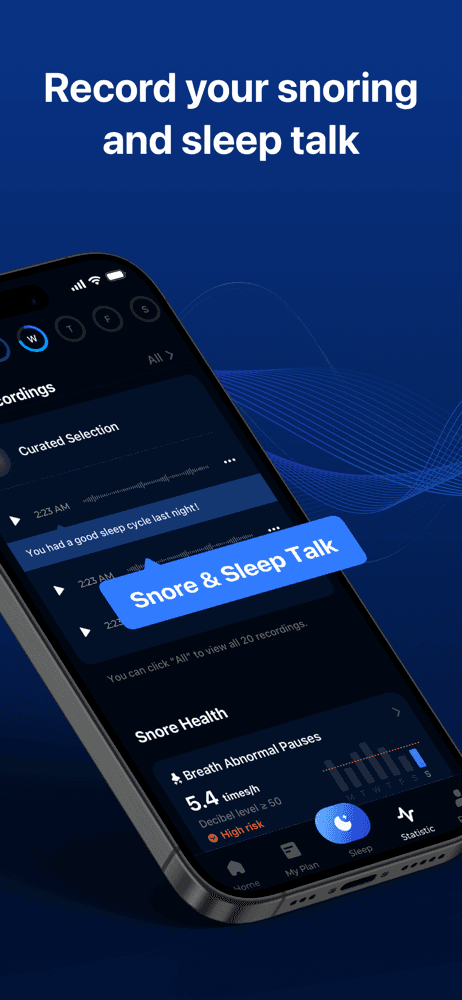
ShutEye is the best sleep tracker for snore recording because its core experience is built around overnight audio capture and the morning playback review. Where BetterSleep treats snore recording as a feature, ShutEye treats it as the headline. The Sleep Talk Recorder catches more than snoring — it picks up sleep talking, environmental noise, and breathing irregularities that may signal apnea. The 4.77-star rating across 347K U.S. ratings is among the highest in the category. What sets it apart is the morning recap: you wake up, see your sleep timeline, and can scrub through any recorded audio events. Use case: you suspect you snore, your partner has complained, and you want overnight evidence rather than asking someone to listen. The tradeoff is accuracy concerns — multiple reviewers report sleep duration estimates that disagreed sharply with how long they actually slept, especially around night wake-ups. The billing complaints common to subscription apps appear here too, particularly around trial-end charges.
Pros
- Snore and sleep-talk recording is the cleanest in the category
- Morning timeline with scrubbable audio events makes review actually usable
- 4.77-star rating across 347K U.S. ratings is among the highest here
Cons
- Sleep duration estimates disagree sharply with reality during night wake-ups
- Trial-end charging complaints from reviewers who canceled before period elapsed
- Rating
- 4.7
- Reviews
- 328.4K
- Price
- Free · IAP
- Last update
- Oct 23, 2026
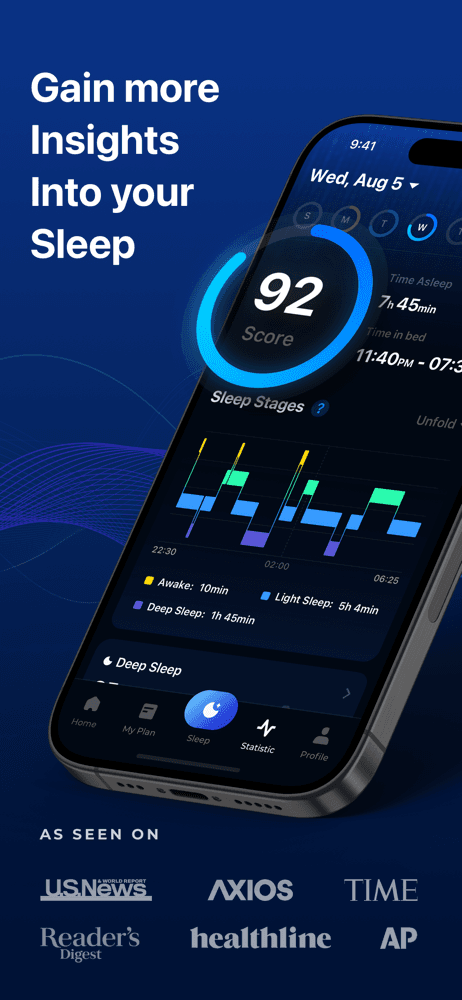
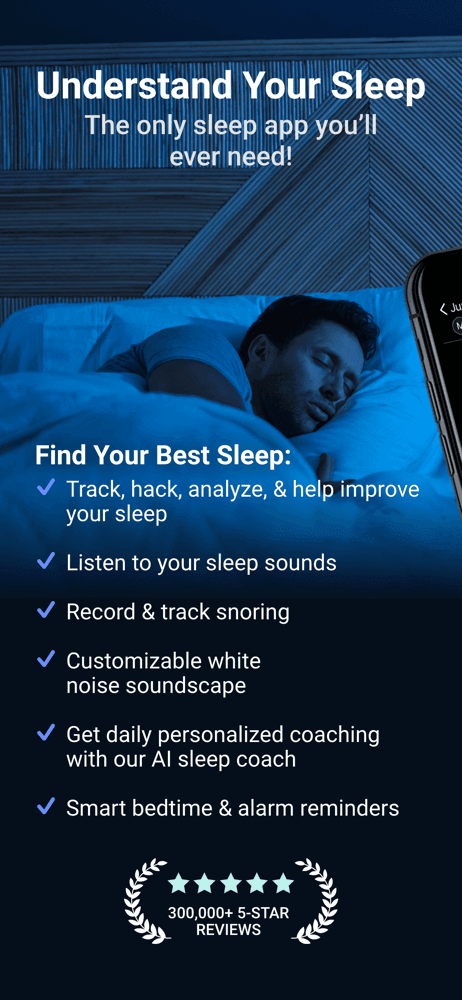
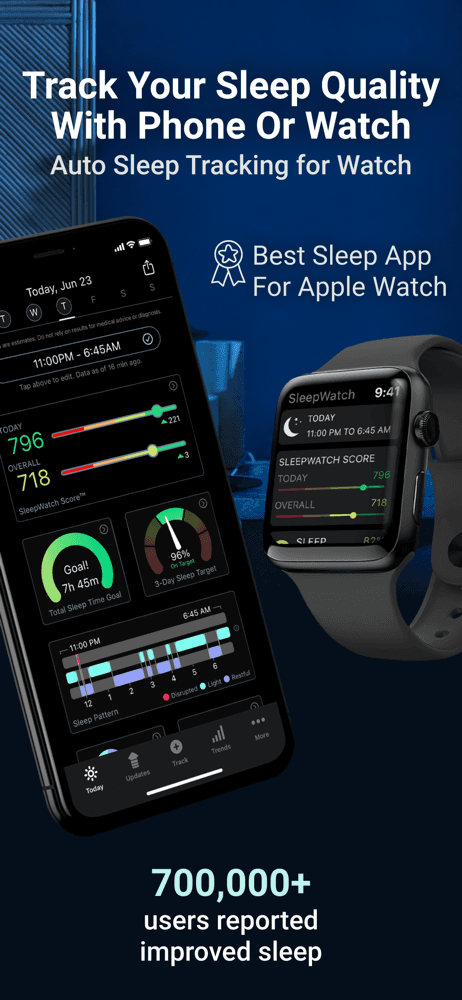
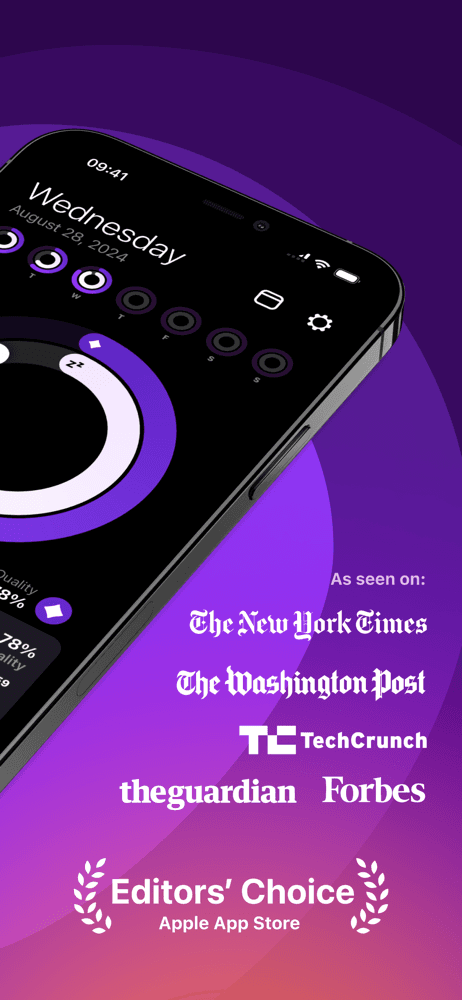
SleepWatch is the best sleep tracker for Apple Watch users who want a coaching layer on top of accurate tracking. Made by Bodymatter, SleepWatch combines Apple Watch sleep data with an AI-driven analysis that tracks sleeping heart rate, sleep rhythm, and recovery trends across weeks. The dashboards are more sophisticated than AutoSleep's — closer to what Whoop or Oura show in dedicated apps — without requiring a separate ring or band. Use case: you wear an Apple Watch overnight, you want the data analyzed rather than just presented, and you're willing to pay a subscription for the analysis layer. The 4.65-star rating across 328K U.S. ratings reflects strong satisfaction with reservations — typical of analysis-heavy apps where some users want simpler outputs. The tradeoff is the watch requirement (the app is far less useful without one) and the subscription. AutoSleep covers similar ground without a recurring charge, so SleepWatch's edge is the coaching content and trend analysis depth.
Pros
- AI-driven coaching layer turns Apple Watch data into multi-week trend analysis
- Tracks sleeping heart rate and recovery rhythm at Whoop or Oura sophistication
- Dashboards are deeper than AutoSleep without requiring a separate ring
Cons
- Requires Apple Watch — significantly less useful for iPhone-only users
- Subscription cost on top of watch hardware investment narrows the audience
- 4
 Get on App Store
#4AutoSleep: Watch Sleep TrackerBest Value
TANTSISSA HOLDINGS PTY LTD
Sleep Cycle Monitor & Alarm
- Rating
- 4.7
- Reviews
- 61.8K
- Price
- $9.99
- Last update
- Sep 15, 2026
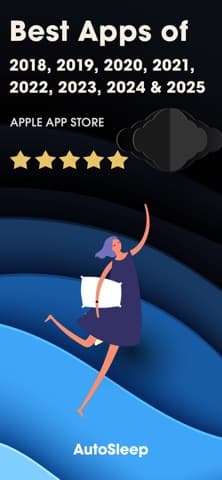
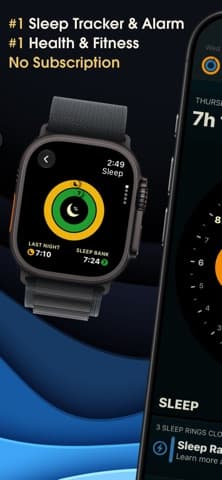
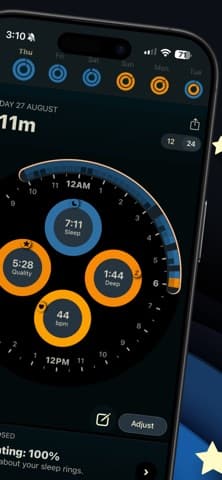
AutoSleep is the best sleep tracker for Apple Watch users who don't want a subscription. The premise is straightforward: wear your Apple Watch to bed, AutoSleep tracks sleep automatically, you wake up to a complete analysis. No buttons to press, no manual logging, no subscription, no in-app purchases. Full integration with Apple's native Sleep Stages means the data lines up with everything else in the Health app. The 4.71-star rating across 61K U.S. ratings is strong for a paid app with no marketing spend behind it. What sets it apart is the privacy posture — zero analytics, zero advertising plugins, zero third-party SDKs, zero data upload. Use case: you have an Apple Watch, you sleep with it on, and you want a sleep tracker that doesn't sell your data or nag you to subscribe. The tradeoff is feature scope. AutoSleep is a focused tracker — it doesn't include sounds, meditations, or coaching. If you want a sleep app to also play rainstorms, you'll need a second app.
Pros
- No subscription, no in-app purchases — fully owned with a one-time payment
- Full Apple Sleep Stages integration so data aligns with native Health app
- Zero analytics, zero advertising SDKs, zero third-party data uploads
Cons
- Requires Apple Watch — useless for iPhone-only sleep tracking setups
- Focused tracker only — no sounds, meditations, or sleep-coaching content
- Rating
- 4.7
- Reviews
- 72K
- Price
- Free · IAP
- Last update
- Oct 22, 2026
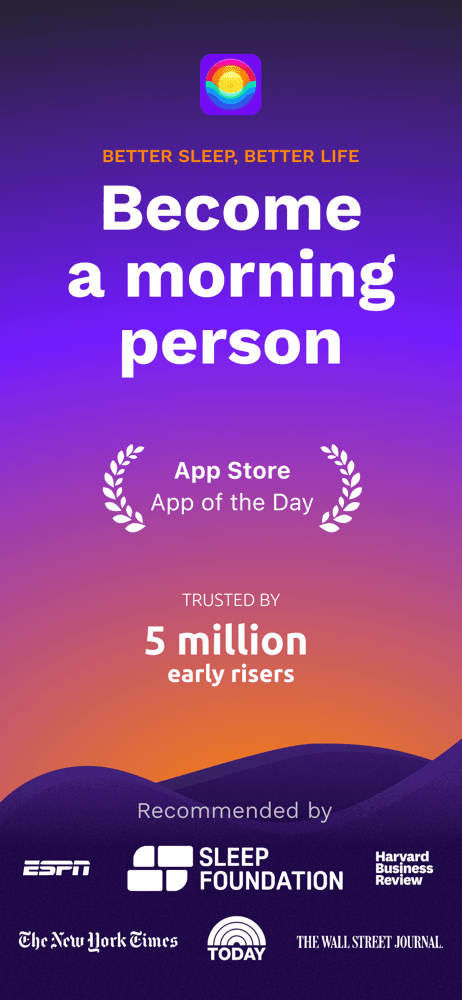
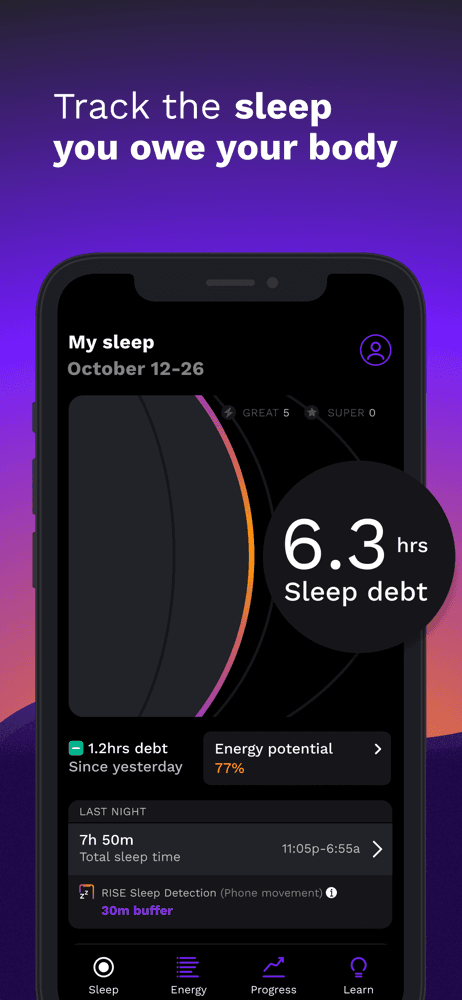
RISE is the best sleep tracker for users who care about daytime energy more than overnight stage breakdowns. The differentiator is sleep debt and energy peak prediction — RISE estimates how rested you'll be at each hour of the day based on the last 14 days of sleep, which is more useful for planning than knowing you got 22% REM last night. The 4.71-star rating across 57K U.S. ratings is solid; the app is recommended by the Sleep Foundation and used by NFL, MLB, and NBA teams. Use case: you're a knowledge worker scheduling meetings around peak focus windows, or an athlete planning training intensity around recovery — RISE turns sleep into a daily-energy forecast. The tradeoff is the subscription cost and accuracy concerns over time. Reviewers report that after several months the value can feel thin — the app tells you what you'd expect (you're tired because you slept five hours), and the smart alarm has been flagged as missing wake times in recent reviews after updates.
Pros
- Sleep debt and hourly energy forecast turn raw data into actionable scheduling
- Recommended by the Sleep Foundation and used by NFL, MLB, and NBA teams
- Works without an Apple Watch using iPhone motion-sensor tracking
Cons
- Smart alarm has missed wake times in recent reviews following app updates
- Value can feel thin after several months once daily-energy patterns are familiar
 Free · IAPSee full data on RISE: Sleep Tracker →
- 6
 Get on App Store
#6SnoreLab : Record Your SnoringBest for Diagnosis
Reviva Softworks Ltd
Snore Recorder & Sleep Tracker
- Rating
- 4.7
- Reviews
- 57.5K
- Price
- Free · IAP
- Last update
- Oct 13, 2026
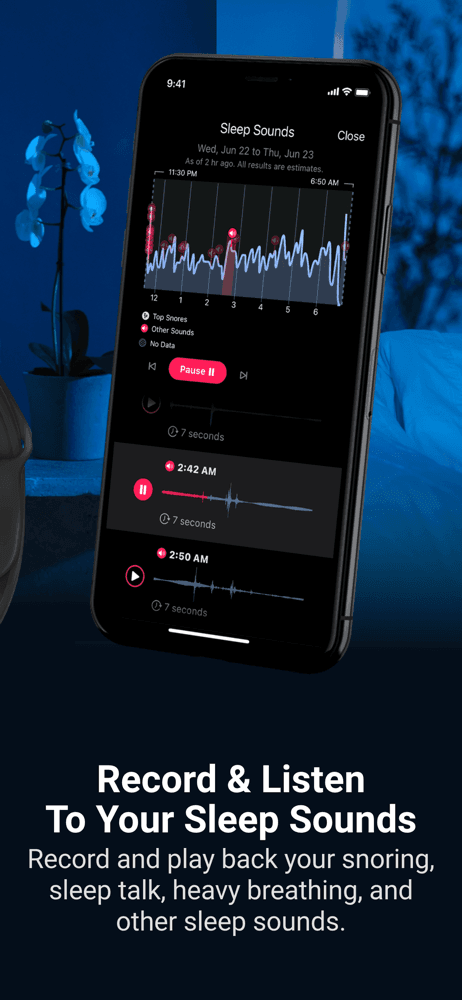
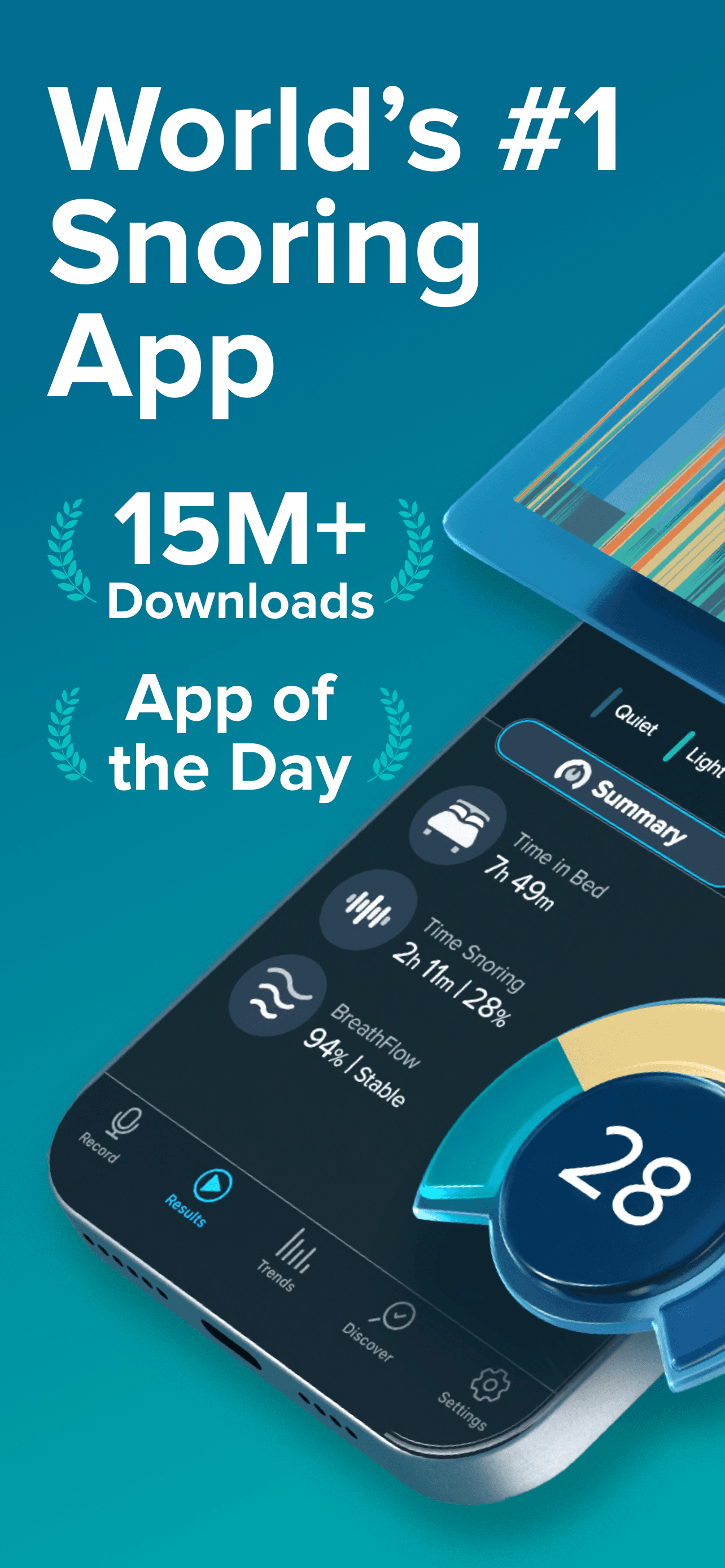
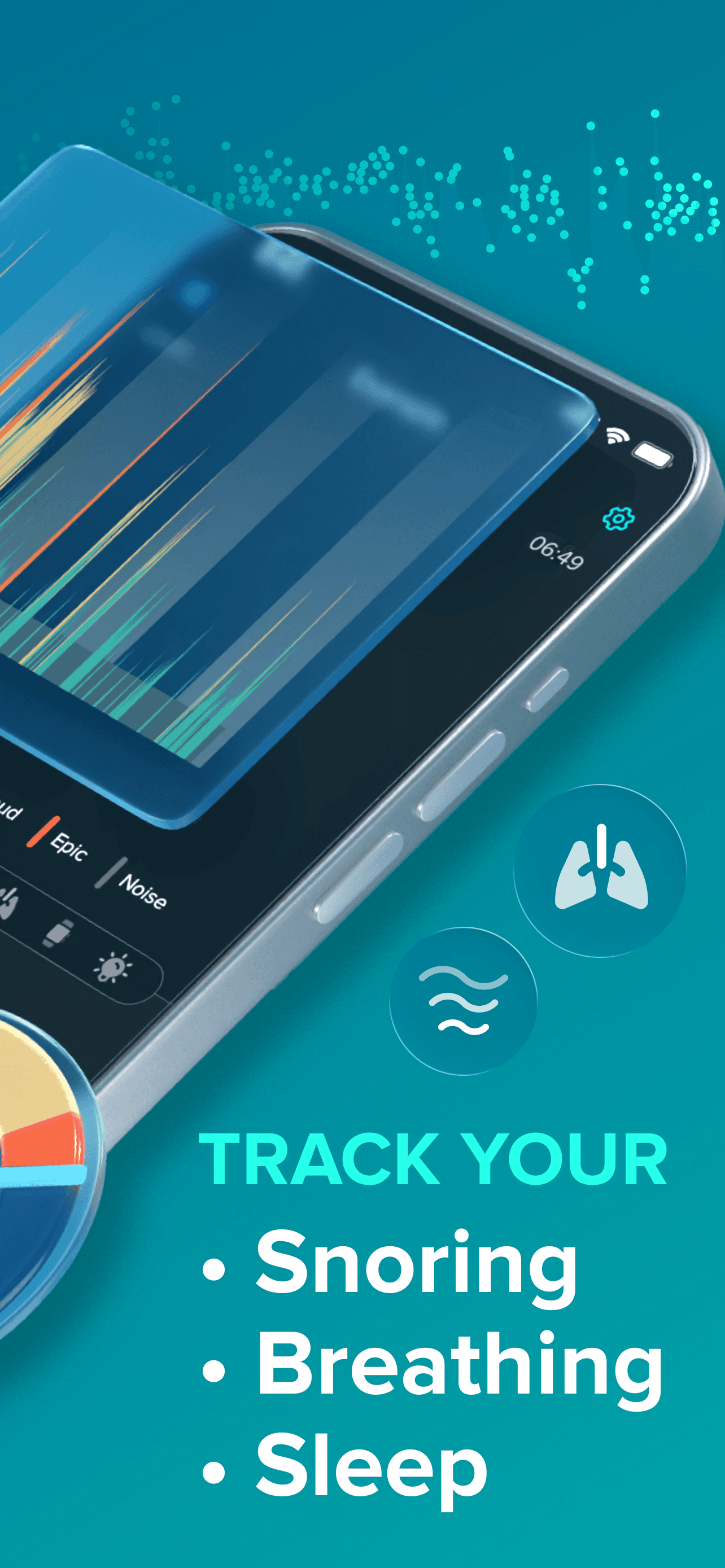
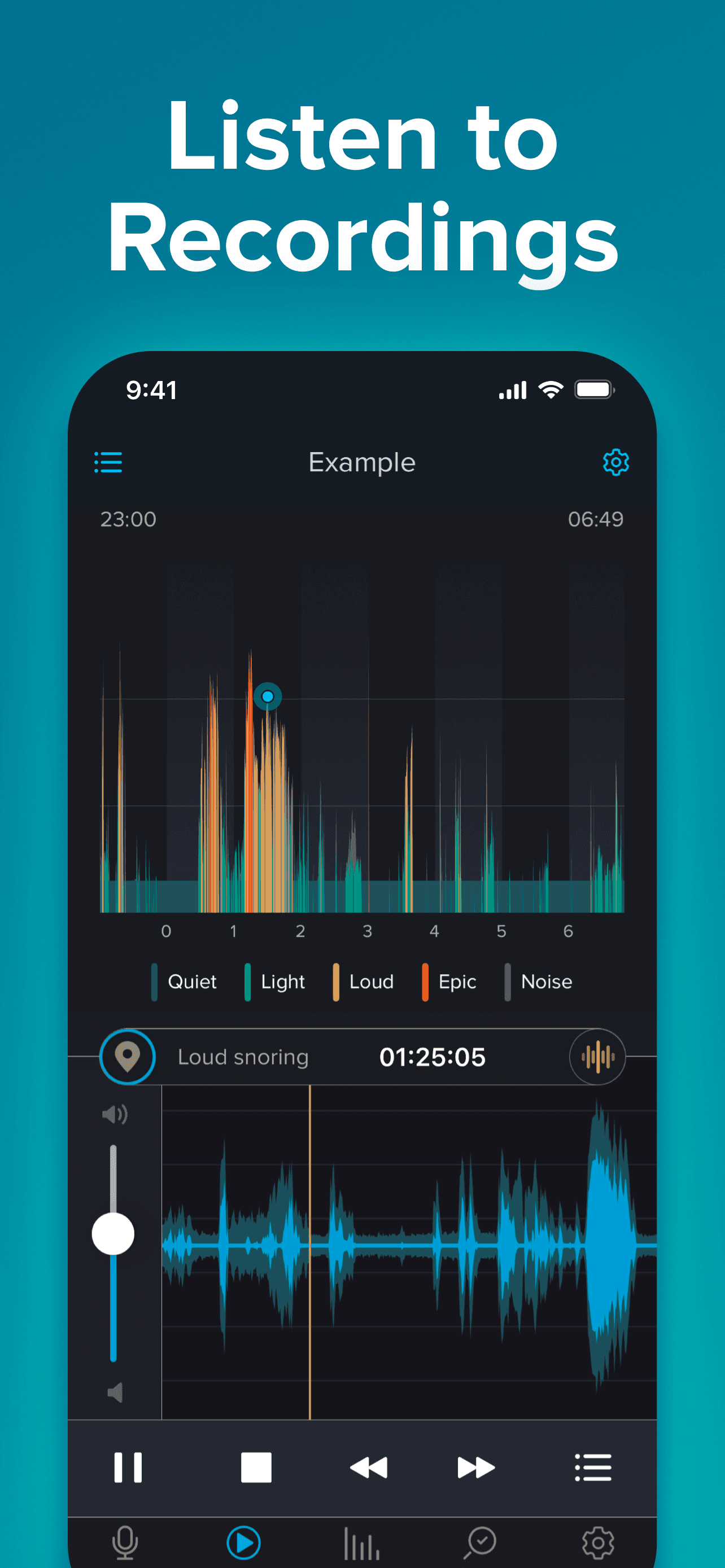
SnoreLab is the best sleep tracker for diagnosing snoring patterns because that's its singular focus. Place your phone next to your bed, SnoreLab records audio through the night and produces a Snore Score plus a playback of the loudest segments. Over 50 million nights monitored across the app's life — a deep dataset for tuning the snore-detection algorithm. The 4.71-star rating across 56K U.S. ratings reflects a focused, useful product. Use case: you've been told you snore, you want to confirm it and measure it, and you want to test interventions (nasal strips, mouth tape, side-sleeping) by comparing Snore Scores across nights. The tradeoff is privacy and trust. One reviewer claims SnoreLab listens beyond sleep tracking and sells the data — the developer disputes this, and Apple's privacy labels are publicly available. Read the disclosures carefully if always-on microphone access concerns you. SnoreLab also doesn't track sleep stages — it's a snore tool first, sleep tracker second.
Pros
- Snore detection algorithm tuned on 50 million tracked nights of audio data
- Morning playback of loudest snore segments lets you compare interventions night-to-night
- Single-purpose focus makes the app simpler to use than full sleep platforms
Cons
- Reviewer privacy claims about microphone use beyond sleep tracking — verify disclosures
- Doesn't track sleep stages — snore tool first, full sleep tracker second
- 7
 Get on App Store
#7Pillow: Sleep TrackerBest Cross-Device
Neybox Digital Ltd.
Smart Alarm & Snore Recorder
- Rating
- 4.4
- Reviews
- 95.8K
- Price
- Free · IAP
- Last update
- Oct 22, 2026
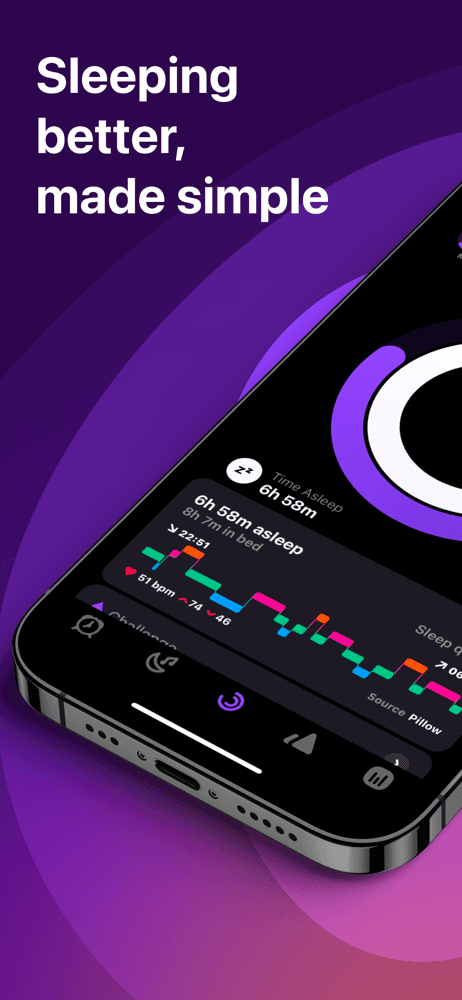
Pillow is the best sleep tracker for users who want flexibility across iPhone, iPad, and Apple Watch. It works without a watch (using iPhone or iPad sensors placed on the mattress) and gets significantly more accurate when paired with an Apple Watch. The smart alarm is the headline feature — wake at the lightest possible sleep stage within a defined window. Apple Health integration runs deeper than most apps here. Use case: you switch between sleeping setups, sometimes with the watch and sometimes without, and want one app that handles both. The 4.37-star rating across 95K U.S. ratings is the lowest top-tier sleep app on this list, and the reviews tell why. Long-time users report accuracy degrading over multi-year use, with some calling the data "made up" after testing the app while not actually sleeping. Subscription complaints are also common — at around £5/month, several reviewers feel the recurring cost outweighs what's effectively a sleep dashboard.
Pros
- Works across iPhone, iPad, and Apple Watch with one unified data store
- Smart alarm wakes you at lightest sleep stage within a defined window
- Apple Health integration runs deeper than most sleep apps on this list
Cons
- Long-time users report tracking accuracy degrading after multi-year app use
- Roughly £5/month subscription feels expensive for what is a sleep dashboard
 Free · IAPSee full data on Pillow: Sleep Tracker →
 - 8
 Get on App Store
#8Sleep Cycle - Tracker & SoundsBest Smart Alarm
Sleep Cycle AB
Alarm Clock and Tracking App
- Rating
- 4.7
- Reviews
- 30.8K
- Price
- Free · IAP
- Last update
- Oct 19, 2026
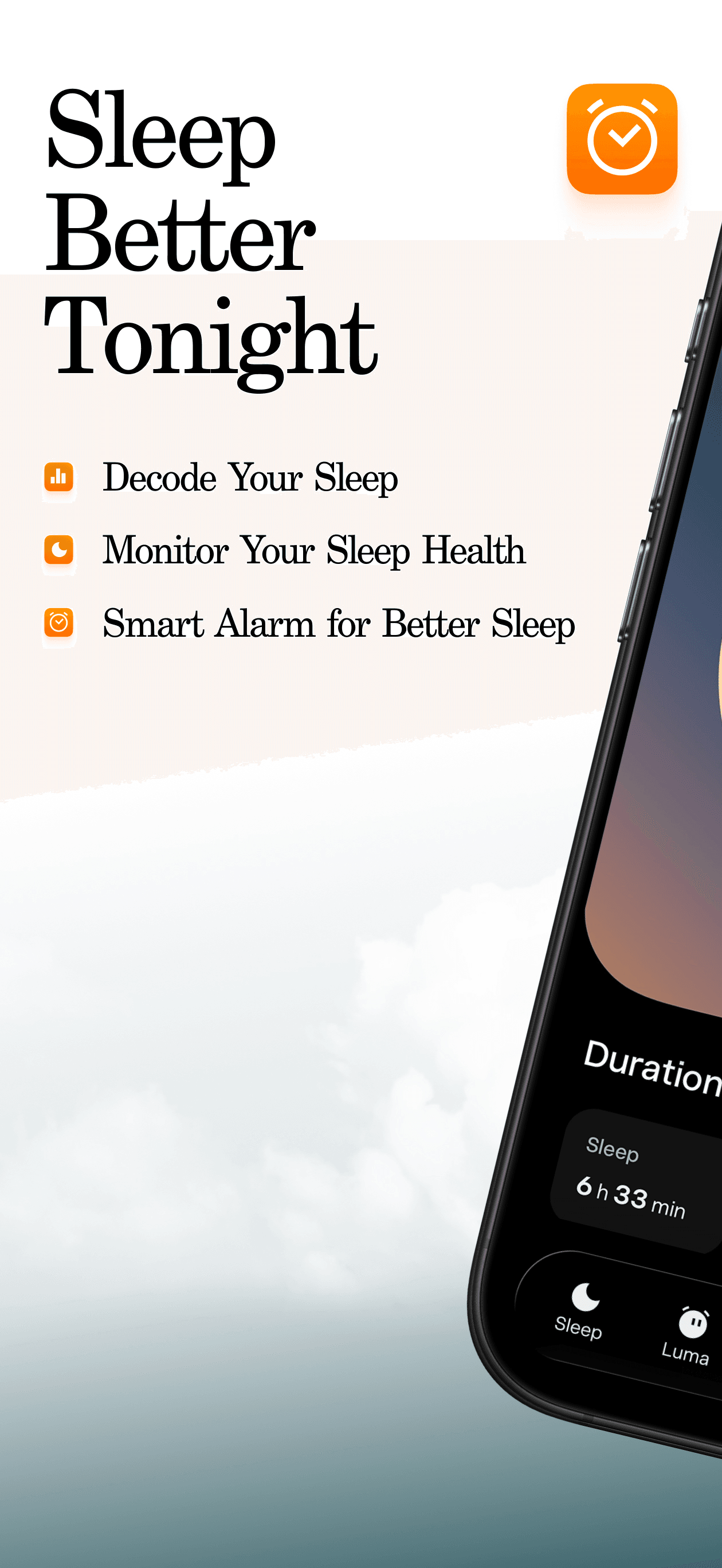
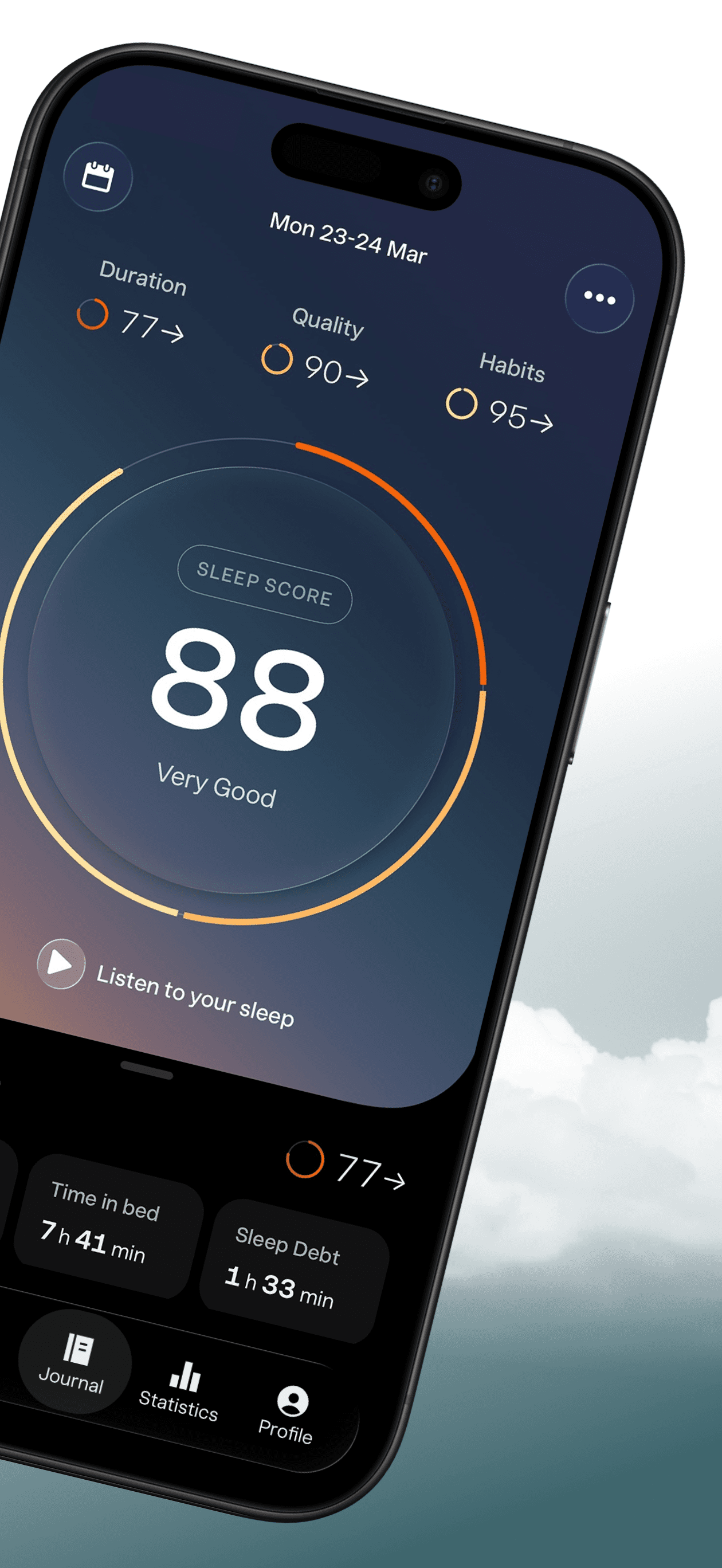
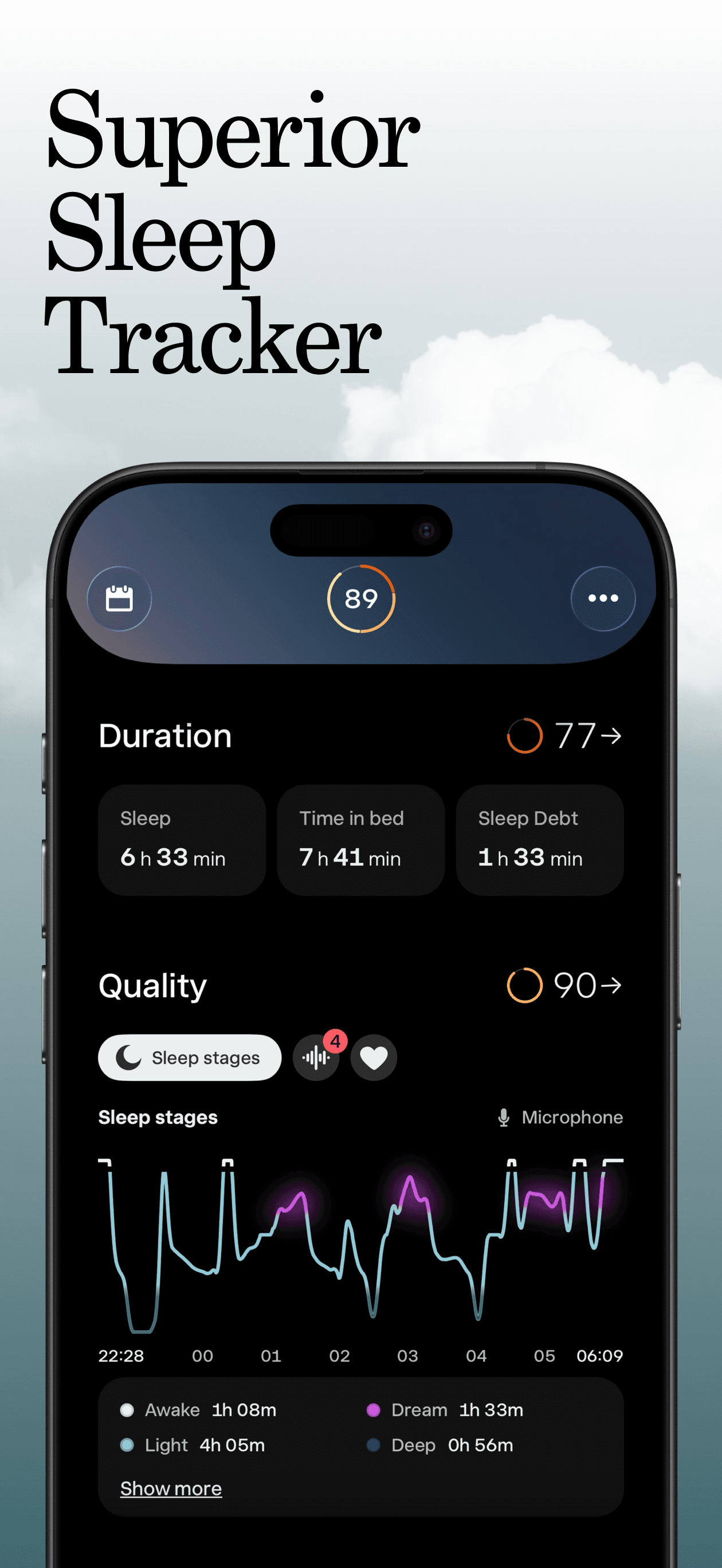
Sleep Cycle is the best sleep tracker for users whose primary need is a smart alarm. The app pioneered the genre — wake during the lightest sleep phase within a 30-minute window so you start the day less groggy. Over 40 million downloads, sound-based tracking that doesn't require an Apple Watch, and an AI coaching layer added in recent updates. The 4.67-star rating across 23K U.S. ratings reflects a mature product with a loyal base. Use case: you wake up groggy regardless of how long you sleep, and you want an alarm that times itself to your sleep cycle instead of a fixed clock. The tradeoff is the subscription model and aggressive trial flow. Multiple international reviewers report being forced into a 7-day free trial just to access the app, and long-time customers have complained about features they previously paid for being moved behind new subscriptions. The smart-alarm core is excellent; the monetization layer creates friction.
Pros
- Smart alarm pioneer with 14+ years of algorithm tuning on sleep-cycle data
- Works without an Apple Watch using sound-based sleep detection
- AI coaching layer in recent updates adds personalized improvement suggestions
Cons
- Forces users into a 7-day free trial just to access the app interface
- Features previously included have been moved behind new subscription tiers
- 9
 Get on App Store
#9Sleep Tracker & Sound by RemlyBest Rising
DEEP FLOW SOFTWARE SERVICES - FZCO
Snore Recorder & White Noise
- Rating
- 4.8
- Reviews
- 19.9K
- Price
- Free
- Last update
- Jul 14, 2026
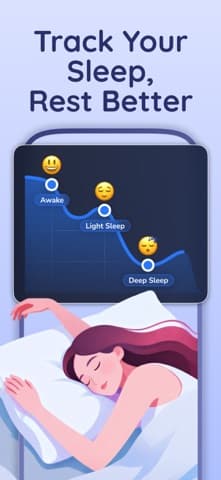
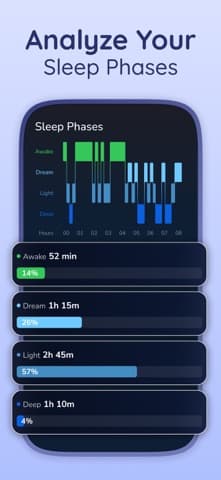
Sleep Tracker & Sound by Remly is the best rising entry in the category because it bundles sound therapy and sleep tracking with a focus on anxiety-related sleep issues. Reviewers describe using it to reduce nighttime waking from anxiety and to fall asleep faster when the mind is racing. It's smaller and newer than the established names on this list, which means rougher edges but also a clearer focus on the user it's built for. Use case: your sleep problem is primarily anxiety-driven, you've tried generic sleep trackers and found them too data-focused, and you want an app that pairs calming audio with tracking. The tradeoff is connectivity. Multiple reviewers note Remly doesn't sync with Apple Health or other health apps, so the data lives in isolation. Pricing complaints around the subscription are common too — reviewers describe the app as fine but not worth what it costs given the lack of integrations. Worth watching as the product matures.
Pros
- Anxiety-focused audio content reduces nighttime waking for racing-mind sleepers
- Bundles sound therapy and tracking with a single user audience clearly in mind
- Niche focus shows in the testimonial-style reviews around panic and stress sleep
Cons
- No Apple Health sync — data lives in isolation from your broader health record
- Subscription pricing feels steep given the lack of integrations or feature depth
- 10
 Get on App Store
#10Sleepzy - Sleep Cycle TrackerBest for Music
Mosaic S.r.l.
Alarm Clock & Snore Recorder
- Rating
- 4.3
- Reviews
- 22.4K
- Price
- Free · IAP
- Last update
- Apr 15, 2025
Sleepzy is the best sleep tracker for users who want a smart alarm with Apple Music integration. The differentiator is waking up to your own music chosen from Apple Music, timed to your lightest sleep stage. Sleep debt notifications, sleep cycle analysis, and snore recording round out the feature set. The app sits between Sleep Cycle (smart alarm, mature) and ShutEye (snore-focused) without quite leading on either axis. Use case: you want the smart-alarm benefit of Sleep Cycle but you specifically care about waking to your own music rather than the app's generic chimes, and you want a sleep-debt indicator to flag when you're underslept. The tradeoff is positioning. Sleepzy lacks a standout feature that distinguishes it from larger competitors, and the rating data is thin enough that we have lower confidence in long-term reliability than the established names on this list. It's a credible pick if Apple Music alarm integration is your specific must-have.
Pros
- Wake to your own Apple Music tracks timed to lightest sleep stage automatically
- Sleep debt notifications surface chronic undersleeping patterns over multiple weeks
- Snore recording bundled with smart alarm functionality in one subscription
Cons
- Doesn't lead on any single feature compared to Sleep Cycle or ShutEye
- Smaller user base means less confidence in long-term reliability and update cadence

How we picked
### Data sources U.S. App Store ratings, review counts, and review text come from our daily sync. Numbers on this page reflect the most recent snapshot — refreshed weekly. Apple Watch integration claims and Apple Health sync behavior are verified against current App Store listings and recent reviewer reports.
### How we score We weight five signals: (1) U.S. rating count as a proxy for retention, (2) average star rating, (3) tracking-accuracy themes in recent reviews (negative reviews calling out wildly off sleep durations or missing wake events get heavy weight), (4) whether the app requires an Apple Watch or works on iPhone-only, and (5) clarity of the data presented — apps that show you a sleep score without explaining the components score lower.
### Refresh cadence The shortlist is reviewed monthly. Apps drop off if recent reviews show a pattern of declining tracking accuracy after an update, or if billing-related negative reviews spike. New entrants need at least 10,000 U.S. ratings and twelve months in the top-200 of Health & Fitness.
### What we exclude Apps with under 10,000 U.S. ratings (signal too thin for a category where accuracy varies), pure sleep-sound apps without tracking, and apps that require external hardware like rings or mattress sensors (the list is iPhone and Apple Watch only).
### What we don't do We don't take affiliate commissions on subscriptions. We don't accept paid placement. If an app's accuracy degrades after a major update — a recurring pattern in this category — we re-rank within the week rather than waiting for the monthly cycle.