



Best Pregnancy Apps for iPhone
By App Store Tracker Editorial · Updated — live App Store data verified
The short version
The best pregnancy app for iPhone in 2026 is Flo Cycle & Period Tracker — its pregnancy mode extends the same prediction engine that earned a 4.75 rating across 1.85 million reviews, with week-by-week updates and postpartum support. Runner-up BabyCenter delivers the most polished daily content for first-time moms. Among the 8 pregnancy apps we evaluated, picks span all-in-one trackers, partner-friendly dad guides, and AI wellness coaches. Always work with your OB-GYN — these apps support, not replace.
Jump to a pick↓
We ranked iPhone pregnancy apps on five criteria: trimester-by-trimester content quality, accuracy of due-date and milestone tracking, contraction-timer and labor-prep tools, postpartum support including mental health, and review consensus from the App Store. We gave extra weight to apps reviewed by OB-GYNs or built on medical content, and we penalized apps that promise health outcomes without disclaimers. Among the 8 pregnancy apps in this guide, picks span all-in-one cycle-to-postpartum platforms (Flo, BabyCenter), wellness coaching (Baby2Body), partner support (Daddy Up), name discovery (Baby Names by BabyCenter), and specialized tools like the Pregnancy Test Checker. Ratings range from 4.54 to 4.89. Use these to track, learn, and feel connected — and keep your OB-GYN in the loop.
- Rating
- 4.8
- Reviews
- 1.9M
- Price
- Paid
- 90-day trend
- —
Flo Cycle & Period Tracker is the best overall pregnancy app for iPhone because it carries you from trying-to-conceive through pregnancy, delivery, and postpartum recovery inside one continuous platform. The 4.75 rating across 1,850,971 reviews makes it the most-vetted reproductive-health app on the App Store, and that scale matters when you're trying to find a symptom thread someone else has shared.
What sets Flo apart in pregnancy mode is the seamless transition. The cycle-tracking data you've already logged informs gestational age estimates, and the same content engine that delivers period education now serves week-by-week pregnancy updates, symptom guides, and labor-prep content. Anonymous community groups by due-date month are active and well-moderated.
Use case: a 30-something who used Flo for cycle tracking, sees a positive test, and wants to continue with the app they already trust. Flo's broad medical advisory board and millions-strong user community give you both clinical credibility and peer support.
The tradeoff is the paywall. Flo Premium unlocks the full pregnancy content library at $79.99 annually; the free tier shows the timeline but gates deeper articles, AI insights, and labor-prep tools. Some reviewers also note privacy concerns post-2022 — Flo's Anonymous Mode helps but isn't perfect. For users who want a single app from cycle to baby, Flo is the strongest pick.
Pros
- Seamless transition from cycle tracking to pregnancy to postpartum modes
- Most-vetted reproductive health platform with 1.85 million reviews to draw on
- Active anonymous community groups organized by due-date month
Cons
- Premium subscription required to unlock full pregnancy content library
- Privacy posture continues to face scrutiny despite Anonymous Mode improvements
- 2Get on App Store
#2BabyCenter Pregnancy TrackerBest for First-Time Moms
Everyday Health, Inc.
Track Baby Daily & Get Rewards
- Rating
- 4.9
- Reviews
- 293.3K
- Price
- Free
- 90-day trend
- —
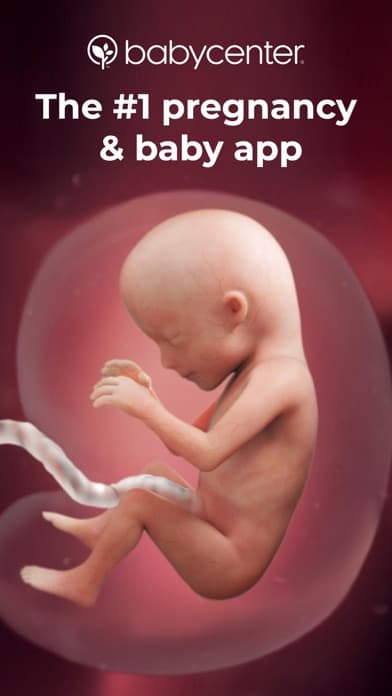
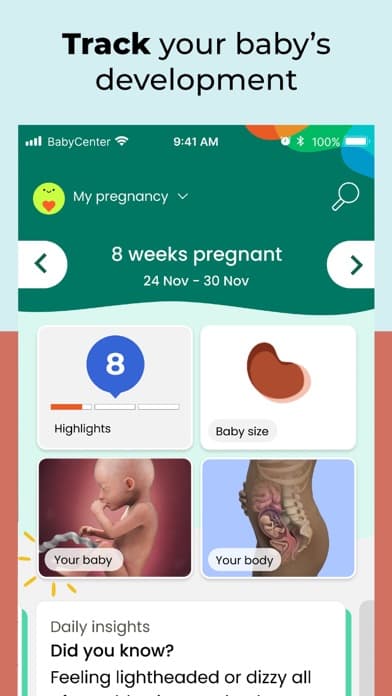
BabyCenter Pregnancy Tracker is the best pregnancy app for first-time moms because the content depth is unmatched — daily and weekly updates, video walk-throughs of fetal development, symptom explainers, and labor and birth education all reviewed by an OB-GYN advisory board. The 4.89 rating across 288,997 reviews is the highest in this list among general pregnancy trackers.
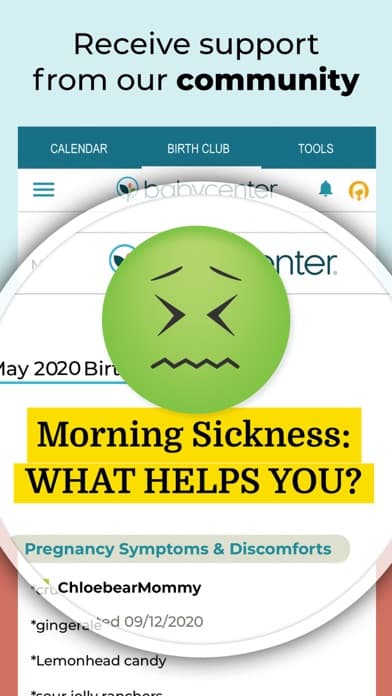
What sets BabyCenter apart is the content velocity and the active community. The Birth Clubs (grouped by due-date month) are some of the most vibrant pregnancy communities online, the daily what-to-expect notifications give you a small reading task that maintains connection, and the postpartum content covers feeding, sleep, and developmental milestones through baby's second birthday.
Use case: a first-time mom who wants the maximum amount of content per dollar, who appreciates structured learning, and who values the network effect of millions of other moms sharing experiences at the same gestational age.
The tradeoff is information density — some users find BabyCenter overwhelming compared to Flo's leaner interface, and the content can lean alarmist on rare complications. The app is free with optional ads; consider an ad blocker if that bothers you. For maximum content and community, BabyCenter is the strongest pick.
Pros
- OB-GYN advisory board reviews all content for clinical accuracy
- Birth Clubs by due-date month are among the most active online
- Daily and weekly updates give a small reading task that maintains connection
Cons
- Information density can feel overwhelming compared to Flo's leaner interface
- Content occasionally leans alarmist on rare pregnancy complications
- Rating
- —
- Reviews
- —
- Price
- Paid
- 90-day trend
- —
Stardust Period Tracker is the best pregnancy app for users who started tracking with Stardust and want continuity through early pregnancy. The 4.75 rating across 103,899 reviews reflects strong engagement among younger users (teens through early thirties) who chose Stardust for its astrology-inflected, low-pressure interface.
What sets Stardust apart in pregnancy is the gentle framing. The app handles the early-pregnancy emotional swings with lunar imagery and daily affirmations rather than clinical language, which serves users in their first trimester (when miscarriage anxiety is real) better than data-heavy alternatives. Privacy posture has improved meaningfully since 2022.
Use case: a 24-year-old who used Stardust to track cycles, sees a positive test, and wants to extend the same gentle, anonymous, no-pressure tracking through early pregnancy. The cohort-tracking and astrology overlay won't appeal to everyone but works well for its core audience.
The tradeoff is depth. Stardust's pregnancy content is thinner than BabyCenter's, the community is smaller, and the medical advisory layer is less prominent. For mid- to late-pregnancy, most Stardust users migrate to BabyCenter or Flo. For early-pregnancy users who already trust Stardust, it's a credible bridge.
Pros
- Gentle astrology framing serves emotional first-trimester users particularly well
- Improved privacy posture meaningful for users in restrictive jurisdictions
- Cohort tracking by cycle stage builds early-pregnancy community feel
Cons
- Pregnancy content thinner than BabyCenter or Flo through third trimester
- Most users migrate to dedicated pregnancy apps by mid-pregnancy
- 4
 Get on App Store
#4Femia - Fertility & PregnancyBest for Tracking
Magicfit Limited
Track Period & Ovulation Cycle
- Rating
- 4.8
- Reviews
- 5.7K
- Price
- Paid
- 90-day trend
- —
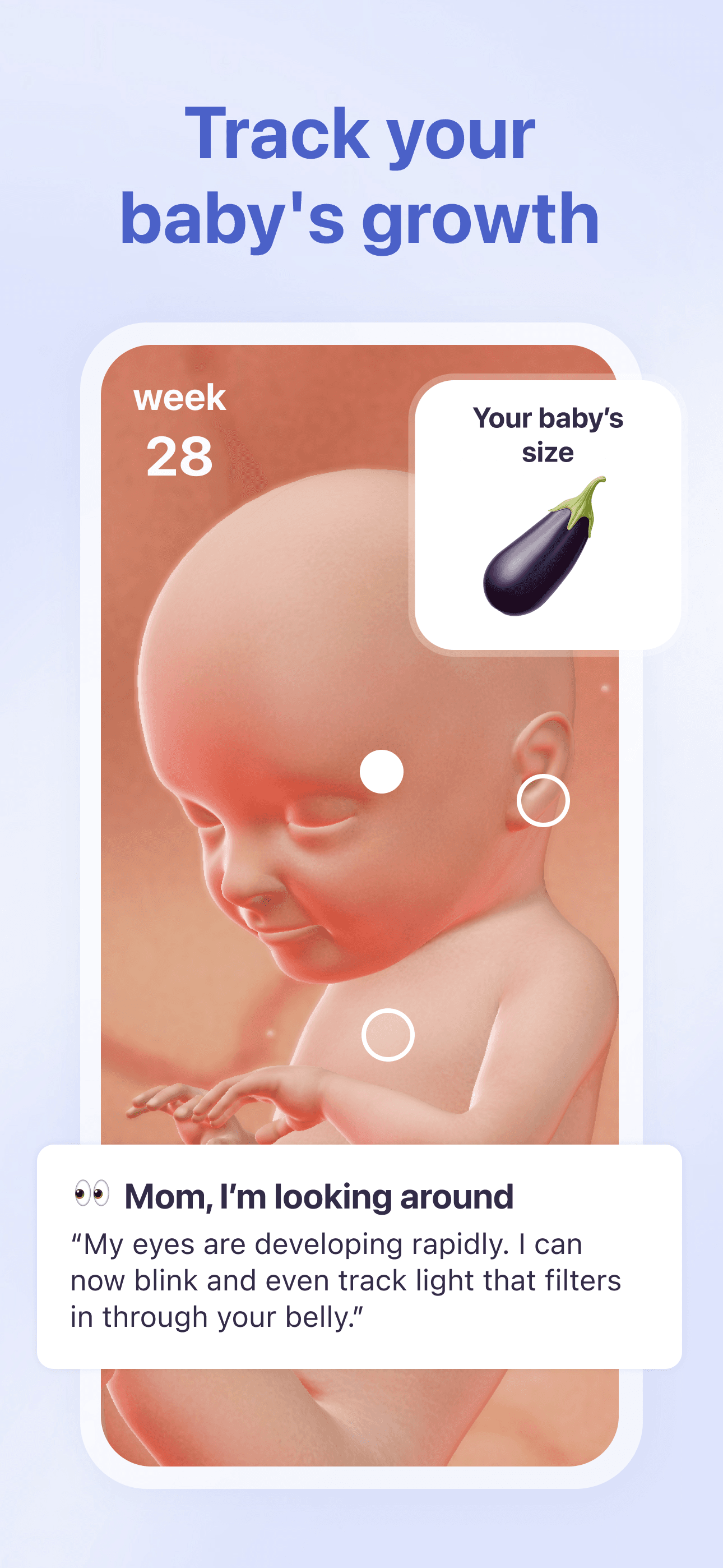
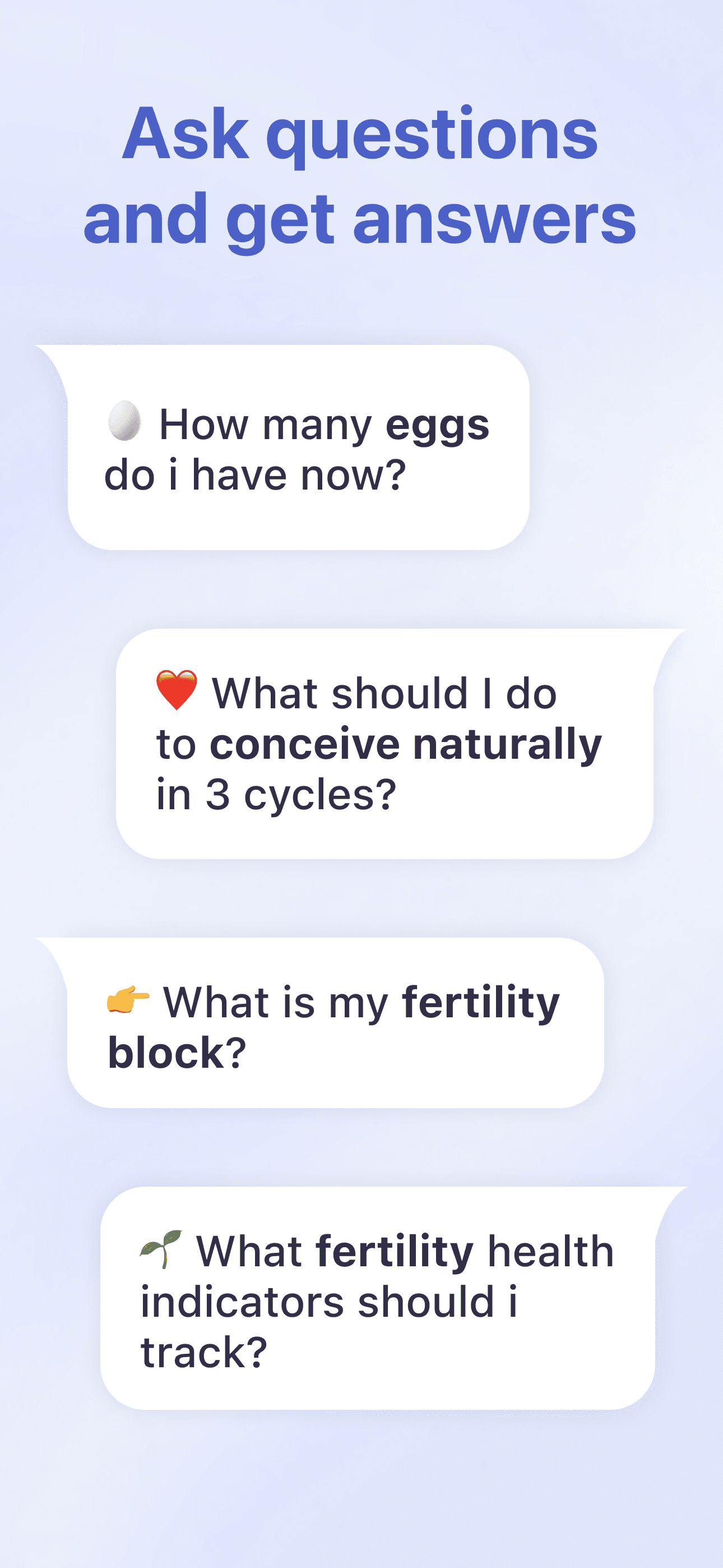
Femia is the best pregnancy app for users transitioning from fertility tracking because its 3D fetal development visualizations and trimester-specific recommendation engine were built to extend its fertility platform into a continuous motherhood companion. The 4.78 rating across 5,694 reviews reflects strong response from a newer entrant.
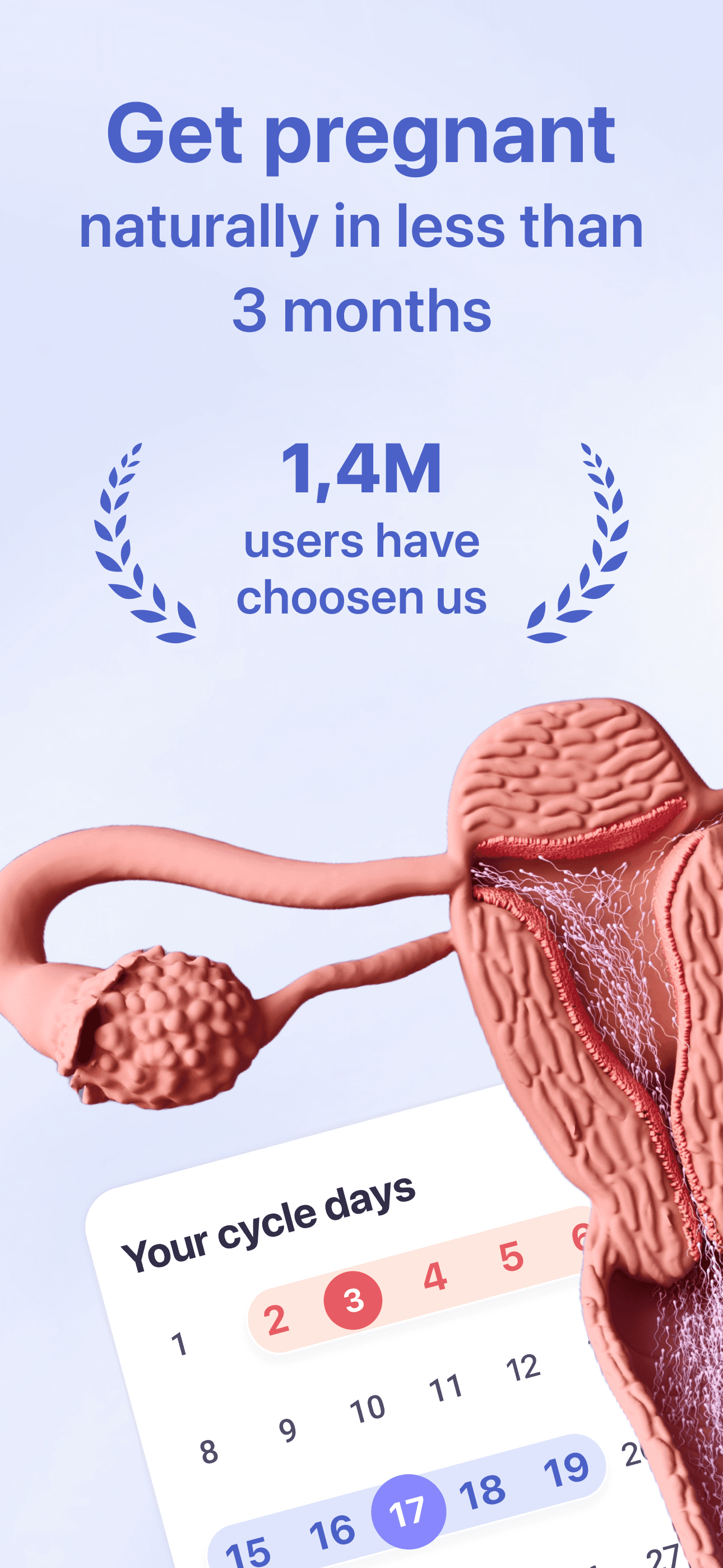
What sets Femia apart is the visual content. Each gestational week shows a beautifully rendered 3D model of fetal development you can rotate and explore — useful for connecting with the abstract reality of a pregnancy you can't yet feel. The fertility-to-pregnancy continuity also means data you logged trying to conceive informs your due-date calculation accurately.
Use case: someone who used Femia for fertility and wants the same app for pregnancy, who values visual learning over text-heavy content, and who appreciates daily recommendations on nutrition and self-care.
The tradeoff is the smaller community and less-mature content library compared to BabyCenter. Pricing tilts toward premium subscription for full access. Some 1-star reviews mention aggressive paywall prompts during onboarding. For users who want a modern, visually-driven fertility-to-pregnancy app, Femia is a credible mid-tier pick.
Pros
- Beautiful 3D fetal development visualizations you can rotate and explore
- Fertility-to-pregnancy continuity uses your TTC data for accurate dating
- Daily nutrition and self-care recommendations tied to gestational week
Cons
- Aggressive paywall prompts during onboarding flow per multiple reviews
- Smaller community and content library than BabyCenter mainstream alternative
- 5
 Get on App Store
#5Pregnancy Test CheckerBest Community
Inventive Mobile
AI, Community & TTC Support
- Rating
- 4.7
- Reviews
- 7.3K
- Price
- Paid
- 90-day trend
- —
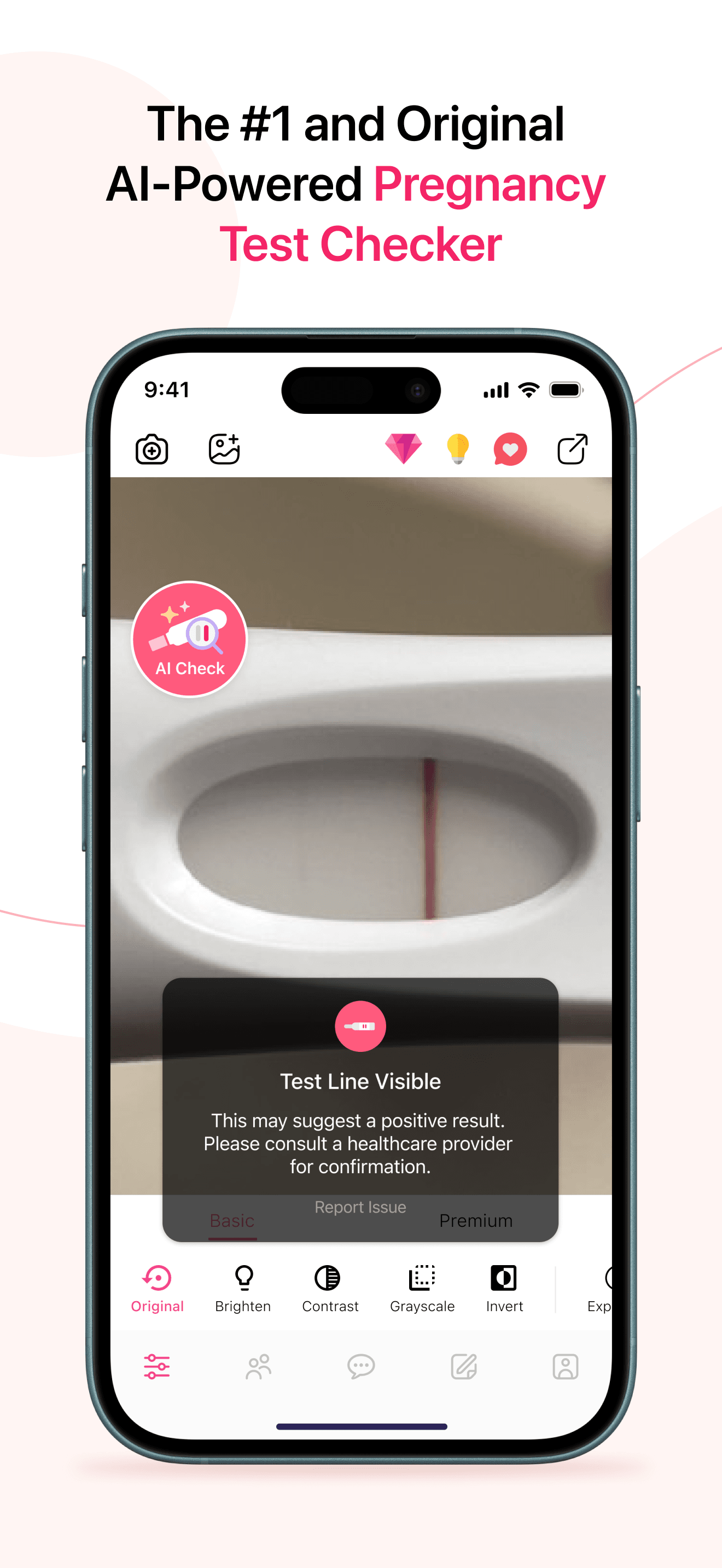
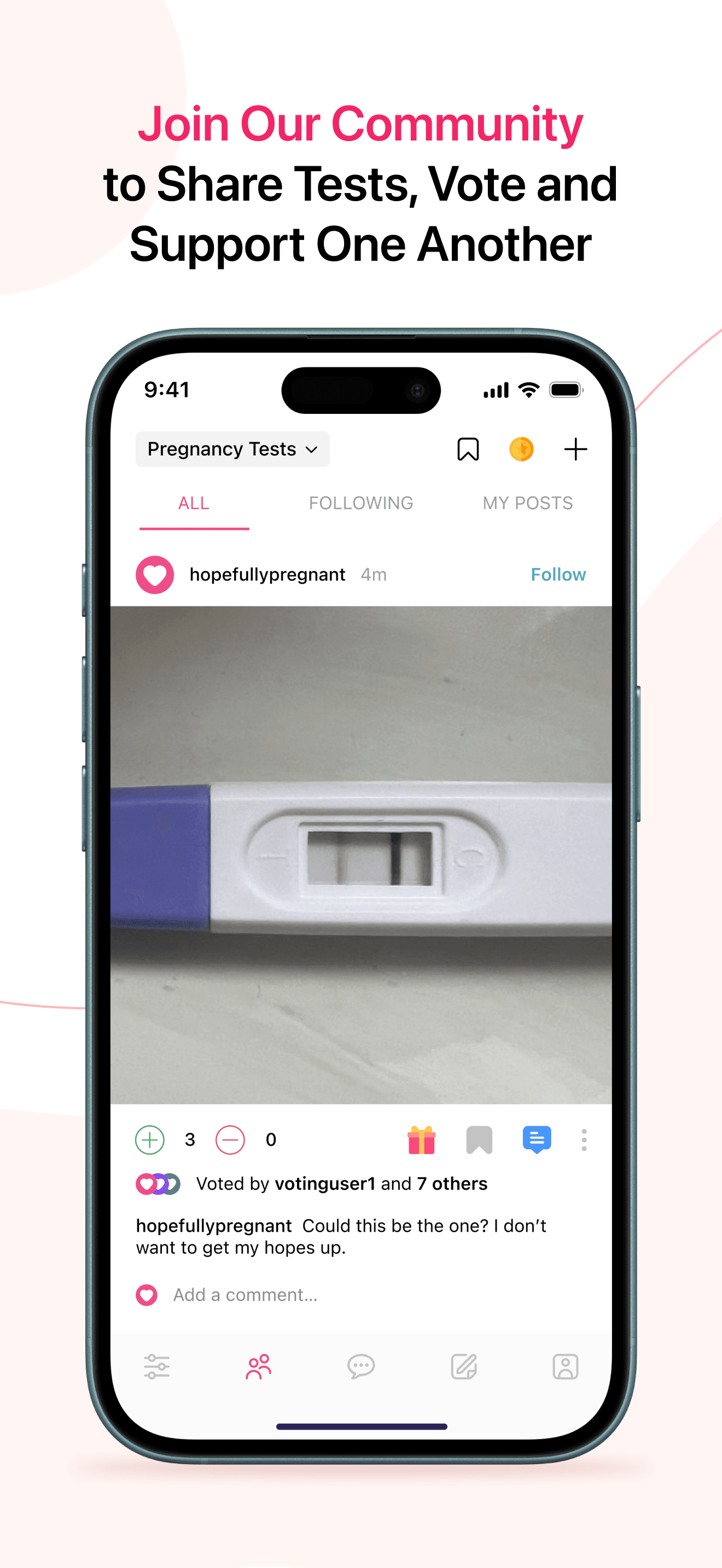
Pregnancy Test Checker is the best pregnancy app for community in the trying-to-conceive waiting room because the supportive feed lets users share faint-line photos, get encouragement, and process pregnancy loss alongside an AI tool that analyzes test photos to help identify whether a second line is real or wishful thinking. The 4.65 rating across 7,183 reviews comes from users in the high-anxiety two-week-wait who appreciate the second opinion.
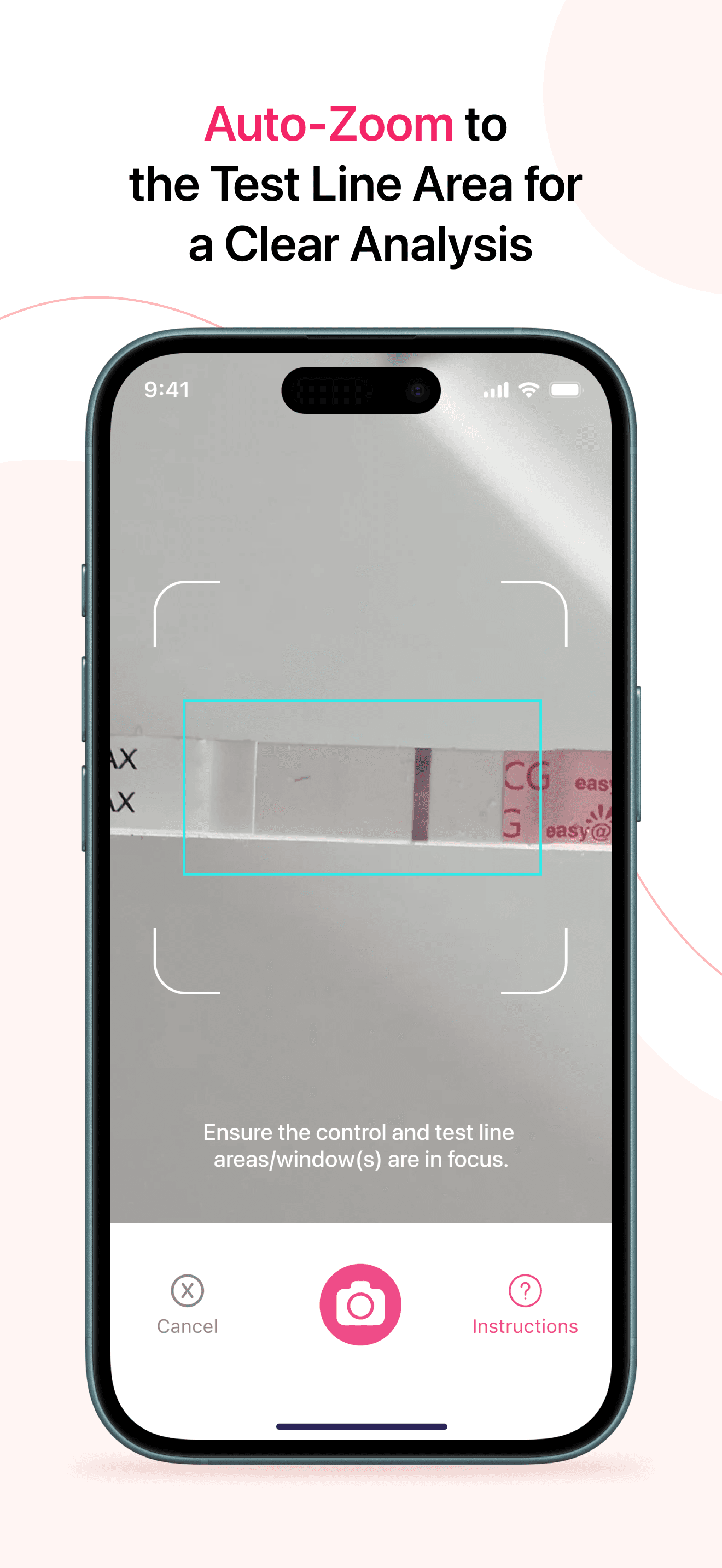
What sets Pregnancy Test Checker apart is the specific focus. Where Flo and BabyCenter are platforms, this app does one thing — analyzes test photos against a trained model that supports all major brands. The supportive community feed lets users share tests, get encouragement, and process pregnancy loss with others going through it.
Use case: someone in their 14-day-wait who has stared at the same test for 30 minutes wondering if a faint line is an evaporation line or an actual positive. The AI doesn't replace a blood test or doctor confirmation, but it can reduce the squinting-at-bathroom-light anxiety.
The tradeoff is the narrow use case. After confirmation, this app's utility drops sharply — you'll migrate to Flo or BabyCenter. The AI also has limits; reviewers note false confidence in both directions. The subscription tier feels steep for a single-purpose tool. For the specific two-week-wait moment, it's a credible companion.
Pros
- AI analyzes test photos against trained model across all major brands
- Supportive community feed for two-week-wait anxiety and pregnancy loss
- Reduces evaporation-line versus faint-positive confusion in low-light bathrooms
Cons
- Single-purpose app with utility dropping sharply after pregnancy confirmation
- AI has limits — false confidence happens in both positive and negative directions
- Rating
- 4.5
- Reviews
- 7.1K
- Price
- Paid
- 90-day trend
- —
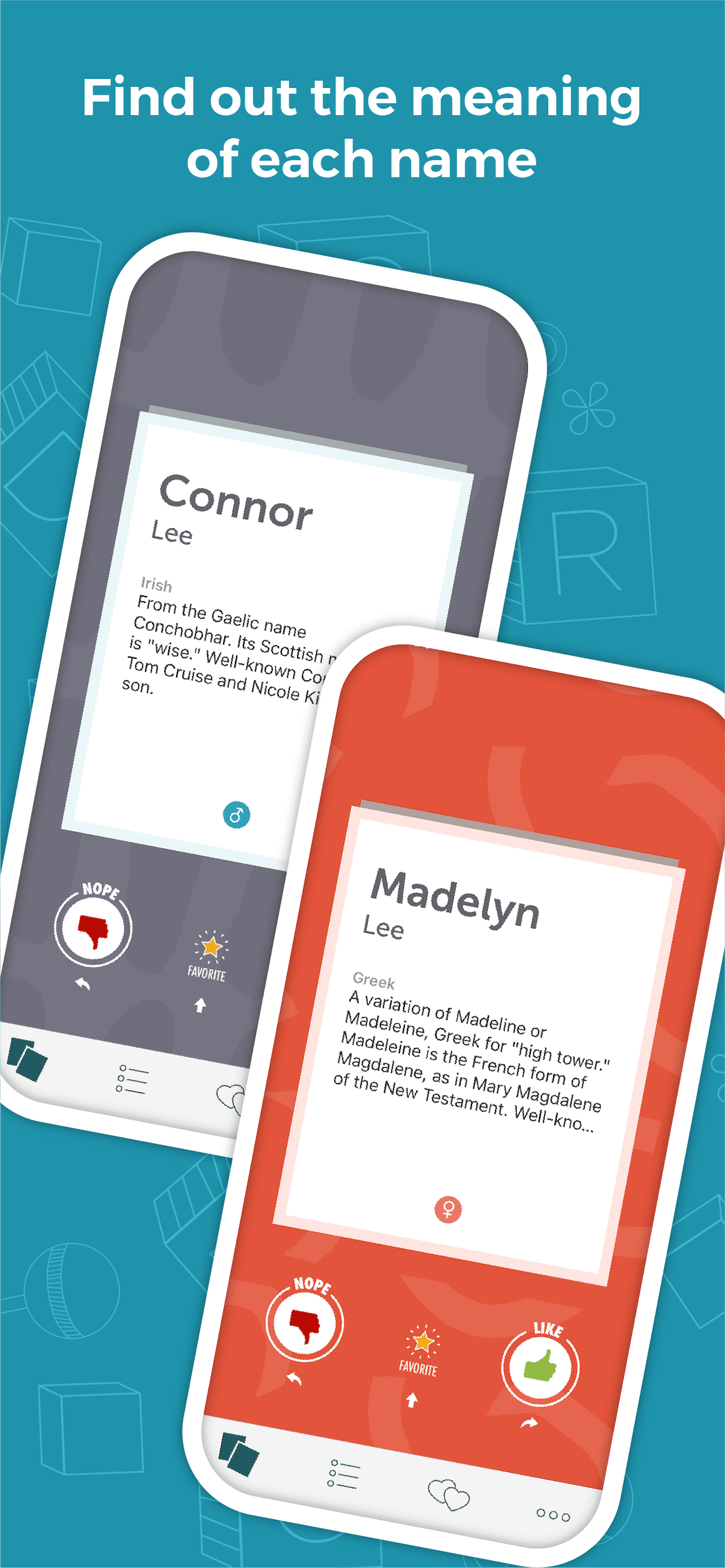
Baby Names by BabyCenter is the best pregnancy app for finding the right name because it pairs a deep, searchable database with real popularity data sourced from millions of BabyCenter members, plus filters by origin, style, meaning, and trending direction. The 4.54 rating across 7,123 reviews reflects the difficulty of the task it's helping with.
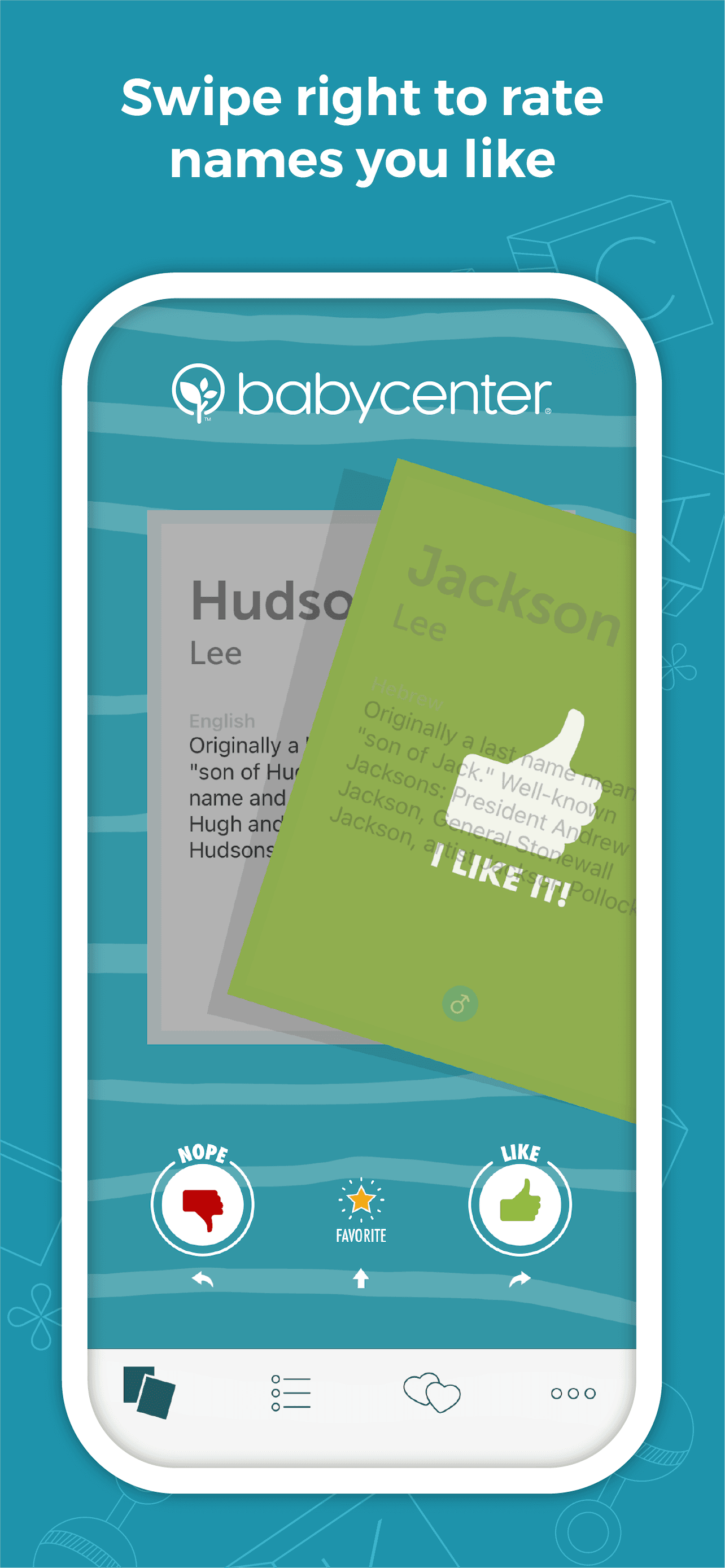
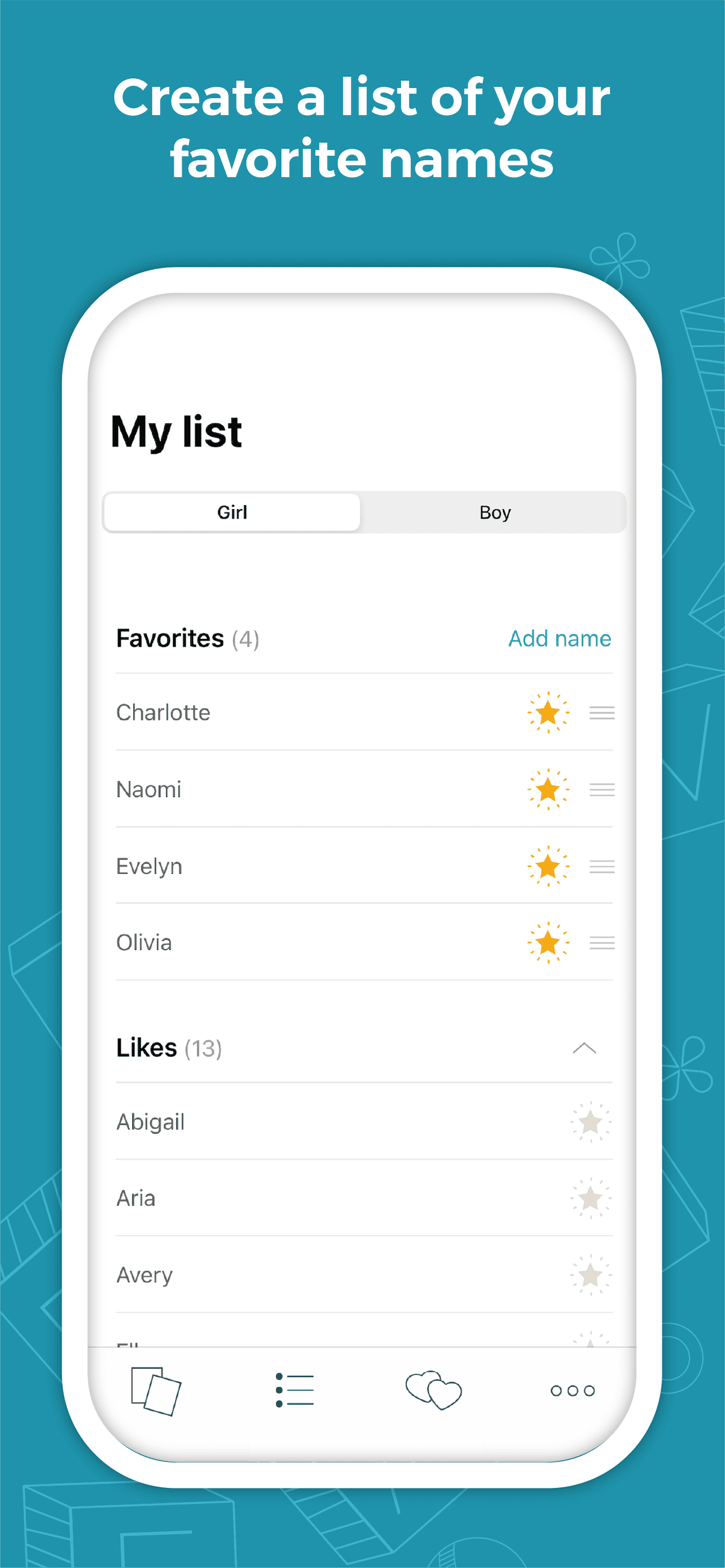
What sets Baby Names by BabyCenter apart is the social-discovery flow. The Tinder-style swipe-to-shortlist mechanic lets you and your partner build separate favorites lists, then surface the names you both swiped right on — surprisingly effective at avoiding the days-long negotiation cycle around naming. Origin filters, meaning lookups, and sibling-name compatibility round out the toolkit.
Use case: a couple in second or third trimester who wants to share name discovery between phones without arguing about a spreadsheet, who likes to play with names rather than committing to one too early.
The tradeoff is the narrow purpose. This isn't a pregnancy tracker — it's specifically for naming. You'll use it most heavily for a few months around weeks 20 to 36. The 4.54 rating, lower than its sibling BabyCenter app, reflects the fundamental difficulty of any naming tool: ultimately, no app picks the name for you. For couples actively choosing, it's the strongest pick.
Pros
- Tinder-style swipe-to-shortlist lets partners build separate favorites lists
- Popularity data sourced from millions of BabyCenter members directly
- Origin, meaning, and sibling-compatibility filters speed name discovery
Cons
- Pure naming tool with no pregnancy tracking or trimester content included
- Ultimately no app makes the naming decision for indecisive couples
- 7
 Get on App Store
#7Baby2Body: Pregnancy WellnessBest for Postpartum
Baby2Body Limited
Workouts, Food Recipes & Yoga
- Rating
- 4.7
- Reviews
- 5.5K
- Price
- Free
- 90-day trend
- —
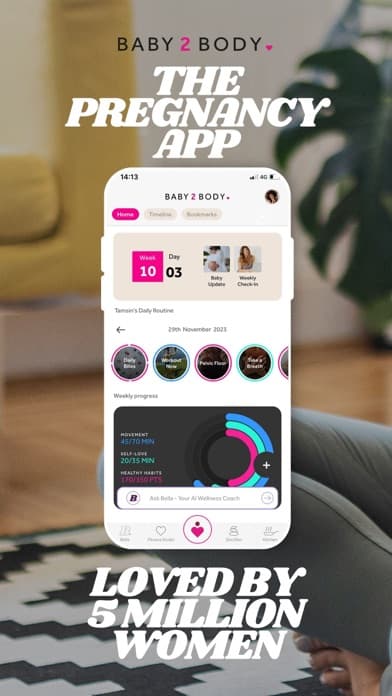
Baby2Body is the best pregnancy app for postpartum recovery because the structured fourth-trimester program continues guided fitness, pelvic-floor rehab, nutrition, and mental wellness content seamlessly after delivery, supported by an AI wellness coach that answers questions across the full motherhood journey. The 4.68 rating across 5,455 reviews reflects strong response to the coaching approach.
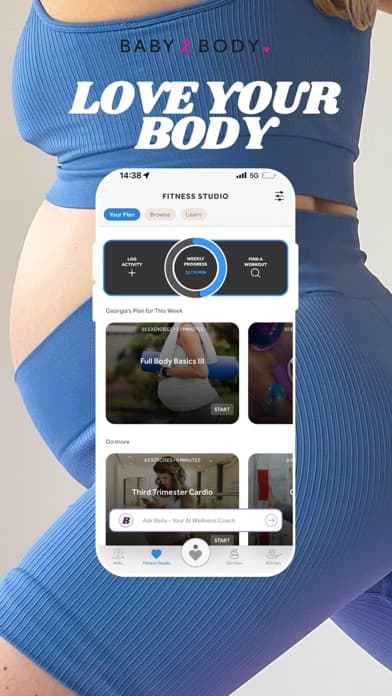
What sets Baby2Body apart is the breadth of pregnancy-safe content. Prenatal yoga, pregnancy strength training, Kegel programs, nutrition recipes adjusted for nausea or heartburn, and mental-wellness content for the emotional swings all live inside one app. The AI coach answers questions 24 hours a day with content grounded in pregnancy guidelines.
Use case: a user who wants daily structured activity through pregnancy, not just tracking, who values fitness and nutrition guidance specifically tailored to each trimester, and who plans to continue into the postpartum recovery program.
The tradeoff is that the AI coach is a content delivery layer, not a clinician — it cannot diagnose or replace prenatal care. Some 1-star reviews mention the coach providing generic answers to specific medical questions. Subscription pricing aligns with premium category. For users who want a coach-style daily companion across trimesters, Baby2Body is the strongest pick.
Pros
- AI wellness coach answers pregnancy questions 24 hours a day
- Prenatal yoga, strength, and Kegel programs tailored to each trimester
- Postpartum recovery program continues structured guidance after delivery
Cons
- AI coach provides generic answers to specific medical pregnancy questions
- Subscription pricing aligned with premium category requires ongoing commitment

- 8
 Get on App Store
#8Dad Pregnancy Guide: Daddy UpBest for Partners
Sycamore Spur, LLC
Track Baby Growth, Support Mom
- Rating
- 4.9
- Reviews
- 2.8K
- Price
- Free
- 90-day trend
- —
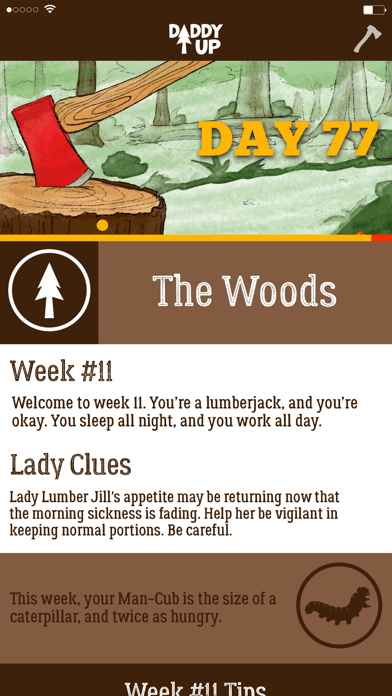
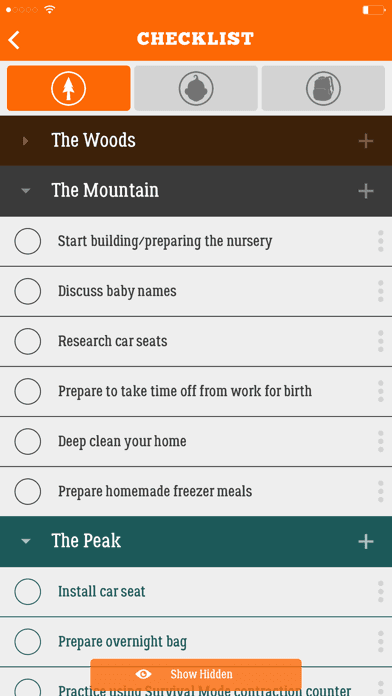
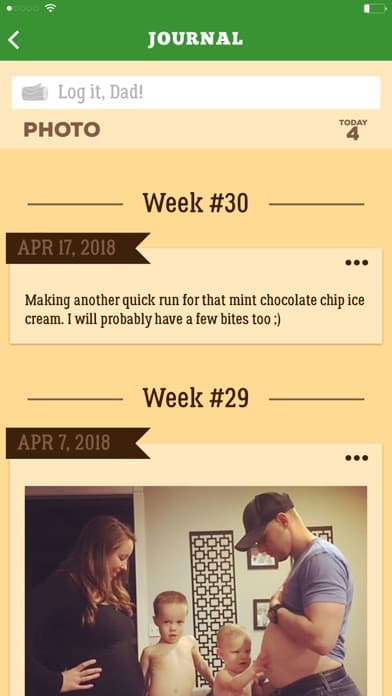
Daddy Up (Dad Pregnancy Guide) is the best pregnancy app for partners because it speaks directly to dads-to-be with weekly updates framed in lumberjack humor, trimester checklists oriented toward partner contribution, a contraction timer, and a journal log for the partner's experience. The 4.86 rating across 2,759 reviews comes from a small but devoted audience.
What sets Daddy Up apart is the tone and the audience. Most pregnancy apps assume the user is the pregnant person. Daddy Up assumes you are not, but you are deeply involved, want to help, and don't know what week 24 means medically. The dad-humor framing makes it usable without feeling like medical homework, and the checklists give concrete tasks (assemble the crib, install the car seat, pack the hospital bag).
Use case: a first-time dad who wants to be more than a passive observer, who appreciates lighter framing, and who wants tools (timer, checklist, journal) rather than only content to read.
The tradeoff is that the lumberjack-Lady-Lumberjill framing won't appeal to every couple, and the LGBTQ+ partnerships aren't centered in the language. The app is sold one-time rather than subscription, which is unusual and welcome in this category. For dads-to-be looking for a focused, fun companion through pregnancy, Daddy Up is unmatched.
Pros
- Speaks directly to dads-to-be with humor and concrete partner tasks
- Contraction timer and hospital-bag checklist oriented for partner contribution
- One-time purchase rather than subscription is unusual and welcome here
Cons
- Lumberjack framing won't appeal to every couple's communication style
- LGBTQ+ partnership language not currently centered in the app copy

How we picked
Data sources: We pull live App Store metadata (rating, review count, version cadence, screenshots, developer) through the iTunes Search API and our own ranking history database, then layer in editorial review of each app's pregnancy content, medical review claims, and pricing. Review themes for pros and cons come from sampling recent App Store reviews across rating buckets, including reviews mentioning trimester-specific frustrations.
How we score: Each app is evaluated on content depth across trimesters (development milestones, symptom guides, what-to-expect), clinical credibility (medical advisory board, OB-GYN review), tools for active pregnancy (contraction timer, kick counter, hospital bag checklists), postpartum support (mental health, recovery, feeding tracking), and signal strength from ratings.
Refresh cadence: We refresh metadata weekly and re-evaluate the ranked list at least quarterly, or sooner when a major version ships, pricing changes, or significant content updates publish.
What we exclude: Apps with no medical advisory board or unclear content sourcing, apps that share pregnancy data with third-party advertisers, abandoned apps without updates in 12+ months, and apps that promise to diagnose pregnancy complications without explicit disclaimers. We also exclude apps marketing themselves as fertility treatment without FDA clearance.
What we don't do: We don't accept payment for placement, we don't replace your OB-GYN, midwife, or maternal-fetal medicine specialist, and we don't make claims about preventing complications. Use these apps to learn, track, and connect; rely on your care team for medical decisions. Call your provider for any bleeding, severe pain, decreased fetal movement, or other warning signs.
### What changed this month
What to Expect updated its weekly content to better reflect 2026 prenatal-care guidelines on screening tests. BabyCenter improved its symptom-checker AI to surface professional-care prompts earlier. Ovia rolled out a privacy-mode toggle that keeps cycle data on-device — a meaningful response to ongoing legal-landscape concerns. The Bump added a partner-account feature so non-pregnant parents can follow milestone updates without seeing the medical-tracking layer. Most pregnancy apps now ship with explicit data-handling disclosures in onboarding, which is an industry-wide improvement on the 2023 baseline.