



Best Mental Health Apps for iPhone
By App Store Tracker Editorial · Updated — live App Store data verified
The short version
The best mental health app for iPhone in 2026 is BetterHelp — its licensed-therapist network and 4.81 rating across 147,199 reviews make it the most-trusted way to start real therapy from your phone. Runner-up Talkspace adds insurance compatibility and 13+ teen support. Among the 10 mental health apps we evaluated, picks span human therapy platforms, AI CBT companions, journaling games, and crisis-aware tools. None replaces professional care; use these to start, sustain, or supplement.
Jump to a pick↓
We ranked iPhone mental health apps on five criteria: clinical evidence (peer-reviewed studies, RCTs), therapist or counselor access where applicable, the quality of CBT and DBT content, crisis-handling and safety design, and review consensus from the App Store. Mental health is health data, so we weighed privacy posture heavily. Among the 10 mental health apps in this guide, picks range from licensed-therapy platforms (BetterHelp, Talkspace), AI chatbots informed by clinicians (Wysa, Woebot), self-tracking and self-help tools (MindDoc, Ahead, Quabble), gamified resilience apps (SuperBetter, Voidpet Garden), and narrative-driven self-reflection games (Betwixt). Ratings span 4.64 to 4.87 across more than 290,000 combined reviews. If you're in crisis, call or text 988 (US Suicide and Crisis Lifeline); none of these apps replace emergency care.
- Rating
- —
- Reviews
- —
- Price
- Paid
- 90-day trend
- —
BetterHelp is the best overall mental health app for iPhone because it remains the largest and most-vetted licensed therapy network on the App Store, with a 4.81 rating across 147,199 reviews. The app matches you with a licensed therapist in your state within days, and you can message via text, audio, and video on a schedule that fits your life.
What sets BetterHelp apart is the flexibility of access. Most reviewers mention being able to message their therapist between scheduled sessions, send journal entries or relevant articles, and switch therapists easily if the first match doesn't fit. The financial aid program offers up to 40 percent off based on income, which lowers the barrier to ongoing care.
Use case: someone who has been considering therapy but hasn't found a local therapist with availability or insurance match, or someone who travels and needs continuity. BetterHelp's group classes and workshops also offer lower-cost group support around specific themes (LGBTQ+, grief, parenting).
The tradeoff is cost without insurance — pricing typically runs $260 to $400 per month for weekly sessions, comparable to but not cheaper than many in-person therapists. Cancellation requires multiple clicks per reviews, and the matching algorithm sometimes pairs poorly on the first try. For users who want real therapy with maximum scheduling flexibility, BetterHelp is the strongest pick.
Pros
- Licensed therapist network with same-week matching in most US states
- Message therapist between sessions via text, audio, or video
- Financial aid up to 40 percent based on documented income status
Cons
- Monthly pricing without insurance runs $260 to $400 typically
- First-match algorithm sometimes requires switching therapists once or twice
- 2Get on App Store
#2Talkspace: Virtual Therapy AppBest with Therapist
Groop Internet Platform inc.
Online Mental Health Support
- Rating
- 4.8
- Reviews
- 46K
- Price
- Paid
- 90-day trend
- —
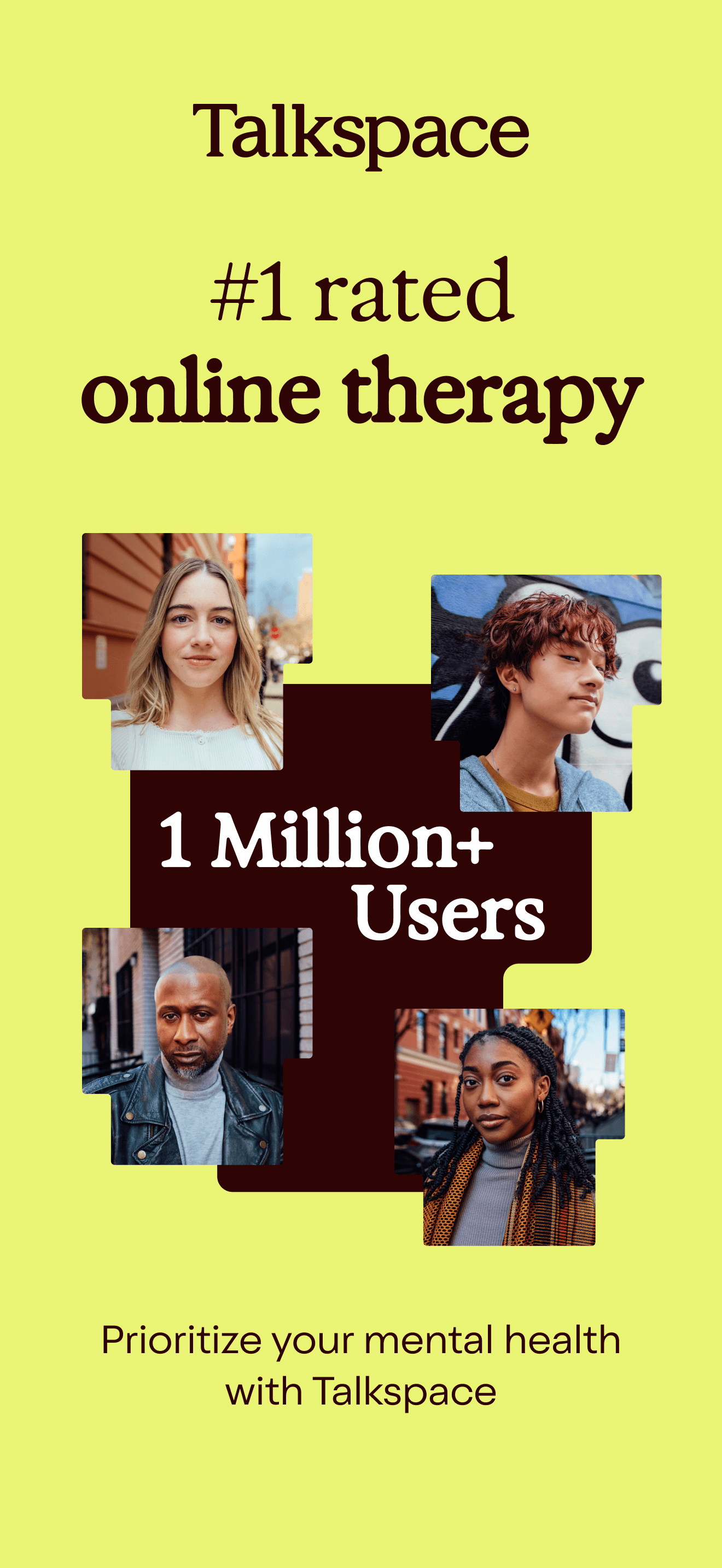
Talkspace is the best mental health app with insurance compatibility because it partners with major US health plans (Cigna, Aetna, Optum, many state Medicaid plans) and large employers to cover therapy at little to no out-of-pocket cost. The 4.82 rating across 44,908 reviews reflects steady satisfaction over the decade since launch.
What sets Talkspace apart is the same-day therapist matching plus the dedicated Talkspace Teens program for users 13 and up with parental consent. Talkcast, an AI-generated personalized podcast based on your session goals, gives you content to engage with between sessions in a format that fits commute or chore time.
Use case: a user whose insurance covers Talkspace and who wants the financial peace of mind that comes with copay-only therapy. The 81 percent of users in one study reporting Talkspace as effective or better than in-person therapy is a meaningful clinical signal.
The tradeoff is the messaging-first model. Talkspace text response cadence is at least once a day, 5 days a week, which is faster than a typical therapist between sessions but slower than synchronous chat. Some reviewers also note therapist turnover. For users with covered insurance and a preference for asynchronous communication, Talkspace is the strongest pick in the category.
Pros
- Major US insurance plans and employer benefits cover most usage
- Same-day therapist matching plus dedicated teen program for ages 13+
- Talkcast personalized podcast extends therapy themes between scheduled sessions
Cons
- Asynchronous messaging cadence slower than live chat or in-person
- Some reviewers note therapist turnover during longer treatment courses

- Rating
- 4.8
- Reviews
- 24.3K
- Price
- Paid
- 90-day trend
- —
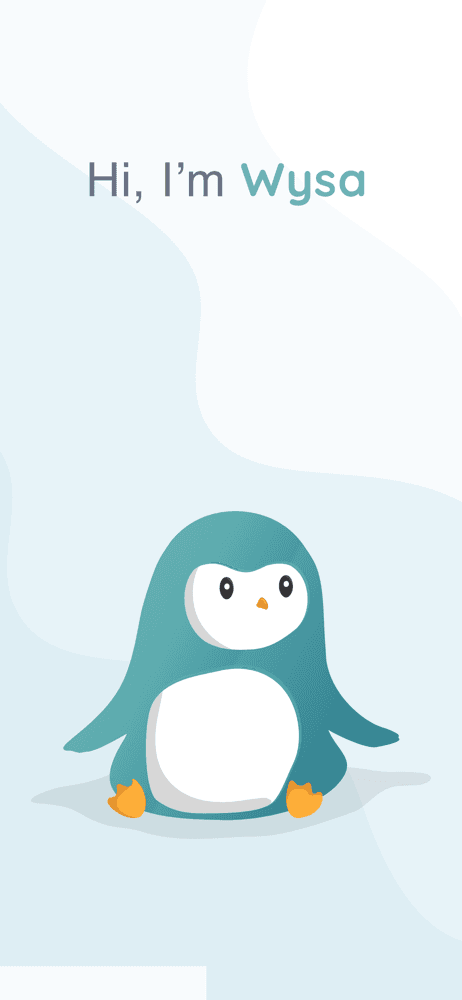
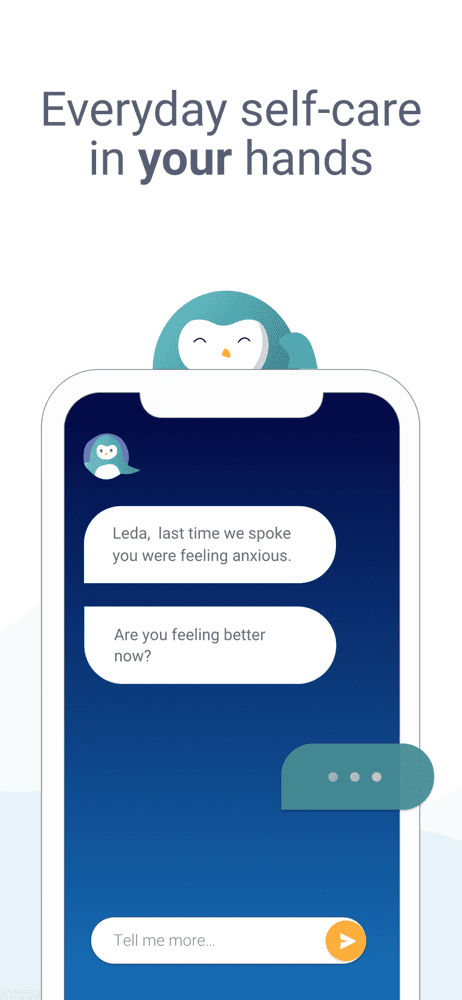
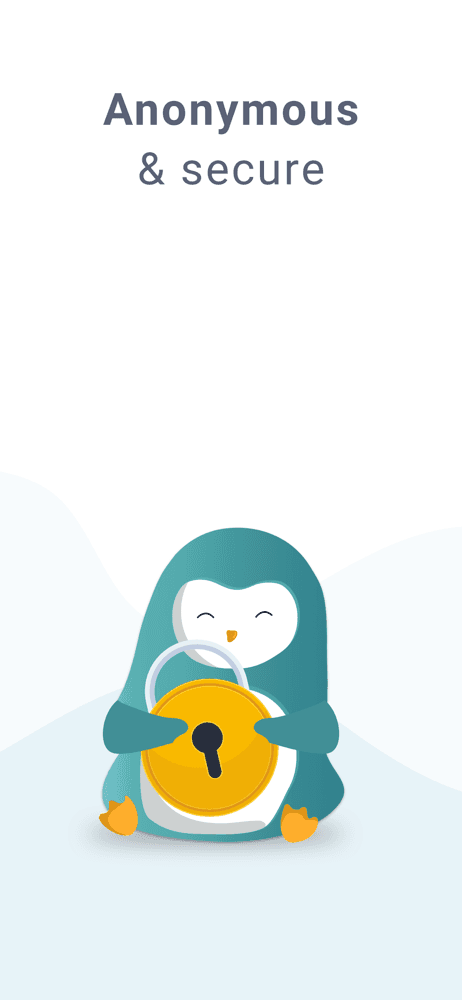
Wysa is the best mental health app with an AI chatbot because the conversational interface uses CBT, DBT, and mindfulness techniques developed with clinical input, and the empathetic penguin character lowers the activation energy of starting a hard conversation. The 4.85 rating across 24,189 reviews reflects strong satisfaction, and 93 percent of users in Wysa's own data report finding the conversations helpful.
What sets Wysa apart is the depth of the free tier. Unlike many AI mental-health apps, Wysa's core chatbot, mood tracking, and CBT exercises are available without subscription. Premium adds access to human coaches and additional toolkits, but the entry point is genuinely useful for free. Anonymity is preserved by design.
Use case: someone hesitant to talk to a real therapist, anxious about being judged, or processing late-night thoughts when human support isn't available. The University of Washington, BBC, and Bloomberg have all featured Wysa as a credible bridge to professional care.
The tradeoff is that an AI chatbot is not a therapist. Wysa is best at structured CBT practice, journaling prompts, and grounding exercises — it cannot diagnose, prescribe, or handle clinical crisis. The premium subscription at $99.99 annually is reasonable but optional. For users who want a free, anonymous, evidence-informed starting point, Wysa is the standout pick.
Pros
- Free tier includes core CBT chatbot, mood tracking, and exercises
- Anonymous design lowers activation barrier for hesitant first-time users
- Empathetic penguin character makes hard conversations feel approachable
Cons
- AI chatbot is not therapy and cannot handle clinical crisis safely
- Premium Plus at $99.99 monthly is steep for coaching access
- 4
 Get on App Store
#4MindDoc: Mental Health SupportBest for Depression
MindDoc Health GmbH
Daily self-care & well-being
- Rating
- 4.7
- Reviews
- 29.5K
- Price
- Paid
- 90-day trend
- —
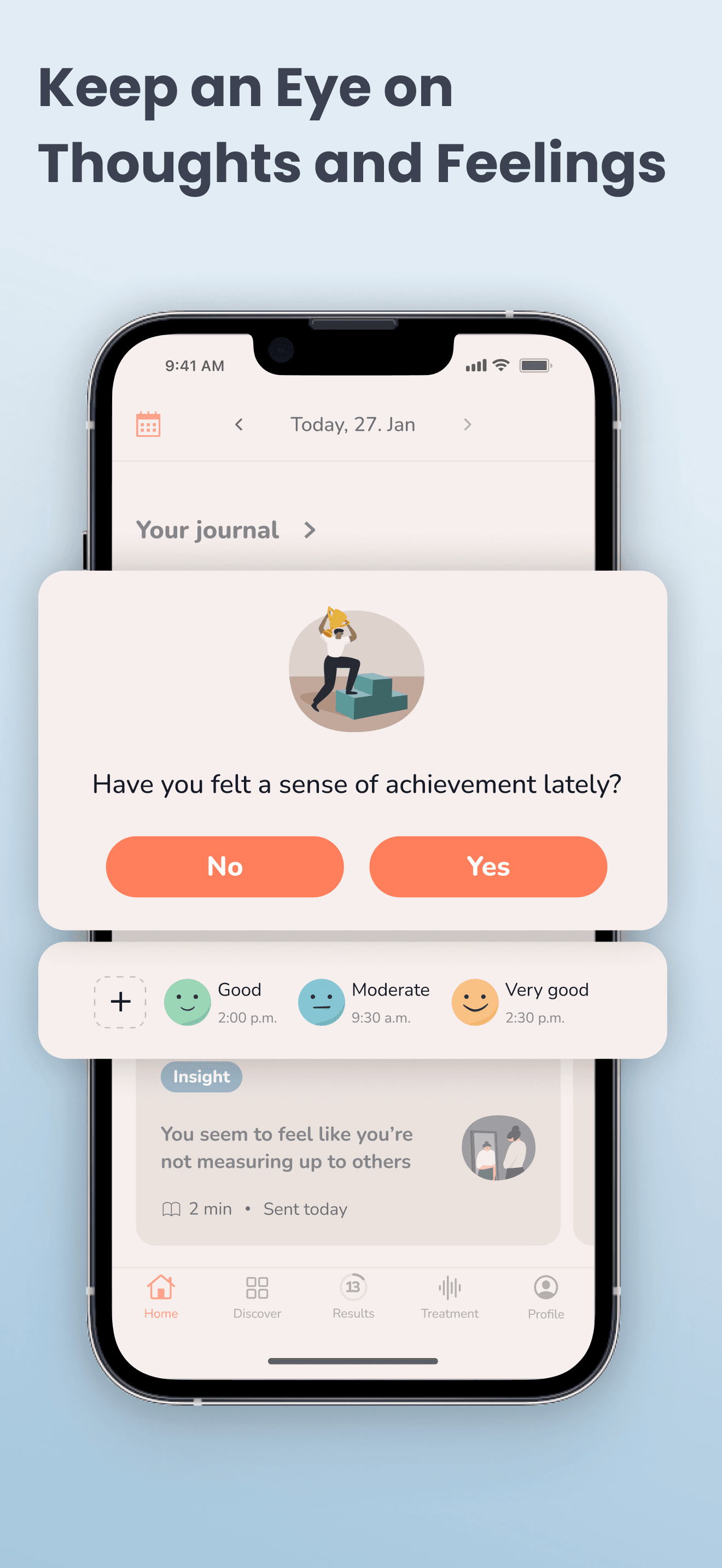
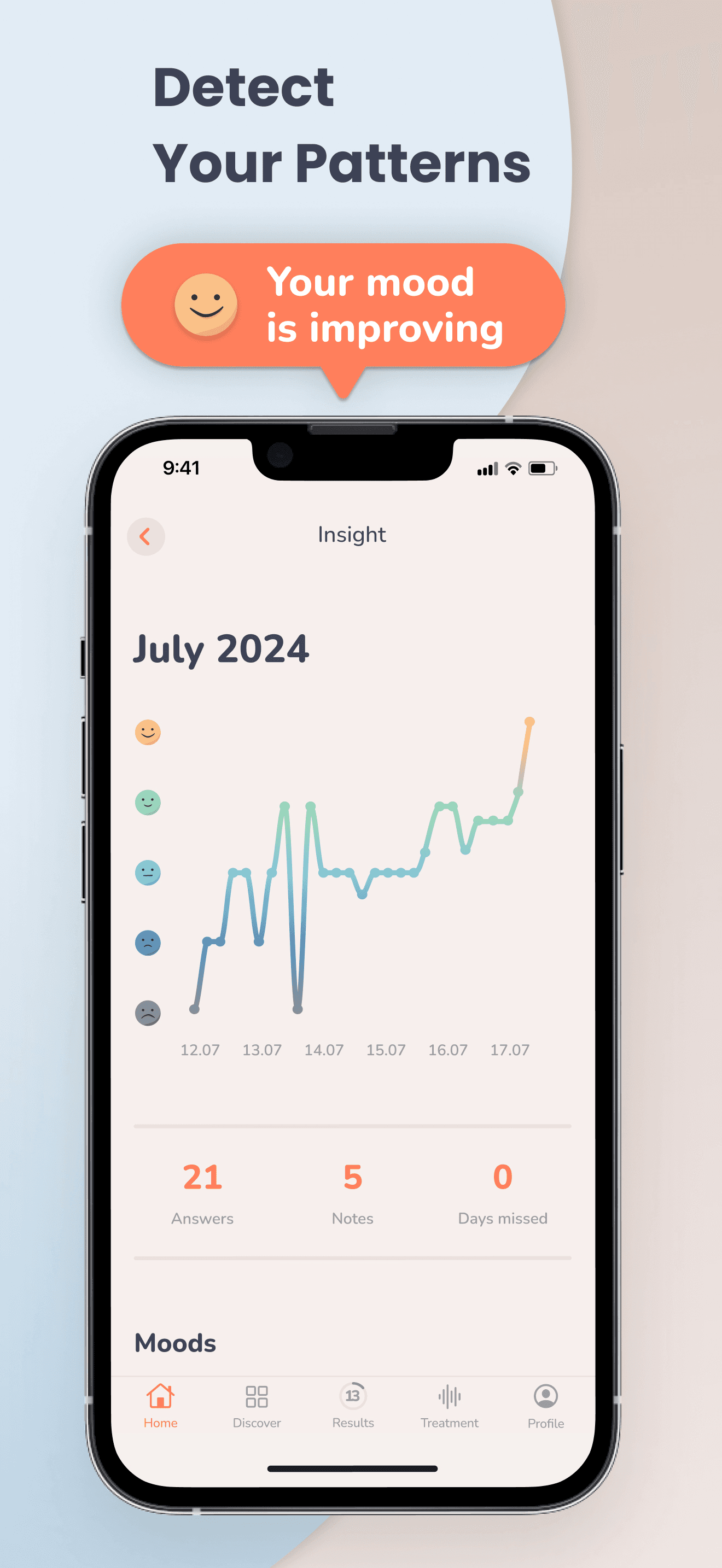
MindDoc is the best self-care mental health app because it was built by clinical psychologists at a German digital-medicine company, certified as a Class I medical device under EU MDR, and trusted by 3 million-plus users to track mood, journal thoughts, and surface CBT-based courses. The 4.71 rating across 29,500 reviews reflects credibility-first design.
What sets MindDoc apart is the regulatory and scientific rigor. ISO 27001 certification and full GDPR compliance signal serious data privacy, and the symptom assessment generates a downloadable report you can share with your healthcare provider. Courses cover depression, anxiety, insomnia, and eating disorders with peer-reviewed CBT frameworks.
Use case: someone tracking mental health symptoms over time, preparing for or supplementing therapy, or trying to recognize patterns in mood, sleep, and stress before deciding whether to seek clinical help. MindDoc's regular feedback explicitly flags when symptoms suggest further evaluation.
The tradeoff is the clinical-tool feel. MindDoc is less playful than Quabble or Voidpet Garden, and the free tier is generous but premium ($59.99 annually for one year) unlocks the full course library. The mood-tracking workflow can feel clinical for users who want a softer self-care experience. For users who want a tool that respects them as patients, MindDoc is the strongest pick.
Pros
- Clinical psychologist developers with Class I medical device certification
- ISO 27001 and GDPR compliance signal serious mental health privacy
- Downloadable symptom reports ready to share with healthcare providers
Cons
- Clinical tool feel less playful than wellness-focused competitor apps
- Premium courses gated behind subscription with limited free preview
- 5
 Get on App Store
#5Ahead: Emotional CompanionBest for Anxiety
ahead Solutions GmbH
For Anxiety, Stress and Anger
- Rating
- 4.7
- Reviews
- 22.4K
- Price
- Paid
- 90-day trend
- —
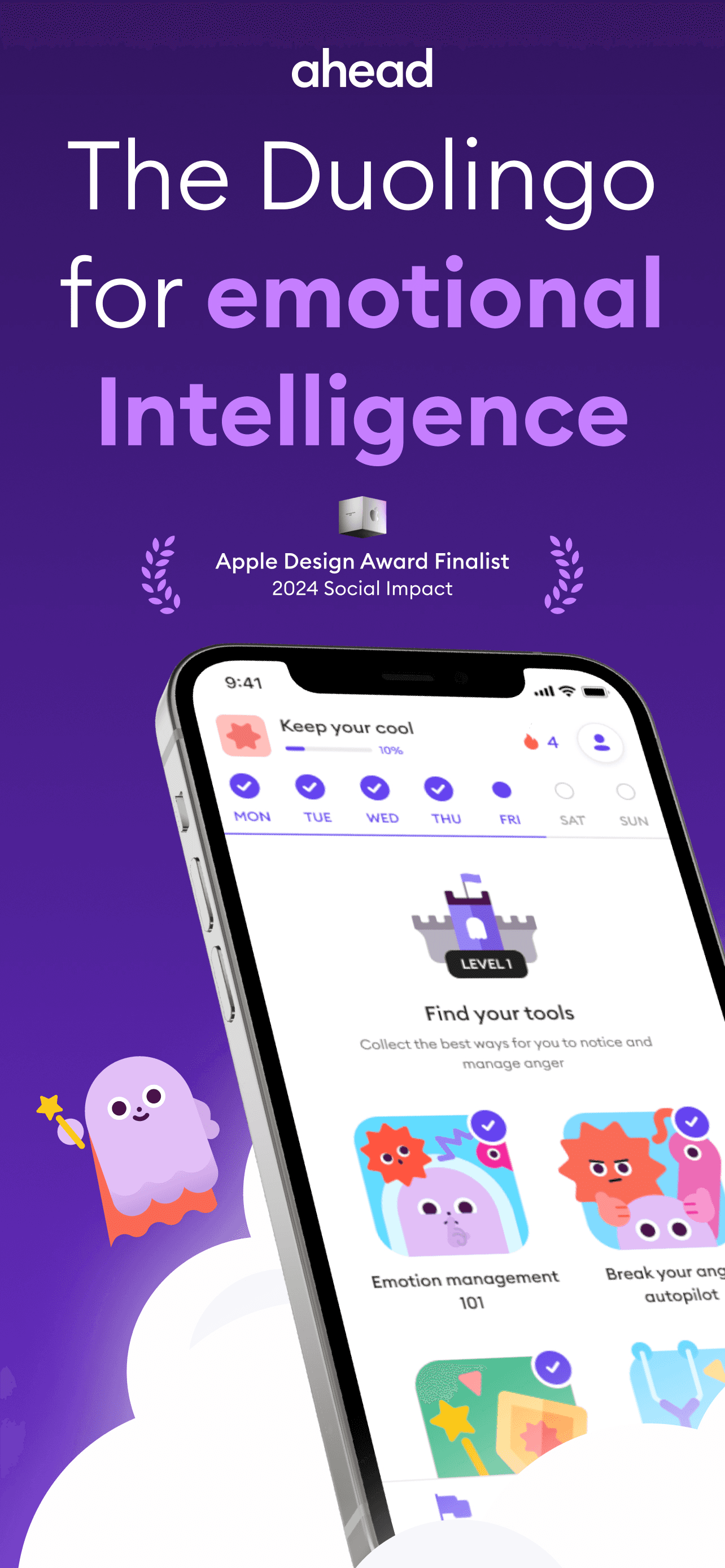
Ahead is the best mental health app for anxiety and emotional regulation because it teaches you to recognize and manage emotional patterns through short daily lessons rooted in behavior-change science. The 4.74 rating across 22,201 reviews reflects users who appreciate the structured, evidence-informed approach to building emotional intelligence.
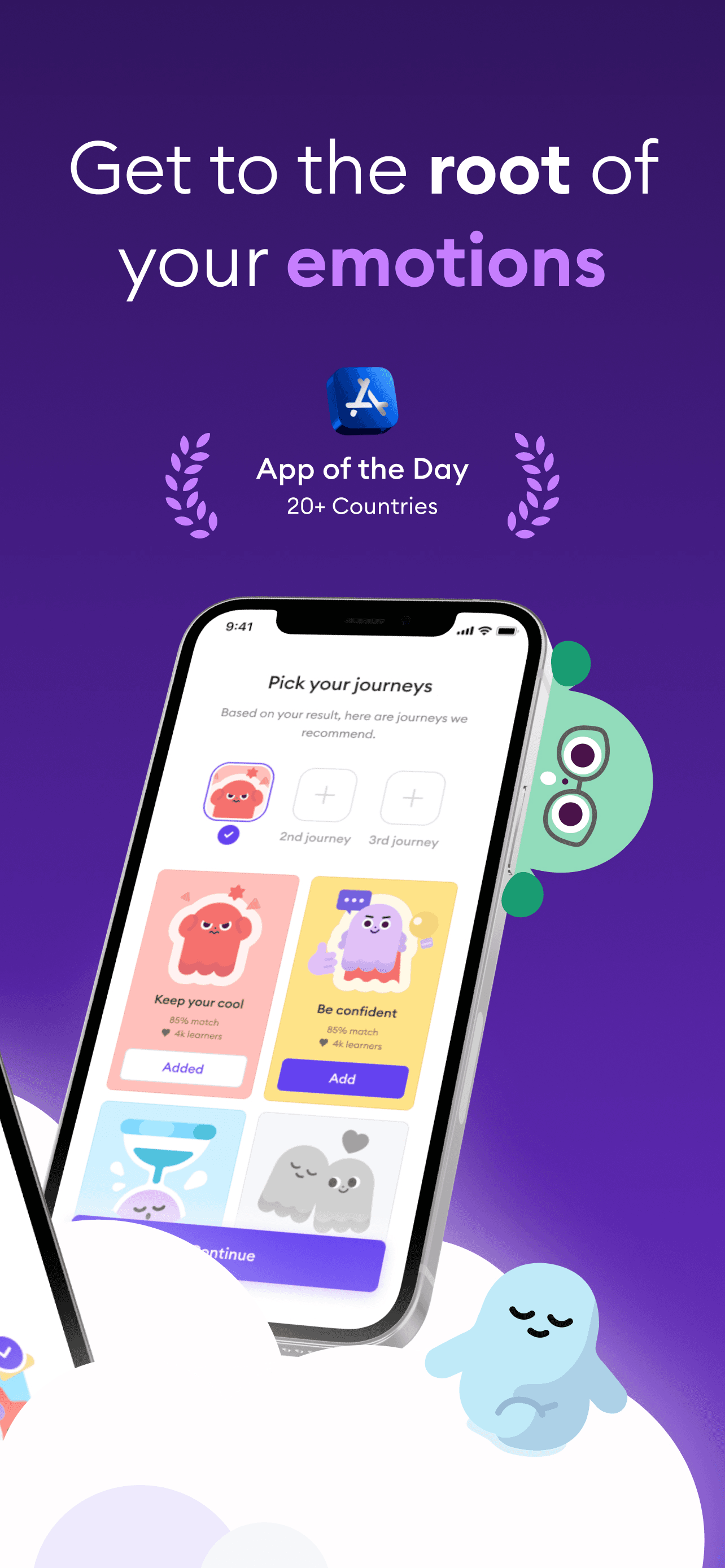
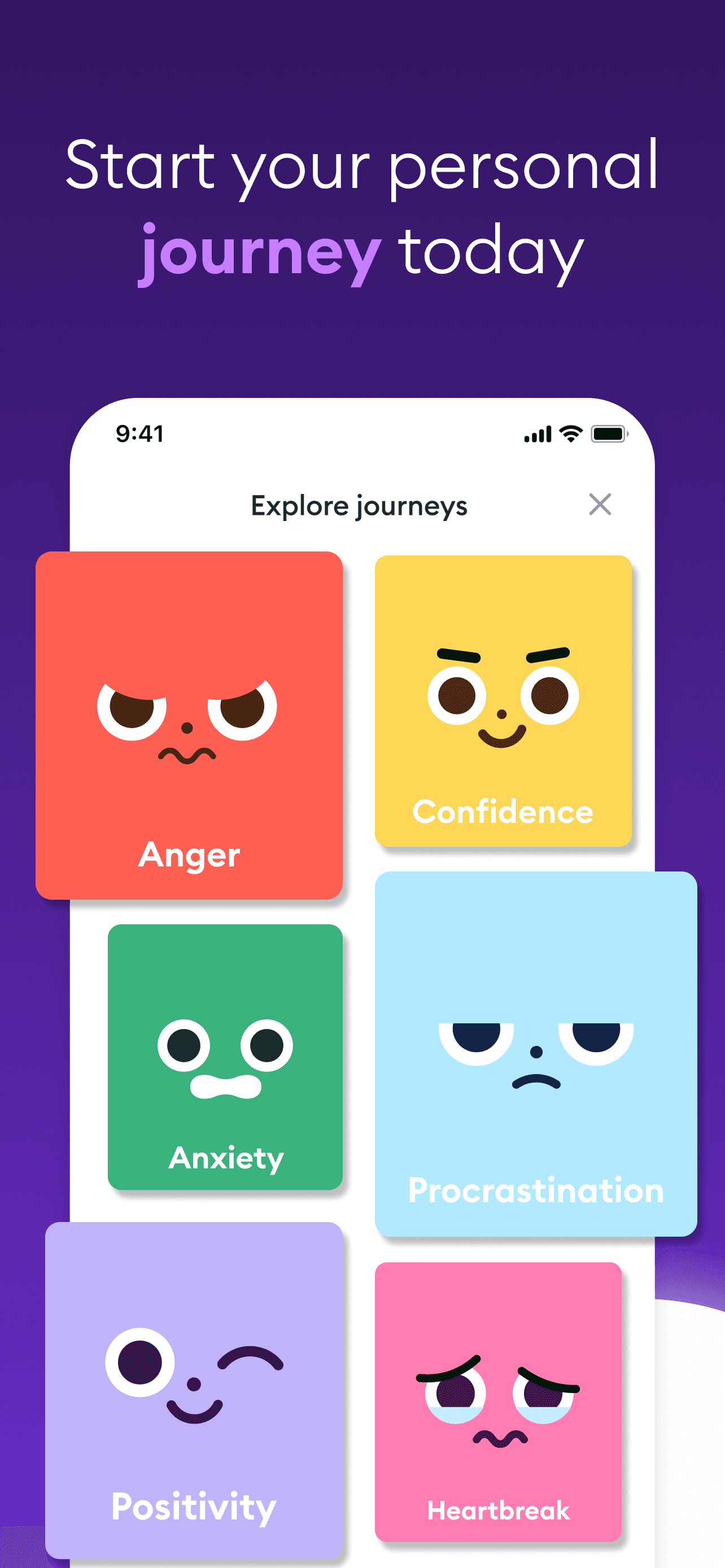
What sets Ahead apart is the personalized journey. The app learns from your responses to build a curriculum focused on the emotions you most want to work on — anger, anxiety, people-pleasing, perfectionism — and reinforces lessons with widget reminders and toolkit shortcuts. Five-minute daily sessions make it sustainable.
Use case: someone who knows their reactions are part of the problem (snapping at a partner, freezing at work, catastrophizing) and wants structured practice for changing those patterns. Reviewers consistently mention noticeable behavior change within two to four weeks.
The tradeoff is the lesson format. Multiple-choice questions and fill-in-the-blank exercises feel grade-school per some reviews, and the lack of audio accessibility limits use for blind or dyslexic users. The paywall hits after a few free activities, with annual pricing in the $79.99 range. For users who want a structured curriculum to manage emotions, Ahead is the strongest pick among self-help tools.
Pros
- Personalized journey adapts curriculum based on your emotional patterns
- Five-minute daily lessons fit sustainably into busy work schedules
- Widget reminders and toolkit shortcuts reinforce techniques in real moments
Cons
- Multiple-choice format feels grade-school to some adult learners
- Lacks audio accessibility for blind or dyslexic users currently
- 6
 Get on App Store
#6Voidpet Garden: Mental HealthBest Self-Care
Voidpet Inc.
Daily Journal & Mood Tracker
- Rating
- 4.9
- Reviews
- 5.7K
- Price
- Paid
- 90-day trend
- —
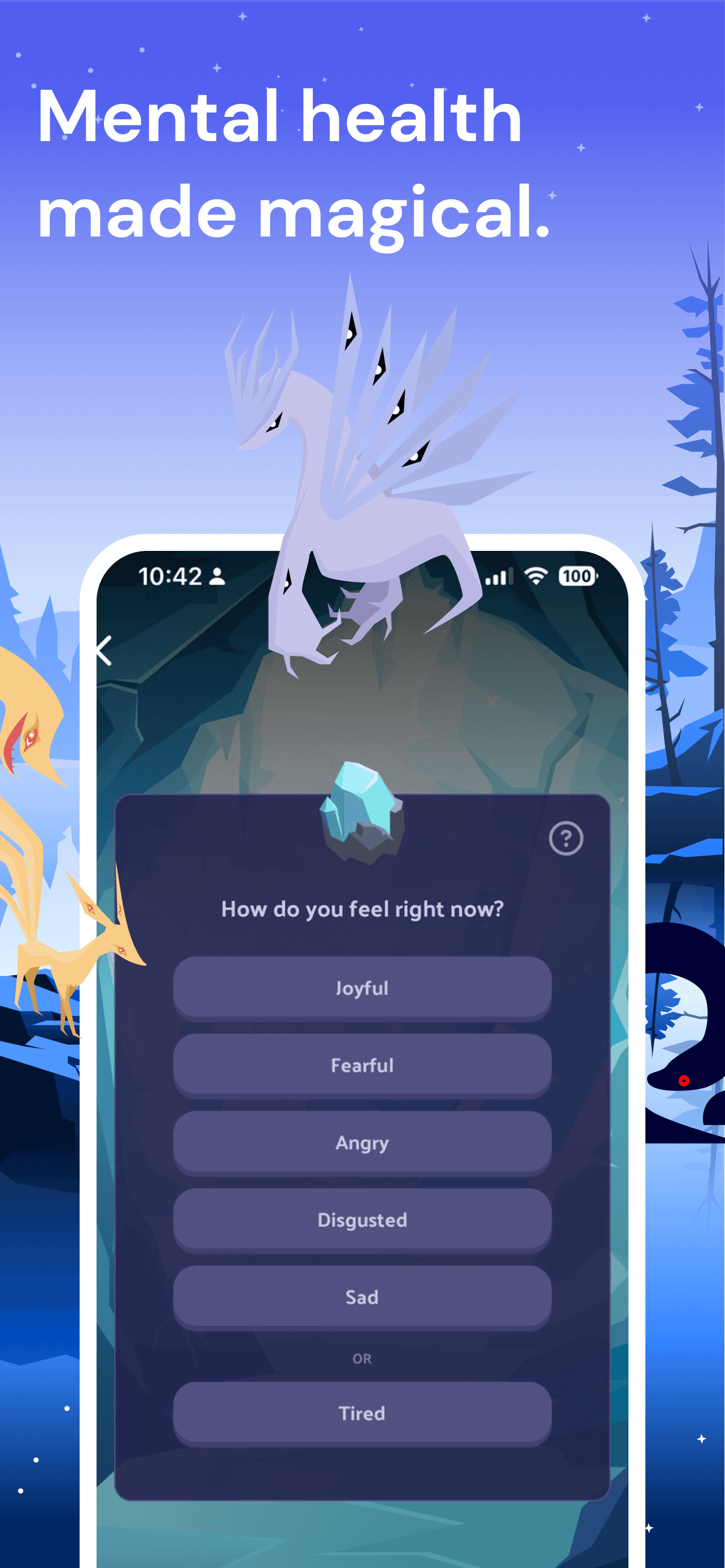
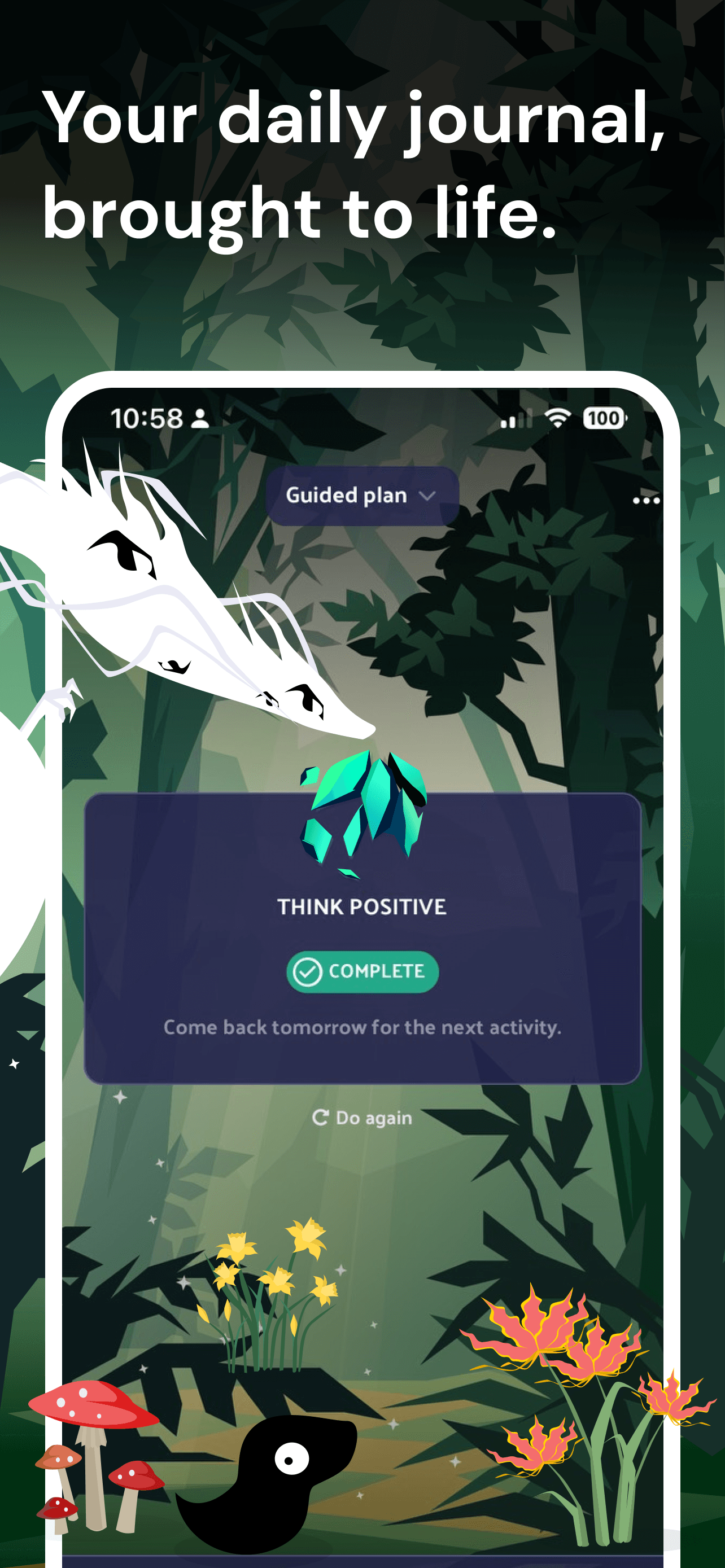
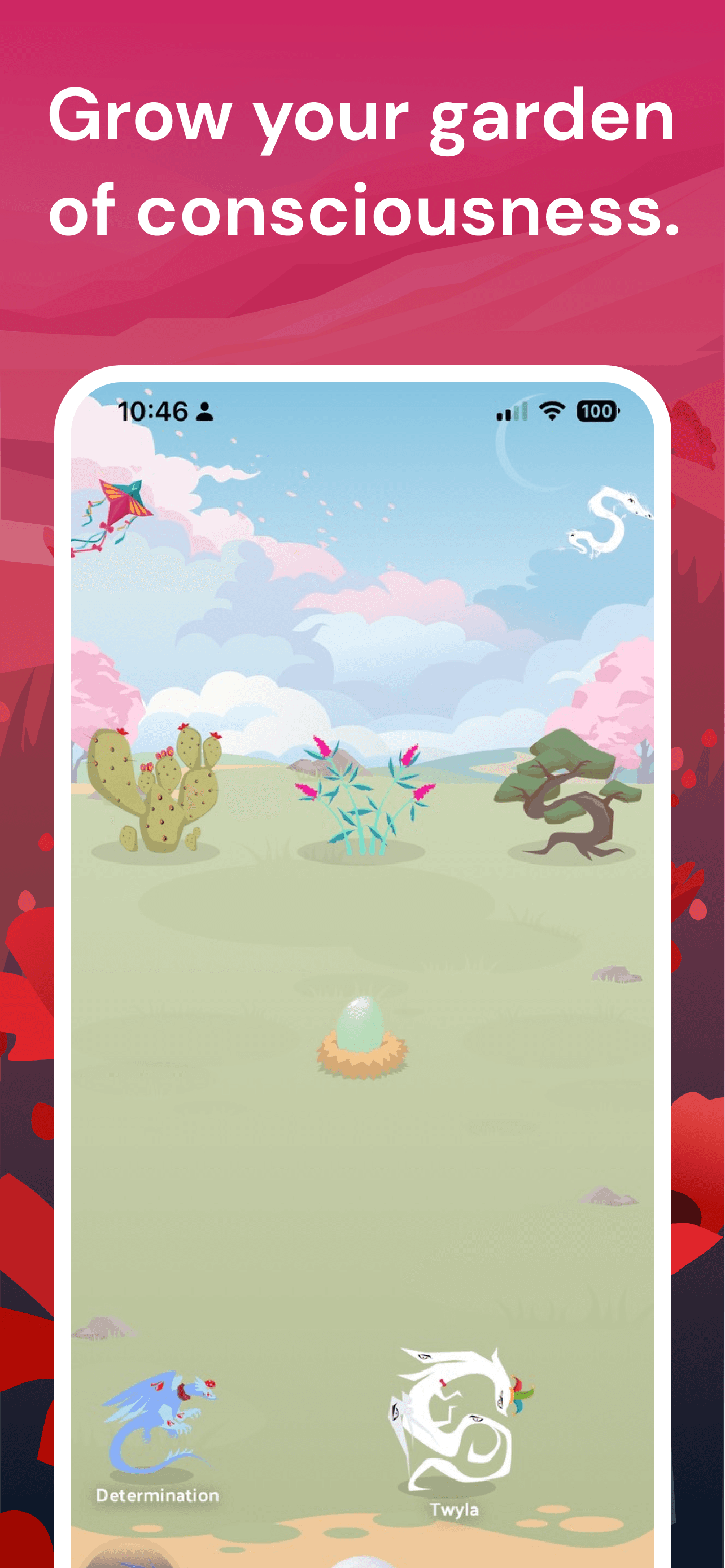
Voidpet Garden is the best mental health app for self-care because it turns journaling and mood tracking into a relaxing creature-collecting garden game, drawing on CBT and DBT prompts designed with practicing therapists. The 4.86 rating across 5,614 reviews reflects a strong, devoted audience that appreciates the gentle, gamified approach.
What sets Voidpet Garden apart is the visual and emotional metaphor. Anxieties, anger, and curiosity become magical creatures you befriend by completing journal prompts — overthink timers, vent retreats, hope boxes, negative thought checks. The pixel-art garden grows as you journal, which builds a daily ritual that doesn't feel like medicine.
Use case: a younger user (teens, twenties) who finds clinical apps too cold and wants a self-care companion that looks more like a Stardew Valley spin-off than a mood tracker. The free tier is generous; Voidpet Giga unlocks more cosmetics and prompts.
The tradeoff is depth. Voidpet Garden is genuinely a self-help and journaling tool, not a clinical platform. There's no therapist matching, no crisis-handling beyond hope-box content, and the gamification won't appeal to users who want a more direct CBT workflow. For users who need a soft entry point to mental health journaling, Voidpet Garden is the strongest pick.
Pros
- Pixel-art garden makes mood tracking feel like playing a cozy game
- CBT and DBT prompts designed with input from practicing therapists
- Generous free tier includes most journal prompts and creature collection
Cons
- Not a clinical platform — no therapist matching or crisis features
- Gamification will not appeal to users wanting direct CBT workflows
- 7
 Get on App Store
#7SuperBetter: Mental HealthBest for Teens
SuperBetter, LLC
The Power of Living Gamefully
- Rating
- 4.7
- Reviews
- 7.9K
- Price
- Paid
- 90-day trend
- —
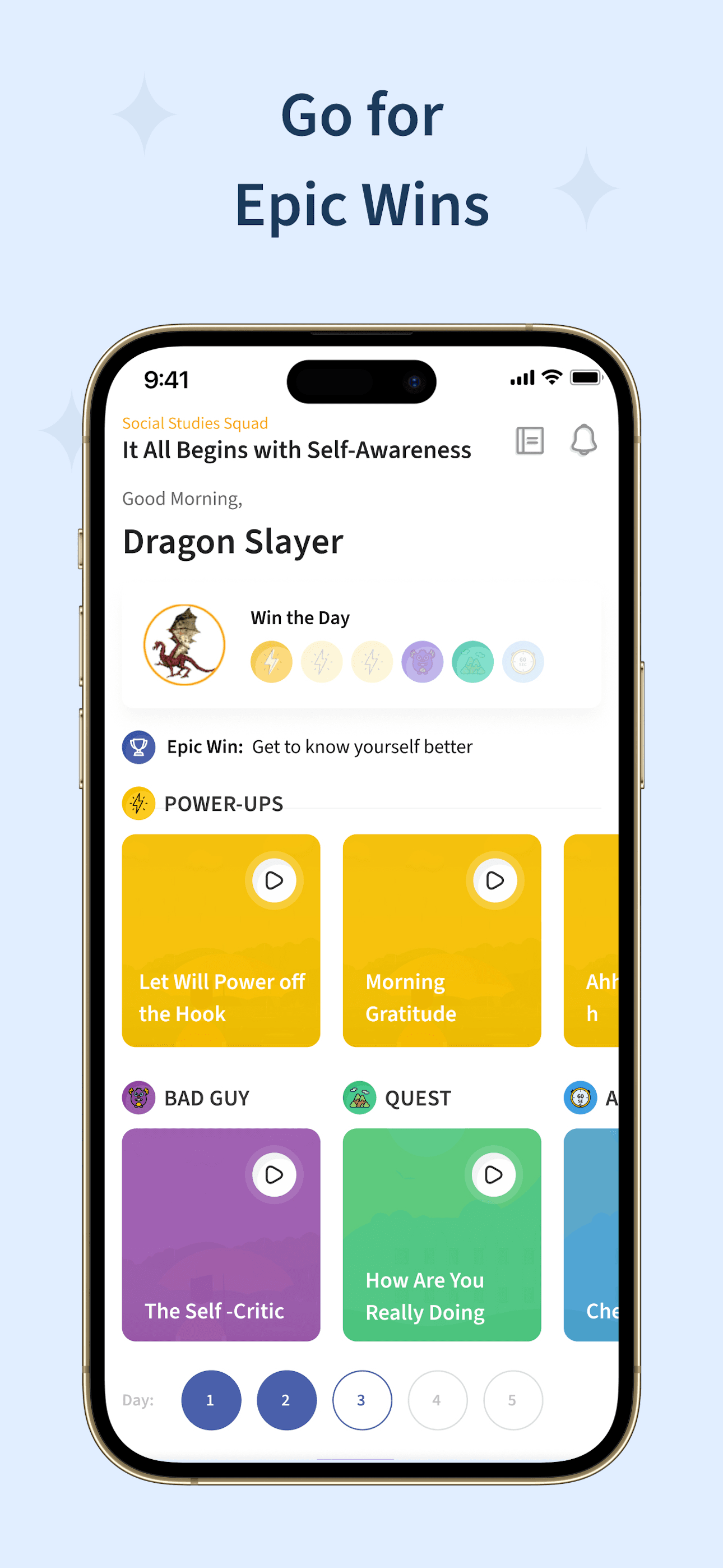
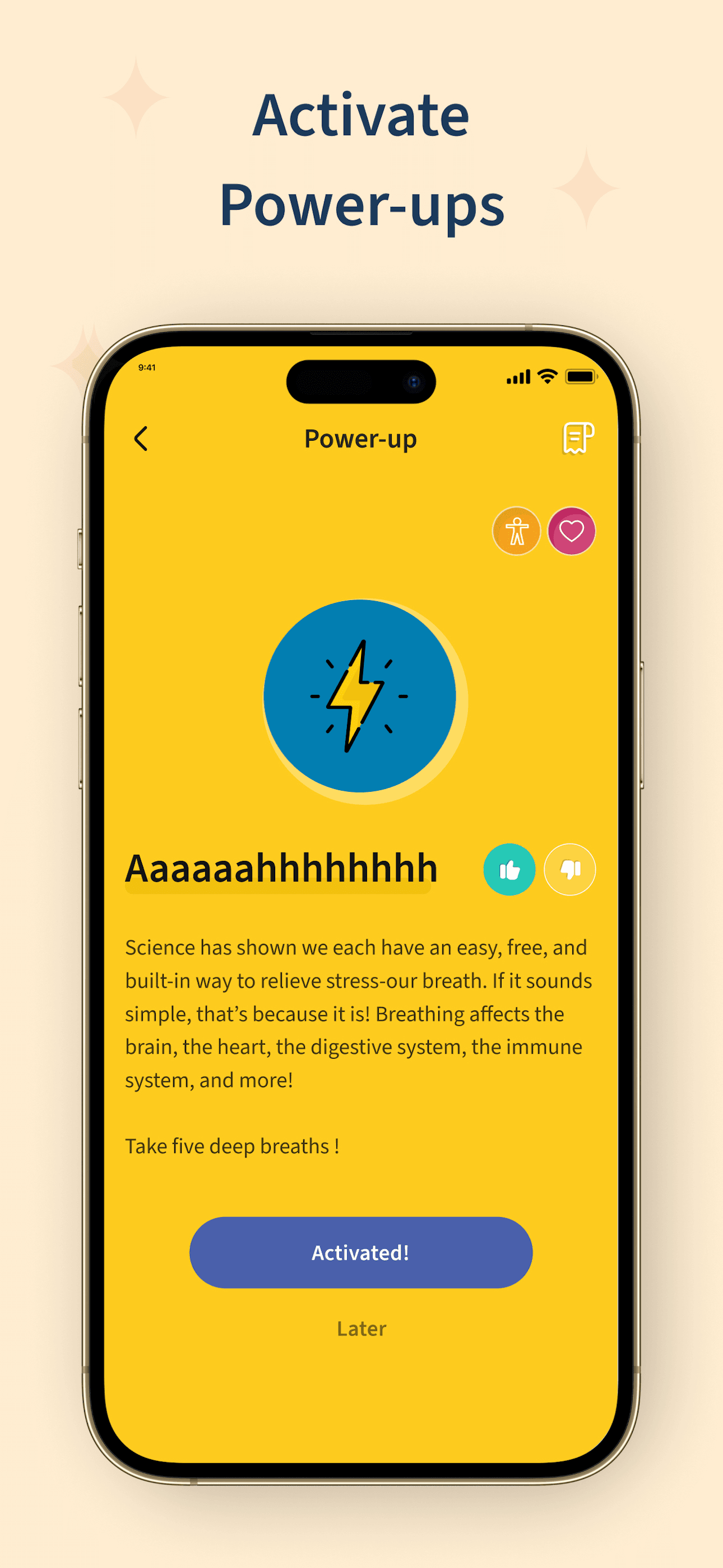
SuperBetter is the best mental health app for resilience-building because it applies game psychology to real-life challenges, inviting you to define an epic win, recruit allies, complete quests, and battle bad guys (your own negative thought patterns). The 4.65 rating across 7,881 reviews comes from a small but committed audience, and the app was created by researcher Jane McGonigal with University of Pennsylvania RCT evidence behind it.
What sets SuperBetter apart is the gameful framework. Most mental health apps ask you to log; SuperBetter asks you to play. The 7 rules for living gamefully — challenge yourself, identify allies, activate power-ups, find quests, fight bad guys, adopt a secret identity, go for epic wins — translate well to recovery from injury, depression, or major life stress.
Use case: a user who finds traditional mental-health framing demoralizing and wants something more empowering. SuperBetter is particularly strong for teens, young adults, and anyone in recovery from a specific event (concussion, breakup, job loss) who benefits from structure.
The tradeoff is niche appeal. The game metaphor will not resonate with everyone, and the app's hero, host, and player account structure (designed for educators) can feel confusing for solo users. Pricing is modest at $24.99 annually. For users who want a gameful approach to resilience, SuperBetter is the standout pick.
Pros
- Game psychology applied to real challenges with RCT evidence behind it
- Gameful framework resonates strongly with teens and young adults
- Modest annual pricing at $24.99 makes premium access affordable
Cons
- Hero, host, and player account structure confuses solo individual users
- Game metaphor will not resonate with all mental-health learning styles
- Rating
- 4.6
- Reviews
- 6.2K
- Price
- Free
- 90-day trend
- —
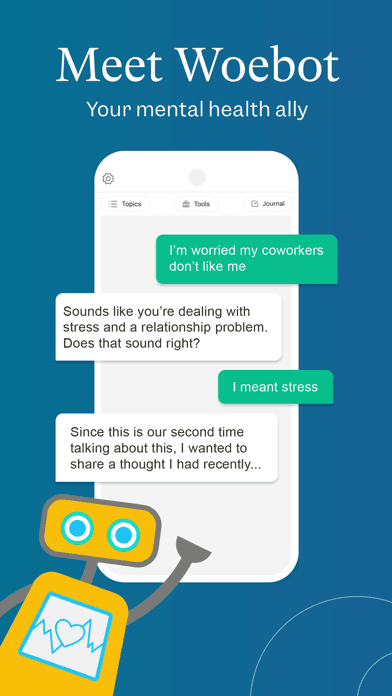
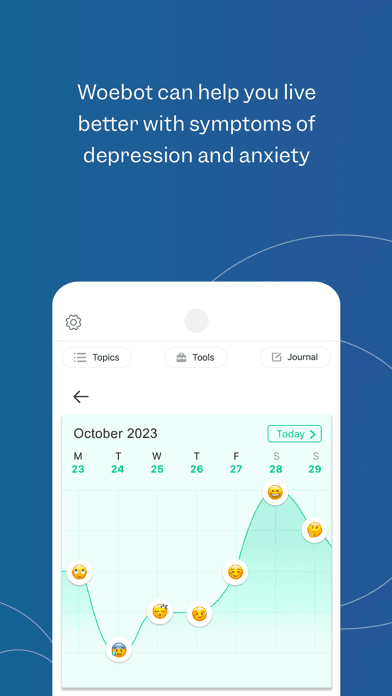
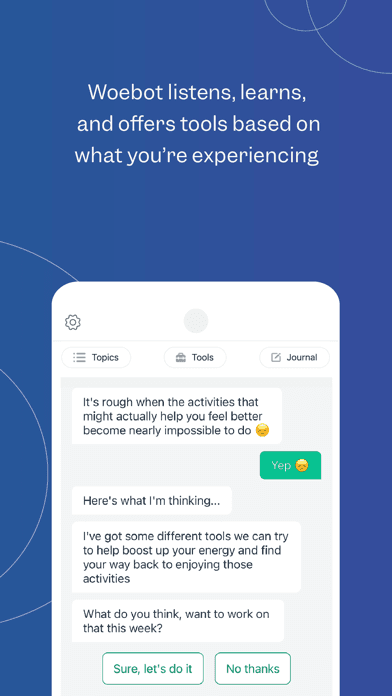
Woebot is the best mental health app with CBT structure because the chat-based interface walks you through structured Cognitive Behavioral Therapy techniques with clinical-grade rigor, backed by 18 trials including full RCTs. The 4.64 rating across 6,239 reviews reflects strong satisfaction among users who have access — Woebot now requires an access code from a healthcare provider, employer, or partner organization.
What sets Woebot apart is the science. The team has published more peer-reviewed research than most digital-mental-health competitors combined, and Woebot has been covered in The New York Times, The New Yorker, Washington Post, and on 60 Minutes. The app explicitly does not sell or share personal data with advertisers, a meaningful commitment in this category.
Use case: a user whose employer or insurance partners with Woebot Health, who wants structured CBT practice between or instead of therapy sessions. The Adult, Adolescent, and Maternal Health versions tailor content to specific life stages.
The tradeoff is access. Without a partner code, you cannot use Woebot, which limits availability significantly. The app is most useful as part of an integrated mental-health benefits package rather than a consumer download. For users with access, Woebot is the strongest evidence-based CBT chatbot available.
Pros
- Eighteen peer-reviewed trials including full randomized controlled clinical studies
- Explicit no-sell promise for personal data with advertiser-free design
- Adolescent and Maternal Health versions tailor content to life stages
Cons
- Access code required from provider, employer, or partner organization
- Not available as direct consumer download without partnership access
- Rating
- 4.8
- Reviews
- 3.9K
- Price
- Paid
- 90-day trend
- —
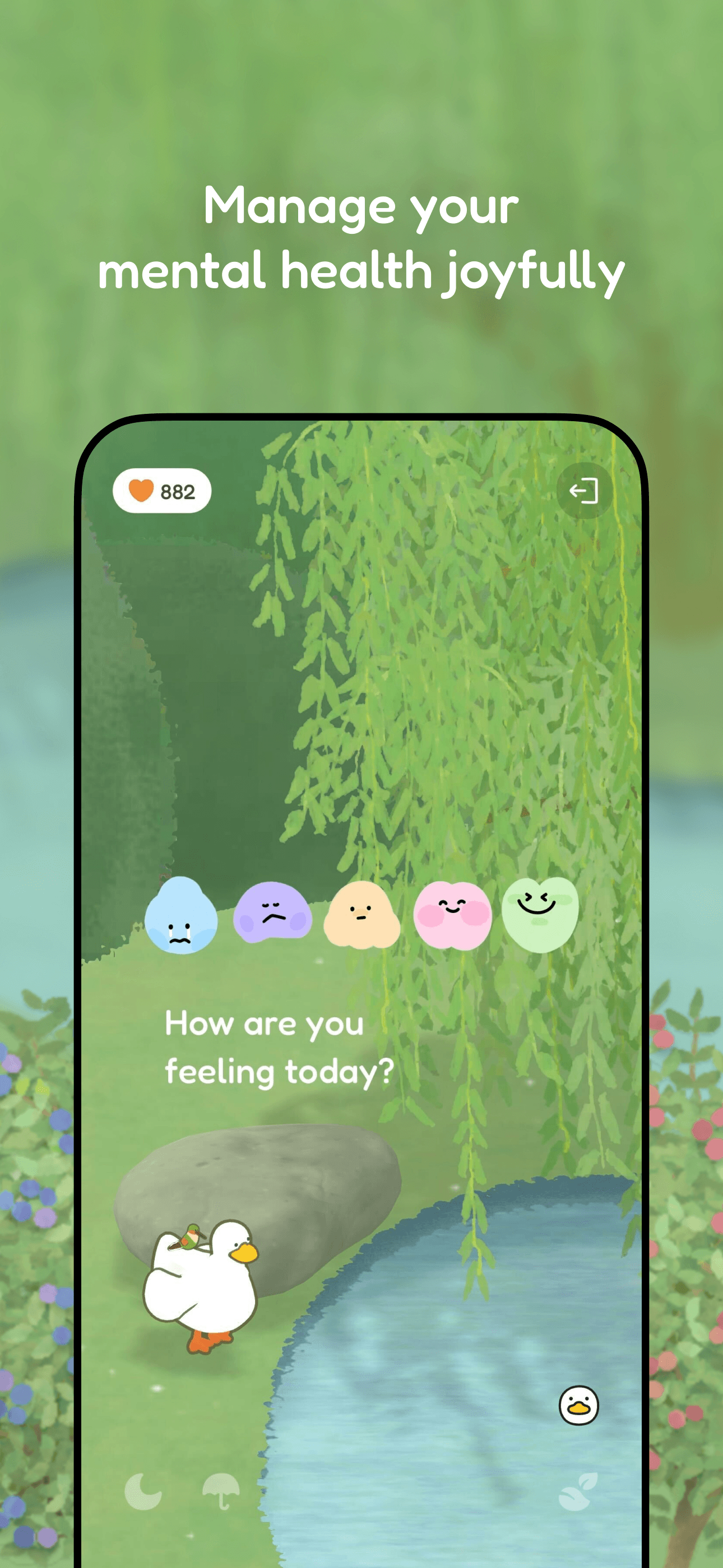
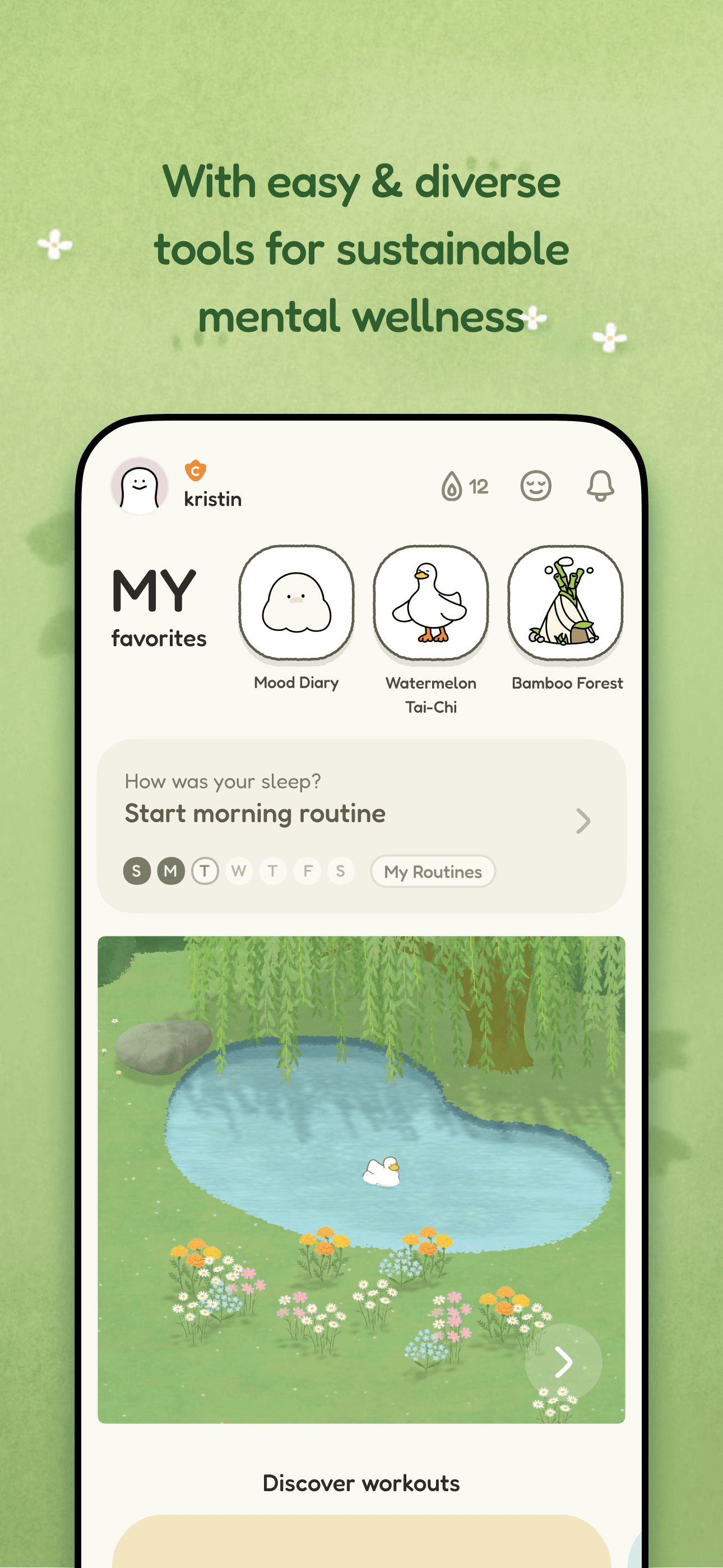
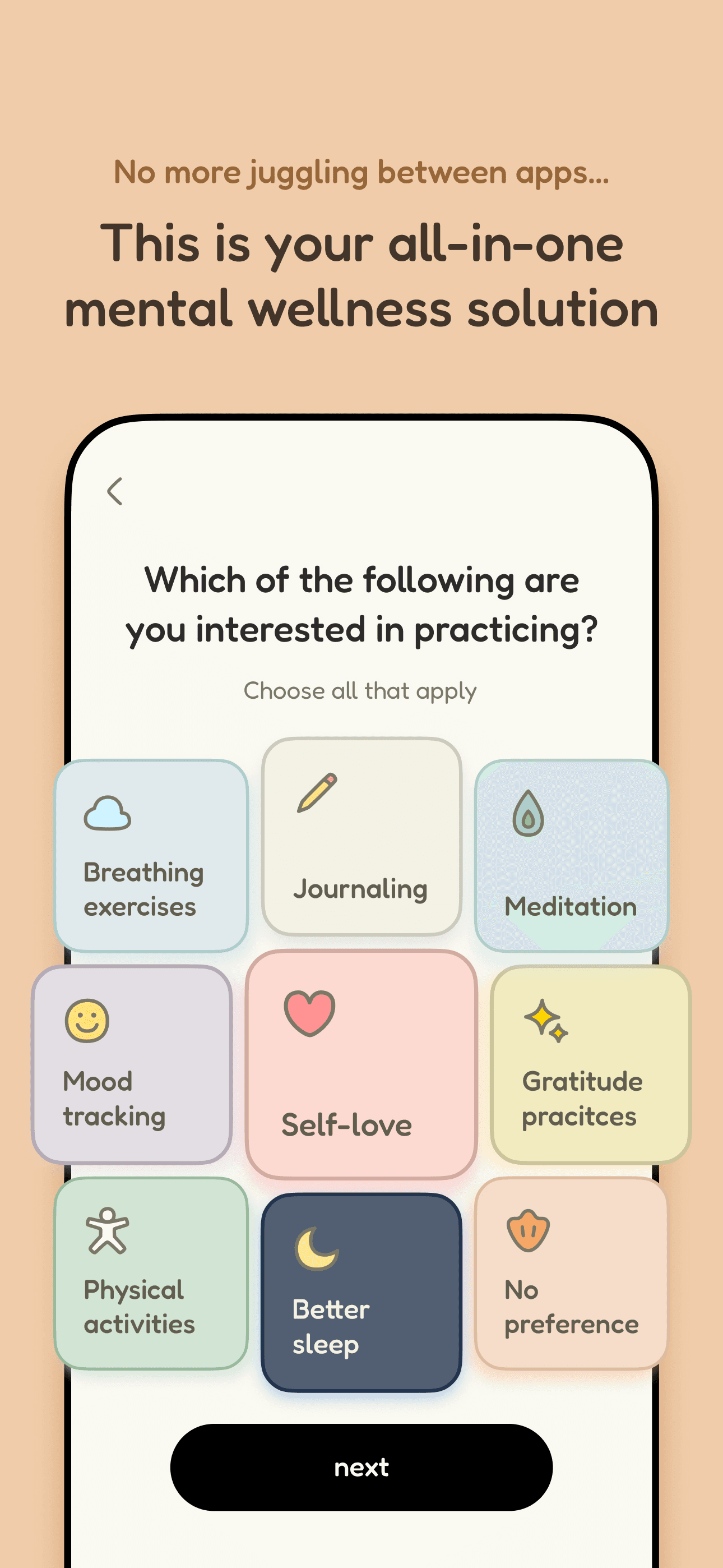
Quabble is the best free mental health app for everyday wellness because it bundles 18 therapist-backed mini-routines (gratitude journaling, 54321 grounding, breathing exercises, mood diary) into a calming, illustrated park where a Quabble Duck guides you through small acts of wellness. The 4.8 rating across 3,656 reviews reflects strong response to a newer entrant.
What sets Quabble apart is the breadth of evidence-based tools in one playful container. Most self-care apps focus on one thing (breathing, journaling, meditation); Quabble offers grounding, gratitude reflection, safe-place visualization, worry-box exercises, mindful meditation, and gentle Tai Chi together, with a 15-day First Bloom onboarding program to build sustainable habits.
Use case: someone who has tried single-purpose apps (Calm for meditation, Daylio for mood) and wants one place for all of it. Quabble's anonymous Bamboo Forest community adds a judgment-free social layer for users who want to feel less alone.
The tradeoff is depth on any single tool. Quabble's grounding exercise is good but not as deep as a dedicated CBT app, and the meditation library is shallow compared to Calm or Headspace. Pricing at $8.99 monthly or $49.99 annually is competitive. For users who want a one-stop calm sanctuary, Quabble is the strongest playful pick.
Pros
- Eighteen therapist-backed mini-routines bundled in one calming interface
- First Bloom 15-day onboarding builds sustainable self-care habit foundation
- Anonymous Bamboo Forest community adds judgment-free social support layer
Cons
- Each tool shallower than dedicated meditation or journaling competitors
- Newer entrant with smaller review base than established mental health apps
- 10
 Get on App Store
#10Betwixt–The Story of YouBest for Crisis
Mind Monsters Games Ltd
Epic journey of self-discovery
- Rating
- 4.9
- Reviews
- 3.2K
- Price
- Free
- 90-day trend
- —
Betwixt is the best mental health app for crisis-adjacent rumination because it wraps emotion regulation, CBT, mindfulness, and Jungian self-reflection into a cozy choose-your-own-path story game that meets users in moments of overwhelm. The 4.87 rating across 3,066 reviews comes from users who specifically chose Betwixt for its immersive, soundscape-driven approach to inner work during hard nights.
What sets Betwixt apart is the format. Rather than asking you to journal in a blank text box, the game places you as the hero of a dreamlike fantasy world where dialogue choices unlock self-awareness powers — identifying values, soothing rumination, deepening self-knowledge. The interactive narrative is a powerful distraction-with-purpose for the 3 AM thought spirals when calling a hotline feels like too much.
Use case: a user processing a difficult chapter (breakup, loss, depressive episode) who finds CBT diaries dry, struggles to engage with breathing apps, and needs a gentle companion during the long evenings. Betwixt is not a substitute for crisis support — if you are in active crisis, call or text 988 — but it can ease the edge of acute rumination.
The tradeoff is the model and the pace. Betwixt is sold as a one-off purchase rather than a subscription, which appeals to anti-subscription users but limits feature growth, and the game pace is slow by design. Scholarship access is available for users who cannot afford the fee. For users who want emotional regulation that feels like art, Betwixt is unmatched.
Pros
- Immersive narrative game makes self-reflection feel like reading a novel
- One-off purchase model with scholarship access for users who cannot afford
- Independent psychology research shows lasting reductions in emotion dysregulation
Cons
- Slow narrative pace will frustrate users wanting fast CBT exercises
- Format limits replay value once you complete all eleven dreams


How we picked
Data sources: We pull live App Store metadata (rating, review count, version cadence, screenshots, developer) through the iTunes Search API and our own ranking history database, then layer in editorial review of each app's clinical evidence, pricing, privacy practices, and licensing of providers where applicable. Review themes for pros and cons come from sampling recent App Store reviews across rating buckets.
How we score: Each app is evaluated on clinical credibility (peer-reviewed studies, clinician-led design), therapist or counselor licensing where applicable, content quality across CBT, DBT, ACT, and mindfulness, privacy posture (HIPAA, GDPR, data sharing), crisis-handling design (988 referrals, safety planning), and signal strength from ratings.
Refresh cadence: We refresh metadata weekly and re-evaluate the ranked list at least quarterly, or sooner when a major version ships, pricing changes, or significant clinical evidence is published.
What we exclude: Apps that market themselves as treatment without FDA clearance or peer-reviewed evidence, apps that share mental health data with third-party advertisers, abandoned apps without updates in 12+ months, and apps that lack any crisis-handling design. We exclude AI chatbots that promise diagnosis or replace clinicians.
What we don't do: We don't accept payment for placement, we don't recommend any app as a substitute for therapy with a licensed clinician, and we don't claim these apps treat depression, anxiety, PTSD, or any clinical condition. If you are in crisis, call or text 988. If you have a diagnosis or medication regimen, work with your clinician before adding or removing tools.