



Best Brain Training Apps for iPhone
By App Store Tracker Editorial · Updated — live App Store data verified
The short version
The best brain training app for iPhone in 2026 is Impulse — 830K U.S. ratings at 4.75 stars, with a daily-workout format covering memory, math, attention, language, and logic across short adaptive sessions. Elevate is the close runner-up at 4.77 with stronger reading and vocabulary tracks. Lumosity is the science-backed pick. The 10 apps on this list cover both adaptive multi-discipline trainers (Impulse, Elevate, Peak, Lumosity, MindPal, Clever) and puzzle-focused trainers (Braindom, Sudoku Puzzle, Word Search Pop, IQ Masters). These apps train cognitive skills through games; they are not medical interventions.
Jump to a pick↓
Brain training apps for iPhone in 2026 fall into two camps that solve different problems. Adaptive trainers (Impulse, Elevate, Peak, Lumosity, MindPal, Clever) treat your brain like a gym — daily workouts of 5-15 minutes across multiple cognitive skill domains, with games that adjust difficulty as you improve. Puzzle-focused apps (Braindom, Sudoku Puzzle, Word Search Pop, IQ Masters) lean into one or two game types you choose to play. Impulse leads on review count by a wide margin (830K U.S. ratings); Elevate and Lumosity have stronger science-backed marketing claims. Important note: these apps train specific cognitive skills through repeated practice. They are not medical treatments for cognitive decline or memory disorders. Independent research on brain-training apps shows benefits are typically specific to the trained tasks — improving at the games doesn't necessarily translate to broad cognitive gains. Pick by what you want: daily-habit cognitive practice (Impulse, Elevate), focused puzzle play (Sudoku Puzzle, Word Search Pop), or science-positioned workouts (Lumosity, Peak).
- Rating
- 4.8
- Reviews
- 834.5K
- Price
- Paid
- 90-day trend
- —
Impulse is the best brain training app for iPhone in 2026 by review count and adoption — 830,083 U.S. ratings averaging 4.75 stars, the deepest review pool of any pick on this list. The app delivers daily personalized workouts across five core cognitive domains: memory, math, attention, language, and logic. Each session takes 5-15 minutes, with games adapting difficulty as you improve and progress tracking visualizing your gains over time. Impulse differs from Elevate by being broader (more game types across more domains) and from Lumosity by being newer with more aggressive growth and a more game-feeling presentation. A real scenario: you commit to a 7-day streak, the app sends a morning reminder, you spend 12 minutes on a workout of three games (sequence memory, mental math, verbal fluency), and the dashboard shows where you've improved over the week. The tradeoff is the subscription model — most games sit behind a paid tier after a brief trial, and reviewers describe the paywall pressure as persistent. The 4.75 rating reflects strong satisfaction among paying users. Best for users who want broad daily cognitive workouts and are willing to subscribe.
Pros
- Largest review pool of any brain training app — 830K U.S. ratings
- Daily workouts cover five cognitive domains with adaptive difficulty
- Clean progress tracking across weeks visualizes improvement over time
Cons
- Most games sit behind paid subscription after brief trial
- Persistent paywall pressure flagged by recent reviewers
- Rating
- 4.8
- Reviews
- 533.5K
- Price
- Paid
- 90-day trend
- —
Elevate is the best brain training app for iPhone users focused on reading, writing, and verbal skills. With a 4.77 average across 527,951 U.S. ratings, Elevate has the highest rating among major brain-training apps on this list, reflecting a devoted user base — many reviewers describe noticeable improvements in their writing and reading speed over weeks of daily practice. Elevate differs from Impulse by leaning academic rather than varied — reading comprehension, expression, writing, vocabulary, and listening tracks are deeper than competitors' equivalents. A real scenario: you write professionally, you commit to 15 minutes a day on Elevate's writing and vocabulary tracks, and after a month your typing speed and word-choice precision feel measurably better on long emails. The tradeoff is the subscription is real ($45-$80/year depending on tier and promotion), and the math and logic tracks are thinner than Impulse's. Best for users who care more about language skills than general cognitive training — writers, students, professionals who want sharper reading and writing.
Pros
- Highest rating among major brain trainers at 4.77 stars across 528K ratings
- Reading, writing, and vocabulary tracks are noticeably deeper than competitors
- Reviewers describe measurable real-world reading and writing improvements
Cons
- Subscription required for full content ($45-$80/year)
- Math and logic tracks are thinner than Impulse's equivalents
- 3Get on App Store
#3Peak - Brain TrainingBest Science-Backed
Synaptic Labs
Better games for smarter minds
- Rating
- 4.7
- Reviews
- 146.2K
- Price
- Paid
- 90-day trend
- —
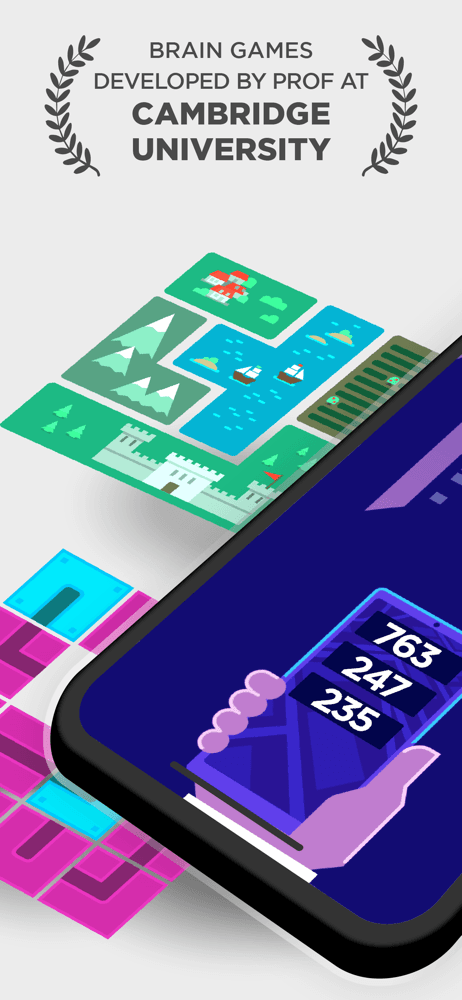
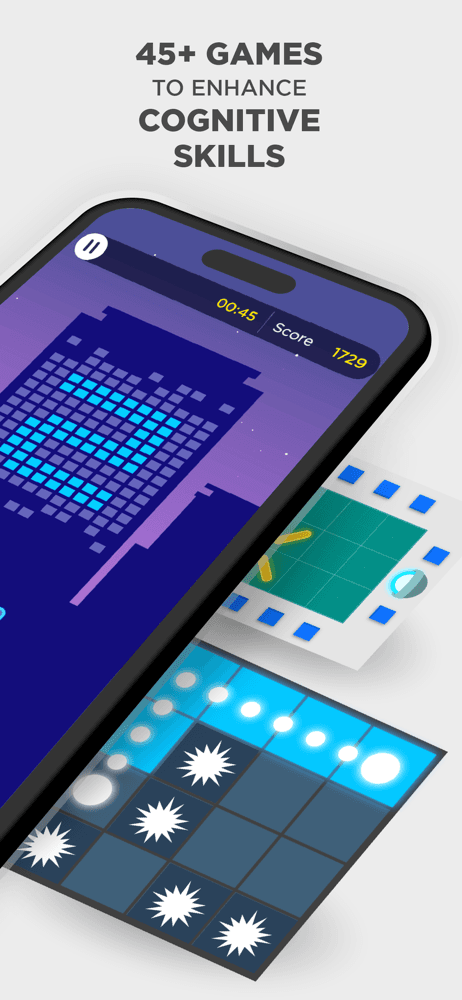
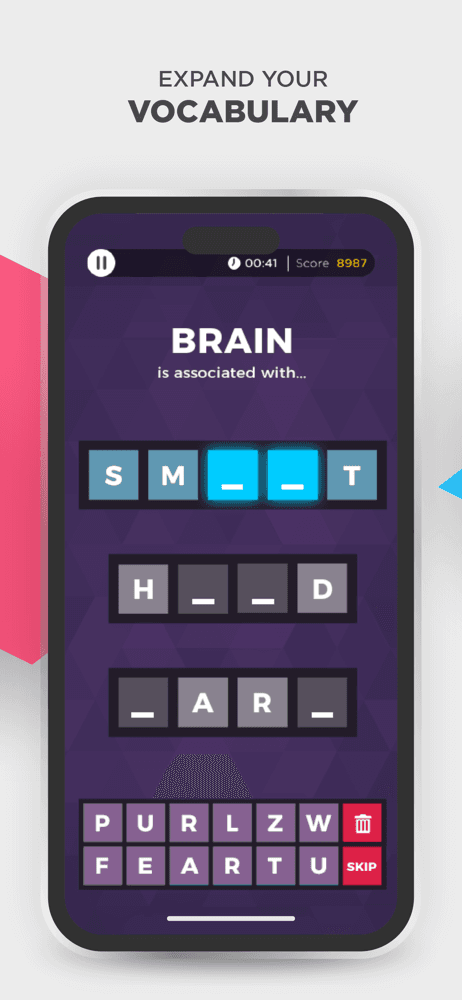
Peak by Synaptic Labs is one of the more research-positioned brain training apps on iPhone, with games developed in collaboration with academic neuroscientists. With a 4.66 average across 146,054 U.S. ratings, Peak offers daily workouts across memory, attention, problem-solving, language, mental agility, coordination, and creativity. Peak differs from Impulse by leaning slightly older as a brand and more science-positioned, and from Lumosity by being smaller but with similar academic framing. A real scenario: you commit to Peak Pro ($35-$70/year), the app delivers a daily workout based on your weakest tracked skills, and you do 15-20 minutes of varied games (a music-listening attention game, a number-memory game, a word-finding game) each morning. The tradeoff is the smaller content library than Impulse and Elevate, and reviewers describe occasional game-difficulty plateaus where progress feels slow. The 4.66 rating is solid but slightly lower than the top picks. Best for users who want a research-positioned alternative to Lumosity with strong design polish.
Pros
- Research-positioned design with academic neuroscience collaborations
- Covers seven cognitive domains including coordination and creativity
- Strong design polish across the app surface
Cons
- Smaller content library than Impulse and Elevate
- Occasional game-difficulty plateaus flagged by reviewers
- 4
 Get on App Store
#4Braindom: Brain Games Test OutBest Variety
Lahana Games Oyun Yazilim ve Teknoloji Anonim Sirketi
Solve Tricky Easy Mind Puzzles
- Rating
- 4.6
- Reviews
- 164.4K
- Price
- Free
- 90-day trend
- —
Braindom is a puzzle-style brain training app for iPhone focused on tricky riddle-puzzles and lateral-thinking challenges. With a 4.62 average across 161,195 U.S. ratings, Braindom is a different category of app — not an adaptive cognitive trainer like Impulse or Lumosity, but a curated stream of one-off puzzles designed to challenge assumptions and reward creative thinking. Braindom differs from Impulse by not adapting to your skill level and from Sudoku Puzzle by mixing many puzzle types rather than focusing on one. A real scenario: you open Braindom in a waiting room, you spend three minutes on a puzzle ('which glass will fill first?'), the answer is the unexpected one, and you tap to the next. The tradeoff is the ad-heavy free experience — reviewers consistently flag ad density as the dominant friction, with each puzzle solved often gating into a 30-second ad. Premium removes ads but adds another monthly cost. Best for users who want casual brain-puzzle entertainment more than structured cognitive training.
Pros
- Curated puzzle stream rewards lateral-thinking and creative reasoning
- Casual format good for waiting rooms and idle moments
- No adaptive-trainer commitment required
Cons
- Ad density on the free tier flagged as the dominant friction
- Not a real cognitive trainer — entertainment more than structured training
- Rating
- 4.9
- Reviews
- 84.5K
- Price
- Paid
- 90-day trend
- —
Sudoku Puzzle by Guru Smart Holding is the highest-rated brain training app on this list at 4.88 stars across 81,511 U.S. ratings. The app is dedicated to Sudoku — the classic 9x9 number-placement puzzle — with multiple difficulty levels, daily puzzles, themed pack challenges, statistics tracking, and hint and notes features. Sudoku Puzzle differs from broad cognitive trainers by training a specific skill (logical reasoning, working memory, pattern recognition) through one game type repeatedly, and the depth of one-game focus is what reviewers consistently praise. A real scenario: you solve the daily expert-level puzzle on the morning commute in 12 minutes, the app tracks your time history, and you can see your average expert-level solve time dropping over weeks. The tradeoff is the narrow scope — if you want varied cognitive training, Sudoku Puzzle is one game, not a workout. Ad density on the free tier has drawn some complaints. Best for users who specifically love Sudoku as a daily cognitive habit and don't need broader training variety.
Pros
- Highest-rated app on this list at 4.88 stars across 81K ratings
- Multiple difficulty levels with hint and notes features
- Daily puzzles and themed packs maintain steady engagement
Cons
- Narrow scope — Sudoku only, no broader cognitive training
- Free tier ad density has drawn some complaints
- 6
 Get on App Store
#6Lumosity: Brain Training GamesBest for Seniors
Lumos Labs, Inc.
Play Brain Games & Puzzles
- Rating
- 4.7
- Reviews
- 128.8K
- Price
- Paid
- 90-day trend
- —
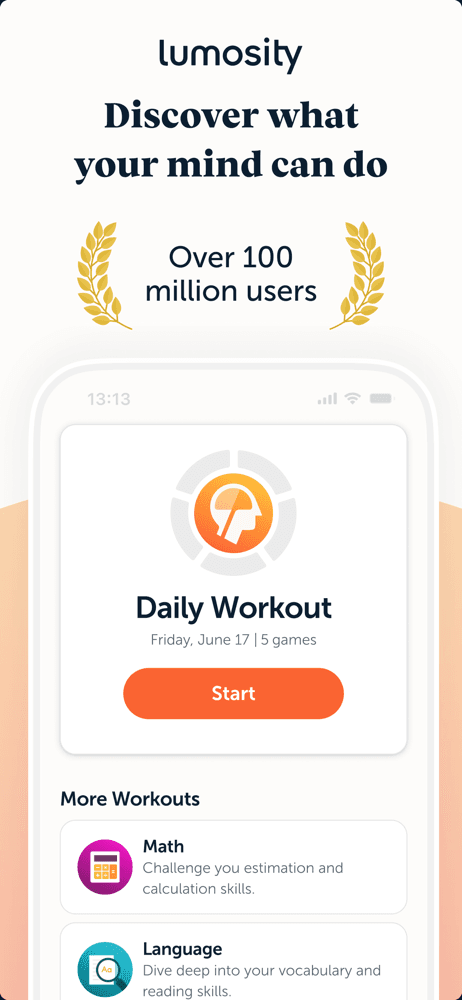
Lumosity is the most established science-backed brand in the brain-training category, with peer-reviewed research papers published on specific games and a long-running user base. With a 4.68 average across 127,116 U.S. ratings, Lumosity offers daily workouts across memory, attention, flexibility, problem-solving, and language. Lumosity differs from Impulse by being more established (the brand defined the category in the early 2010s) and from Peak by being larger but slightly less polished in newer feature work. A real scenario: you start Lumosity's free trial, the app builds a personalized workout based on initial baseline games, and you commit to a daily 10-15 minute session of three games selected by the algorithm. The tradeoff is the subscription pricing ($60-$100/year for Premium) and the FTC settlement history (Lumosity changed its marketing language in 2016 after settling over earlier claims). The science-backed marketing today is more careful but Lumosity remains the brand with the most published research. Best for users who want a research-positioned brain trainer from the most established brand.
Pros
- Most established science-backed brand with published peer-reviewed research
- Daily workouts across memory, attention, flexibility, and problem-solving
- Long-running user base means stable feature set and reliable updates
Cons
- FTC settlement history requires more careful claim interpretation
- Subscription pricing ($60-$100/year) is among the higher tiers
- Rating
- 4.7
- Reviews
- 85.5K
- Price
- Paid
- 90-day trend
- —
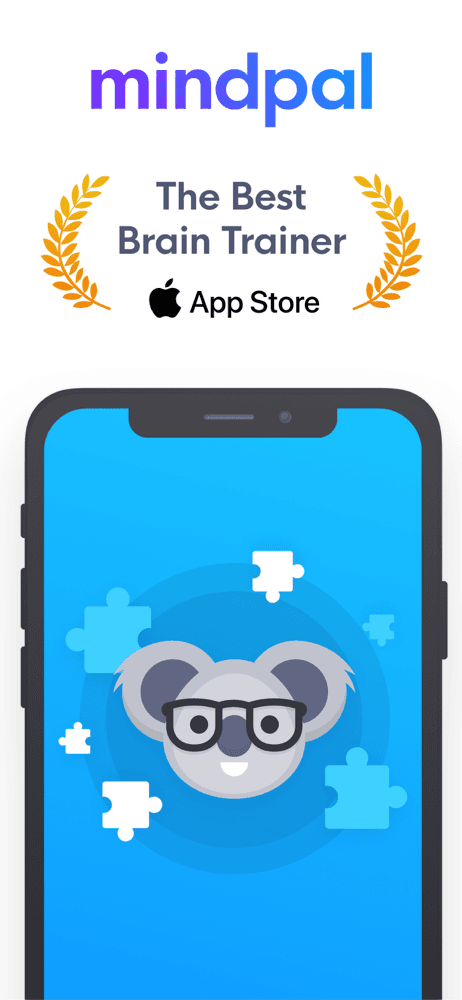
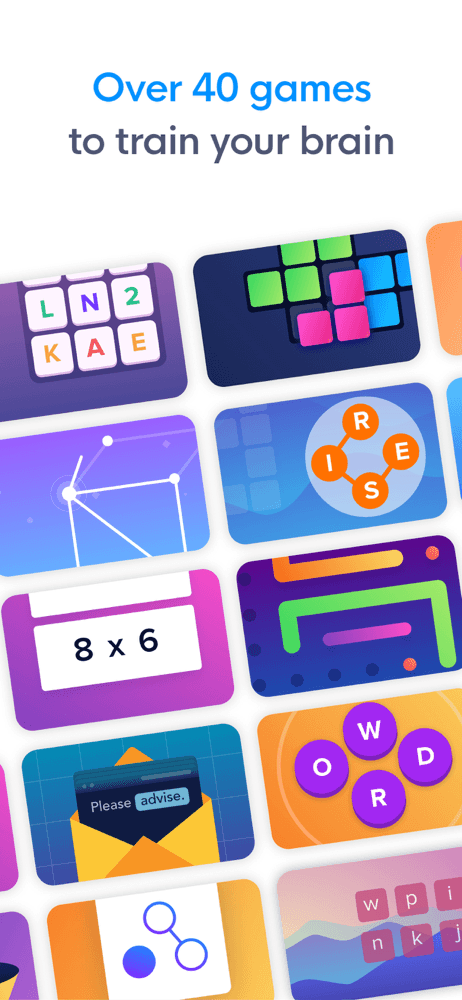
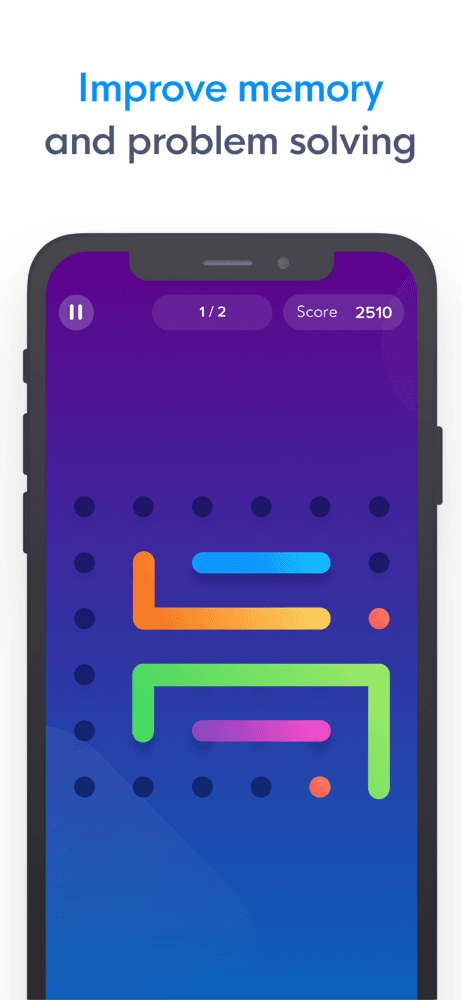
MindPal by Elektron Labs is a brain training app for iPhone built around a daily mini-workout format with games covering memory, focus, reaction, and reasoning. With a 4.74 average across 84,891 U.S. ratings, MindPal sits in the well-rated middle of this list — smaller than Impulse and Elevate but rated comparably. MindPal differs from Impulse by being slightly more game-feeling and from Lumosity by being newer and less research-positioned. A real scenario: you open MindPal in the morning, the app shows three daily games selected for you, you complete the workout in 8 minutes, and a simple dashboard tracks your trend across each cognitive area. The tradeoff is the smaller game library than Impulse and Elevate — the same games surface more often, and progress can feel less varied over weeks. The subscription pricing is comparable to competitors. Best for users who want a clean, simpler alternative to Impulse and don't mind a smaller content library.
Pros
- Clean daily-workout format with games across multiple cognitive areas
- Simpler interface than Impulse for users who want less complexity
- Steady progression tracking across cognitive areas
Cons
- Smaller game library than top picks means less variety over weeks
- Subscription model comparable to competitors with similar paywall pressure
- 8
 Get on App Store
#8Word Search Pop: Brain GamesBest for Memory
HI STUDIO LIMITED
Swipe Letters, Sharpen Mind
- Rating
- 4.7
- Reviews
- 77.8K
- Price
- Free
- 90-day trend
- —
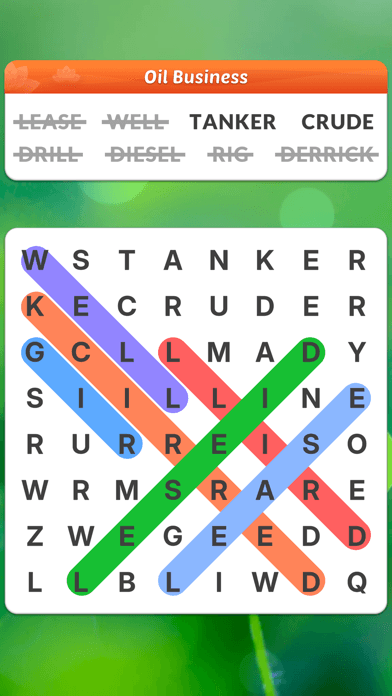
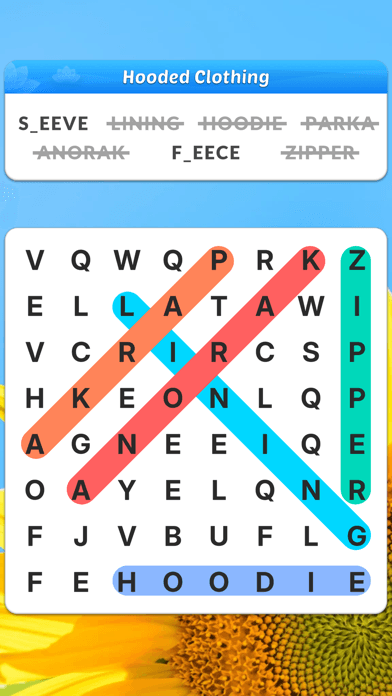
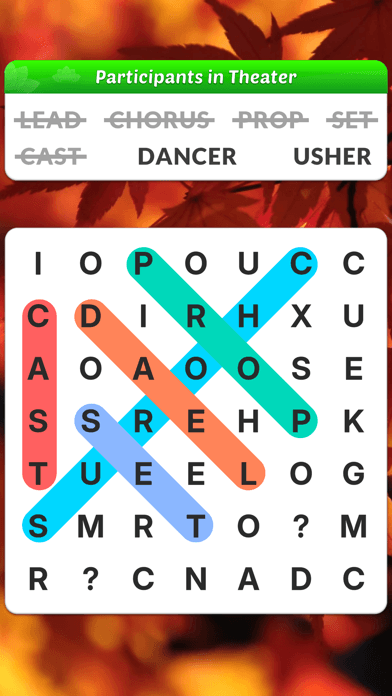
Word Search Pop by Hi Studio is a word-puzzle brain training app focused on word-search puzzles with crossword integration and themed packs. With a 4.71 average across 77,793 U.S. ratings, the app delivers a steady stream of word-search puzzles across difficulty levels, with daily challenges, themed packs (animals, food, science), and progress tracking. Word Search Pop differs from broad cognitive trainers by training a narrow skill set (visual scanning, pattern recognition, vocabulary recall) through one repeated game type. A real scenario: you spend 10 minutes on a word-search puzzle while waiting for coffee, the app tracks your completion time, and you progress through a themed pack about ocean life — finding 12 words about marine animals. The tradeoff is the narrow scope and ad density on the free tier. Power users will outgrow it for varied training but it remains satisfying for users who love word search as a daily ritual. Best for users who specifically love word search and want it well-designed with progression structure.
Pros
- Polished word-search experience with themed packs and progress structure
- Daily challenges maintain engagement over weeks
- Visual scanning and vocabulary recall are training side-effects
Cons
- Narrow scope — word search only, not broad cognitive training
- Ad density on the free tier flagged in reviews
- Rating
- 4.6
- Reviews
- 63.8K
- Price
- Paid
- 90-day trend
- —
IQ Masters by DEEP FLOW SOFTWARE SERVICES is a brain training app focused on logic puzzles, IQ-style tests, and reasoning challenges. With a 4.64 average across 63,148 U.S. ratings, the app delivers a mix of pattern-matching, number-sequence, spatial-reasoning, and verbal-logic puzzles in a quiz-style format. IQ Masters differs from Impulse by being puzzle-focused rather than adaptive-workout-focused, and from Braindom by leaning more analytical than lateral-thinking. A real scenario: you spend 15 minutes on a logic-puzzle pack, the app gives you a session score and ranks you against other users, and you progress through unlock-able difficulty tiers. The tradeoff is the IQ-test framing — reviewers note that 'IQ Masters' framing can imply broader cognitive measurement than the games actually deliver, and the score from these puzzles isn't equivalent to a clinical IQ score. Ad density and subscription pricing have also drawn some complaints. Best for users who specifically enjoy IQ-style logic puzzles and don't read the 'IQ Masters' framing too literally.
Pros
- Mix of pattern-matching, spatial-reasoning, and verbal-logic puzzles
- Quiz-style scoring keeps engagement high for puzzle fans
- Difficulty progression unlocks tougher packs over time
Cons
- IQ Masters framing can imply more cognitive measurement than games deliver
- Ad density and subscription pricing flagged in reviews
- Rating
- 4.7
- Reviews
- 43.5K
- Price
- Paid
- 90-day trend
- —
Clever by DPM APPS is a brain training app for iPhone with daily workouts across cognitive domains including memory, attention, math, and verbal skills. With a 4.66 average across 43,237 U.S. ratings, Clever is the smallest of the major adaptive-trainer apps on this list but covers similar ground to Impulse and MindPal in a tighter format. Clever differs from Impulse by being smaller and from Lumosity by being newer. A real scenario: you open Clever, the app delivers a 5-minute workout of three short games, you tap through quickly, and an overall progress bar tracks your weekly engagement. The tradeoff is the smaller game library and rating pool — 43K reviews means review-signal confidence is lower than for Impulse or Elevate, and the variety of games is less than top picks. The subscription model is comparable to competitors. The 4.66 rating reflects positive sentiment but a smaller sample. Best for users who want a lightweight daily cognitive workout app and don't need the broader game libraries of Impulse or Elevate.
Pros
- Lightweight 5-minute daily workout format for busy schedules
- Covers memory, attention, math, and verbal skills
- Lower-friction entry than Impulse for users new to brain training
Cons
- Smallest game library and rating pool among adaptive trainers on this list
- Subscription model required for full content access


How we picked
### Data sources We combine live App Store data (ratings, recent reviews, version cadence, pricing, screenshots) with our own ranking tracker, which logs U.S. Games and Education category positions daily for every app. Review themes come from the most recent U.S. reviews per app, weighted toward the last 90 days.
### How we score Four weighted axes: training variety (number of distinct game types and cognitive domains covered), adaptive difficulty (does the app adjust to your skill level over time), daily-habit support (streaks, reminders, progress visualization), and free-tier usefulness measured against the paid tier. Apps with stronger transparent communication about what the games actually train (versus broad claims about 'making you smarter') score higher.
### Refresh cadence The top-10 set is re-scored monthly. Ratings, ranks, and review-theme analysis refresh daily. When an app changes pricing, drops below 4.0 stars, or removes a feature that drove its ranking (such as a free-tier game limit tightening), it gets re-evaluated within the week.
### What we exclude Apps with an average below 4.0 stars, fewer than a few hundred ratings on the current version, or no update in nine months. Apps that make medical or therapeutic claims (treating Alzheimer's, dementia, ADHD) without published peer-reviewed evidence are excluded. Pure casino-style or pattern-matching slot games marketed as brain training are excluded.
### What we don't do No affiliate-driven ordering. We don't take sponsorship from listed apps. If a pick shifts, it's because the data shifted — pricing, ratings, review themes, or removed features. We don't evaluate the scientific validity of each app's specific cognitive claims; we describe what the apps train and link to independent research where appropriate.
### Important context Brain-training apps train cognitive skills through repeated practice. Independent research suggests that improvements typically transfer narrowly — getting better at a specific app's number-memory game doesn't necessarily improve memory in daily life. These apps are not medical treatments and should not be used as substitutes for medical evaluation or care if you're concerned about cognitive health.